
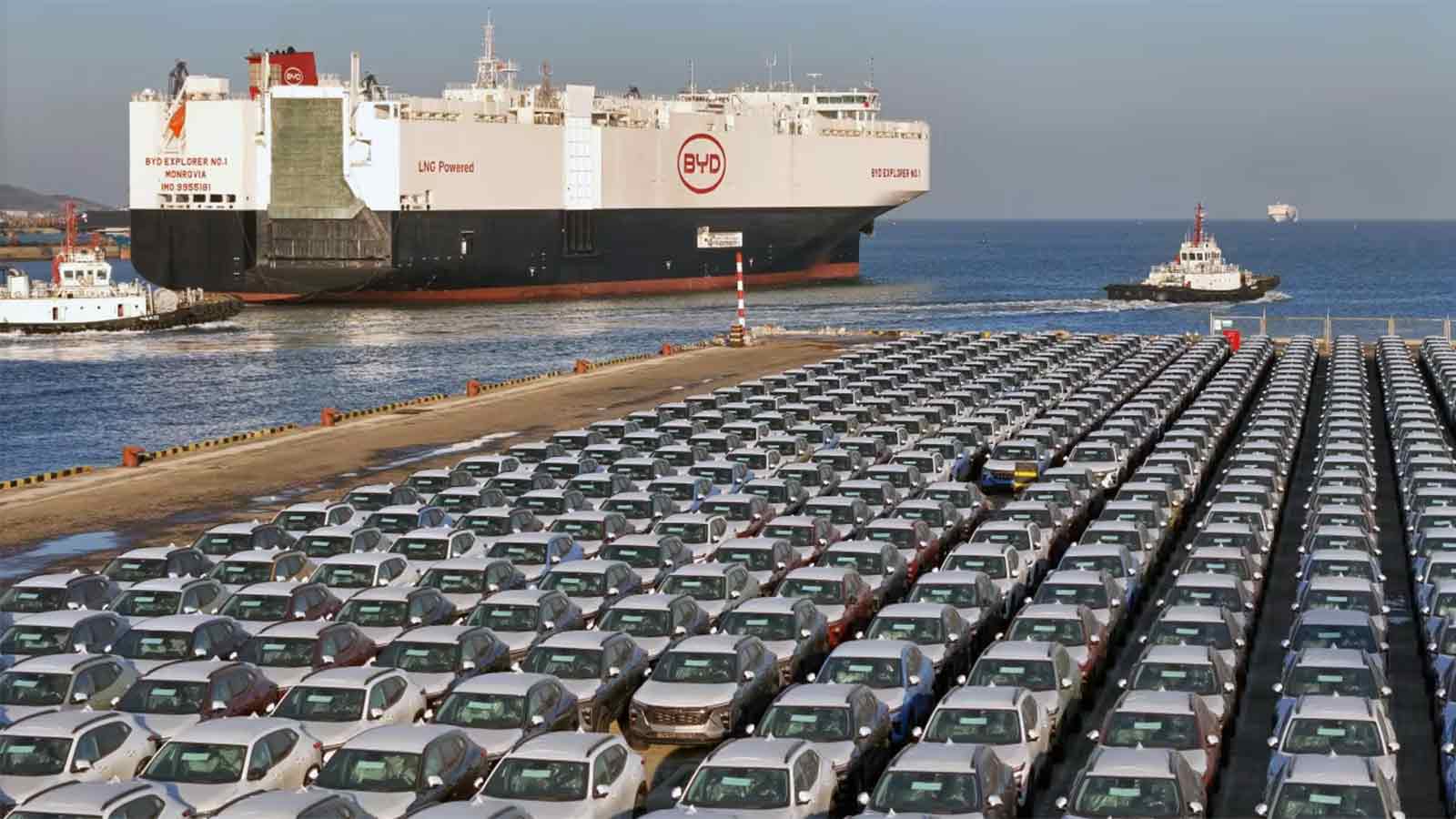
- US tariffs are causing a pile-up of imported cars at American ports.
- Automakers like Audi and Jaguar Land Rover have halted shipments.
- Ports are nearing capacity, raising concerns of further disruptions.
- The trade war’s impact on the auto industry continues to escalate.
US Tariffs Lead to Car Import Backlog at American Ports
The intensifying trade war under President Donald Trump’s administration is causing a significant backlog of imported vehicles at US ports. Automakers are halting shipments and delaying the entry of vehicles into the country as they attempt to mitigate the fallout from escalating tariffs. This situation is creating logistical challenges and raising concerns about the broader implications for the automotive industry and the economy.
Imported Vehicles Pile Up at Ports
Thousands of imported cars are being held at American ports as manufacturers seek to navigate the uncertainty surrounding new tariffs. According to logistics and automotive executives, the situation could worsen in the coming weeks if the tariff measures are not clarified or softened. One executive warned that ports could “fill up fast,” creating a chaotic environment for the industry.
Some brands, including Audi, Jaguar Land Rover, and Aston Martin, have already taken precautionary measures by suspending or minimizing shipments to the US for the month of April. These companies are relying on their existing inventory to meet short-term demand while avoiding the financial burden of higher tariffs.
Ports Nearing Capacity
Logistics experts have expressed concerns about the capacity of US ports to handle the growing backlog. “We are getting closer to capacity at some ports,” stated one executive, highlighting the urgency of the situation. If the trend continues, it could lead to significant delays in vehicle distribution and impact the availability of certain models in the market.
Impact of Tariffs on the Automotive Industry
The Trump administration’s trade policies, including a 25% tariff on auto imports, aim to encourage domestic manufacturing. However, these measures are having unintended consequences for automakers and consumers. The higher costs associated with tariffs are likely to be passed on to buyers, leading to increased vehicle prices and potentially dampening demand.
Furthermore, the uncertainty surrounding the implementation of tariffs is complicating supply chain management for manufacturers. Companies are being forced to make difficult decisions about inventory levels, production schedules, and shipping strategies to adapt to the evolving trade landscape.
Global Repercussions
The impact of US tariffs extends beyond domestic borders, affecting international trade and economic stability. Countries heavily reliant on automotive exports, such as Japan and South Korea, are facing significant challenges. Both nations have announced plans to support affected businesses and are exploring options to address the economic fallout.
Experts warn that the trade war could disrupt global supply chains and contribute to a slowdown in economic growth. The International Monetary Fund (IMF) has already indicated that it may revise its global growth forecast downward due to the ripple effects of the tariffs.
As the situation unfolds, automakers and policymakers will need to collaborate to find solutions that minimize disruptions and support the industry’s recovery. The resolution of trade disputes and the establishment of clear guidelines for tariff implementation will be crucial in restoring stability to the automotive sector. For now, the backlog of imported vehicles at US ports serves as a stark reminder of the far-reaching consequences of trade policies. The automotive industry, a key driver of economic activity, is at the forefront of this evolving challenge, navigating an uncertain future shaped by geopolitical tensions and economic policy shifts.
Sources: Financial Times, Reuters