
Quick Read
- The USS Tripoli is transiting toward the Middle East carrying the 31st Marine Expeditionary Unit to counter the blockade of the Strait of Hormuz.
- The task force includes 2,500 Marines and F-35B stealth fighters, providing the Pentagon with the capability to conduct amphibious raids on Iranian coastal assets.
- The closure of the Strait of Hormuz has disrupted 20 percent of the global oil supply, forcing the IEA to release emergency stockpiles to stabilize energy markets.
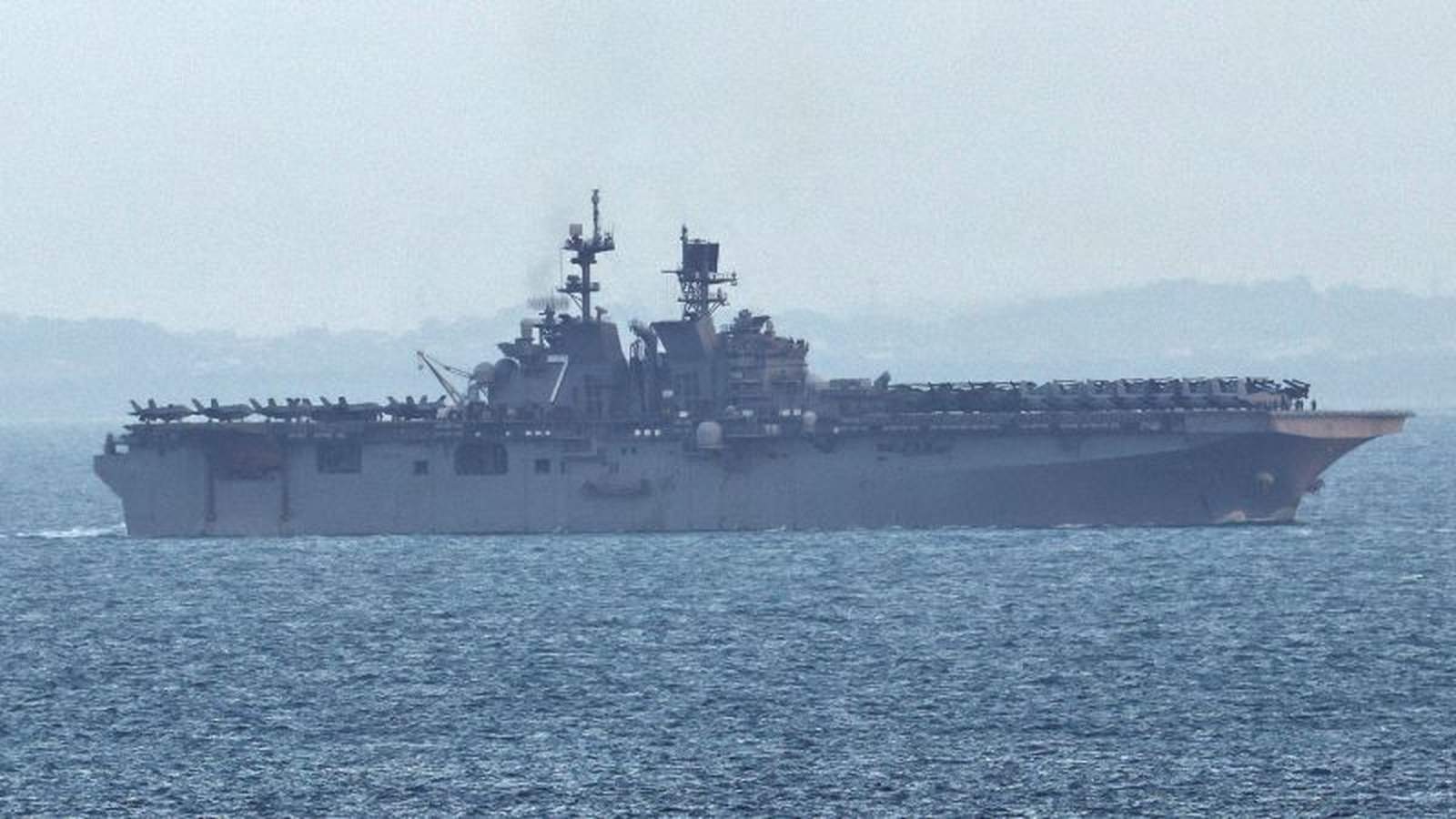
SINGAPORE (Azat TV) – The amphibious assault ship USS Tripoli is transiting near Singapore as it leads a critical deployment of the 31st Marine Expeditionary Unit (MEU) toward the Middle East. The move, confirmed by multiple officials, signals a significant escalation in the U.S. military presence as the Pentagon evaluates tactical responses to the ongoing closure of the Strait of Hormuz by Iranian forces.
Strategic Deployment of the 31st MEU
The USS Tripoli, an 850-foot amphibious assault ship capable of operating as a small aircraft carrier, is carrying approximately 2,500 Marines along with an air wing that includes F-35B Lightning II stealth fighters. As of March 17, 2026, tracking data placed the vessel near the southwestern edge of the South China Sea, moving at a steady pace toward the Arabian Sea. The ship is the centerpiece of an Amphibious Ready Group that provides U.S. Central Command (CENTCOM) with a versatile, self-sufficient force capable of conducting everything from humanitarian evacuations to high-intensity amphibious assaults.
Tactical Options in the Strait of Hormuz
The deployment comes in direct response to the deepening crisis in the Strait of Hormuz, where Iranian naval forces have effectively obstructed commercial shipping. This blockade has stalled roughly 20 percent of the global oil supply, prompting the International Energy Agency to authorize the release of 400 million barrels from strategic stockpiles. According to The National Interest, the presence of the 31st MEU offers the Pentagon options beyond the stand-off air and naval strikes that have defined Operation Epic Fury thus far. Military planners are reportedly assessing the feasibility of amphibious operations to secure coastal assets, with analysts noting that Kharg Island—the primary hub for Iranian oil exports—could become a focal point for potential operations.
Escalating Risks and Regional Stability
The arrival of the 31st MEU heightens the potential for direct physical engagement between U.S. and Iranian forces. While the administration has yet to authorize a full-scale ground invasion, the integration of ground, air, and logistics components within the MEU provides the capability to seize and hold territory if ordered. The situation remains fluid, with the White House weighing the necessity of escorting commercial vessels against the risks of increased casualties in a volatile maritime environment. CNN reports that the U.S. Navy has increased the frequency of its maritime patrols in the region as it attempts to restore freedom of navigation through the narrow, high-stakes waterway.
The deployment of the USS Tripoli and the 31st MEU represents a shift from passive containment to an active, posture-based deterrence strategy, signaling that the U.S. is moving beyond economic sanctions and air-based interdiction toward the threat of direct amphibious intervention to break the Iranian-imposed blockade.