
Quick Read
- Early January 2026 saw Wales hit by an Arctic blast, causing widespread snow and ice.
- Over 30 schools across multiple Welsh counties were closed due to hazardous conditions and staffing issues.
- Numerous major roads, including sections of the A5, A494, and A55, faced closures or became ‘just passable’.
- Met Office issued multiple yellow warnings for snow and ice, with temperatures dropping to -10°C.
- North Wales Police advised against non-essential travel, urging caution and route checks.
Early January 2026 has witnessed Wales grappling with an unrelenting Arctic blast, unleashing widespread snow and treacherous ice that has brought significant parts of the nation to a near standstill. The severe winter weather has led to extensive road closures, widespread travel disruptions, and the unprecedented shutdown of over 30 schools across numerous counties, profoundly impacting daily life and posing considerable challenges for residents and emergency services alike.
As temperatures plummeted to as low as -10°C in some areas, the Met Office issued multiple yellow weather warnings for snow and ice, covering large swathes of the country, particularly North Wales. These warnings, initially in place for Saturday, January 3, extended through Sunday, January 4, and into Monday, January 5, signaling a prolonged period of hazardous conditions. The warnings highlighted the potential for significant travel disruption, icy patches, and fresh coverings of snow, prompting authorities to issue urgent advisories against non-essential travel.
Roads Become Treacherous as Snow and Ice Dominate
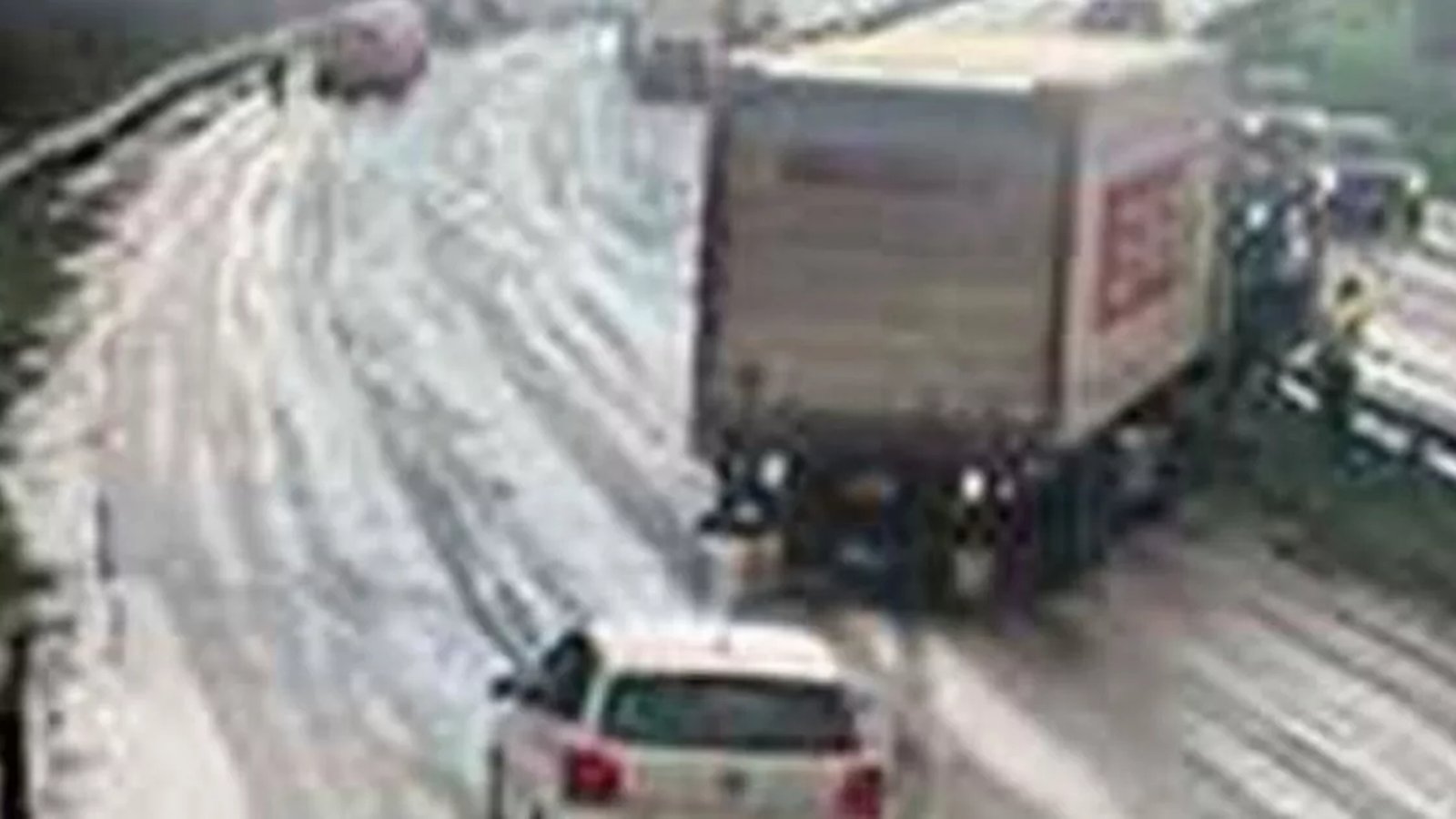
The impact on Wales’ road network has been immediate and severe. Numerous key routes, especially in Gwynedd, Conwy, Denbighshire, Flintshire, and Wrexham, became impassable or extremely hazardous. Reports from Traffic Wales and local monitoring services detailed a litany of incidents and closures:
- The A499 was partially blocked in both directions from the A487 (Llanwnda Roundabout) to Ty’n Lon due to an accident, causing slow traffic.
- Sections of the A5, including from Braichmelyn (Grisiau-Cochion) to the A4086 (Capel Curig) and the High Street in Bethesda, were rendered ‘just passable’ or completely closed due to heavy snow and ice, further complicated by a crash in Bethesda.
- The A494 faced similar challenges, with stretches from the B4416 (Bontnewydd) to B4403 Church Street (Llanuwchllyn), and between Corwen and Ruthin, becoming ‘just passable’ due to snow.
- Other critical arteries like the A4086 (from Pont Pen-y-benglog to Nant Ffynnon) and the A4244 (from A4086 to Clwt y Bont turn off, and near Seion) experienced significant delays and difficult driving conditions due to snow and ice.
- The A542 Horseshoe Pass, a notoriously challenging route in winter, remained closed as a precautionary measure against further snowfall and ice. Gwaenysgor Hill had also been shut since Wednesday afternoon, reinforcing safety concerns.
- Further south, the A470 was partially blocked after a collision attributed to the poor weather, though it was subsequently gritted. The A487 in Gwynedd, from Maentwrog to Gellilydan, was ‘just passable,’ and specific sections of the A474 in Pontardawe were completely closed due to snow.
- Even major motorways like the A55 saw ‘issues in relation to the current weather conditions’ affecting areas west of Abergwyngregregyn to Anglesey, and the Felinheli bypass, prompting police to advise against all but essential travel.
These disruptions were not merely inconveniences; they posed genuine risks. Chief Inspector Emma Parry of North Wales Police urged the public: ‘We’d ask everyone to please consider the weather conditions before venturing out, and stay away from mountainous or higher areas particularly affected. If you are travelling, please check your routes and the weather along the way and at your end destination.’ This advice underscored the severity of conditions and the need for extreme caution.
Education System Feels the Chill: Widespread School Closures
The return to school after the two-week Christmas break proved impossible for thousands of children across Wales, as hazardous conditions forced the closure of more than 30 schools on Monday, January 5. The decision, driven by concerns for pupil and staff safety due to icy roads, impassable routes, and staffing issues, affected multiple counties:
- **Gwynedd and Anglesey:** Almost 40 schools were listed as closed in Gwynedd, with several more in Anglesey.
- **Carmarthenshire, Neath Port Talbot, Bridgend, Caerphilly, and Pembrokeshire:** These counties also reported significant closures, particularly in rural areas.
- **Flintshire:** Eight schools confirmed closures, mostly citing ‘weather conditions’ or ‘public safety.’
- **Denbighshire:** Ysgol y Llys, Ysgol Dewi Sant (due to staffing issues caused by adverse weather), Ysgol Pant Pastynog, Ysgol Brynhyfryd, and Ysgol Glan Clwyd were among those closed.
- **Conwy:** Ysgol Aberconwy, Ysgol Awel y Mynydd, Ysgol Babanod Llanfairfechan, Ysgol Bryn Elian (due to an unsafe icy site), Ysgol Pant y Rhedyn, and Ysgol Porth y Felin experienced closures, largely due to staff shortages and unsafe local conditions.
- **Wrexham:** Ysgol Rhiwabon was confirmed closed due to ‘adverse weather.’
Gwynfor Coaches, a bus operator serving Anglesey, Caernarfon, Llanberis, and Snowdonia, suspended some services, stating that ‘rural roads [were] completely unsafe, and drivers unable to come in to work.’ This highlights how the weather’s grip extended beyond private vehicles, impacting public transport and the ability of essential workers, including school staff, to reach their workplaces safely.
Community Resilience Tested by Prolonged Disruption
Beyond the immediate travel and educational impacts, the prolonged severe weather has begun to test the resilience of local communities and businesses. In a poignant example, pub owners in a rural part of Carmarthenshire voiced deep concerns over a two-month road closure on the B4310 between Nantgaredig and Brechfa, scheduled to begin on Monday, January 5. Kathryn Jones, owner of the Forest Arms in Brechfa, expressed her fears to WalesOnline, stating, ‘The whole thing just hasn’t really been thought through. We’ll just have to try it out for a couple of weeks and if it doesn’t work we will have to shut up shop for the duration of the road closure.’ This illustrates how weather-induced or concomitant road closures, even for planned works, can become a ‘tipping point’ for small businesses already navigating challenging economic landscapes. The added layer of snow and ice would only exacerbate these difficulties, potentially cutting off vital lifelines for remote communities.
Emergency services have been working tirelessly in challenging conditions. The gritting of major roads like the A470 after collisions and the constant monitoring by Traffic Wales underscore the concerted effort to keep essential routes open where possible. However, with forecasts indicating further snow showers and temperatures remaining well below freezing, the immediate outlook suggests continued vigilance will be required.
The Enduring Chill: What Lies Ahead
The Met Office forecast for Wales warned of a mixture of clear periods and scattered wintry showers, leaving fresh coverings of snow and the persistent risk of icy stretches. Skies were expected to clear later, leading to ‘very cold and frosty’ conditions. A separate yellow warning for snow and ice was extended until Tuesday, January 6, covering most of Wales and predicting scattered sleet and snow showers with icy patches causing further travel disruption. Some parts of west Wales could see as much as 10cm of snow, with mid-Wales experiencing overnight lows of -10°C.
As Wales navigates this deep freeze, the emphasis remains on safety. Authorities continue to advise residents to plan journeys carefully, allow extra time, and avoid unnecessary travel. The closures of schools and roads are stark reminders of nature’s power and the critical importance of heeding official warnings to protect lives and minimize disruption.
The early days of 2026 have laid bare the vulnerabilities of Wales’ infrastructure and daily routines to extreme weather. While the immediate focus is on managing current disruptions and ensuring public safety, this prolonged period of severe snow and ice serves as a potent reminder for ongoing investment in resilient infrastructure and robust emergency preparedness strategies, particularly as climate patterns continue to evolve. The human stories, from stranded commuters to struggling local businesses and families adapting to school closures, underscore the profound societal impact of such events, demanding a proactive and integrated approach to future winter challenges.