


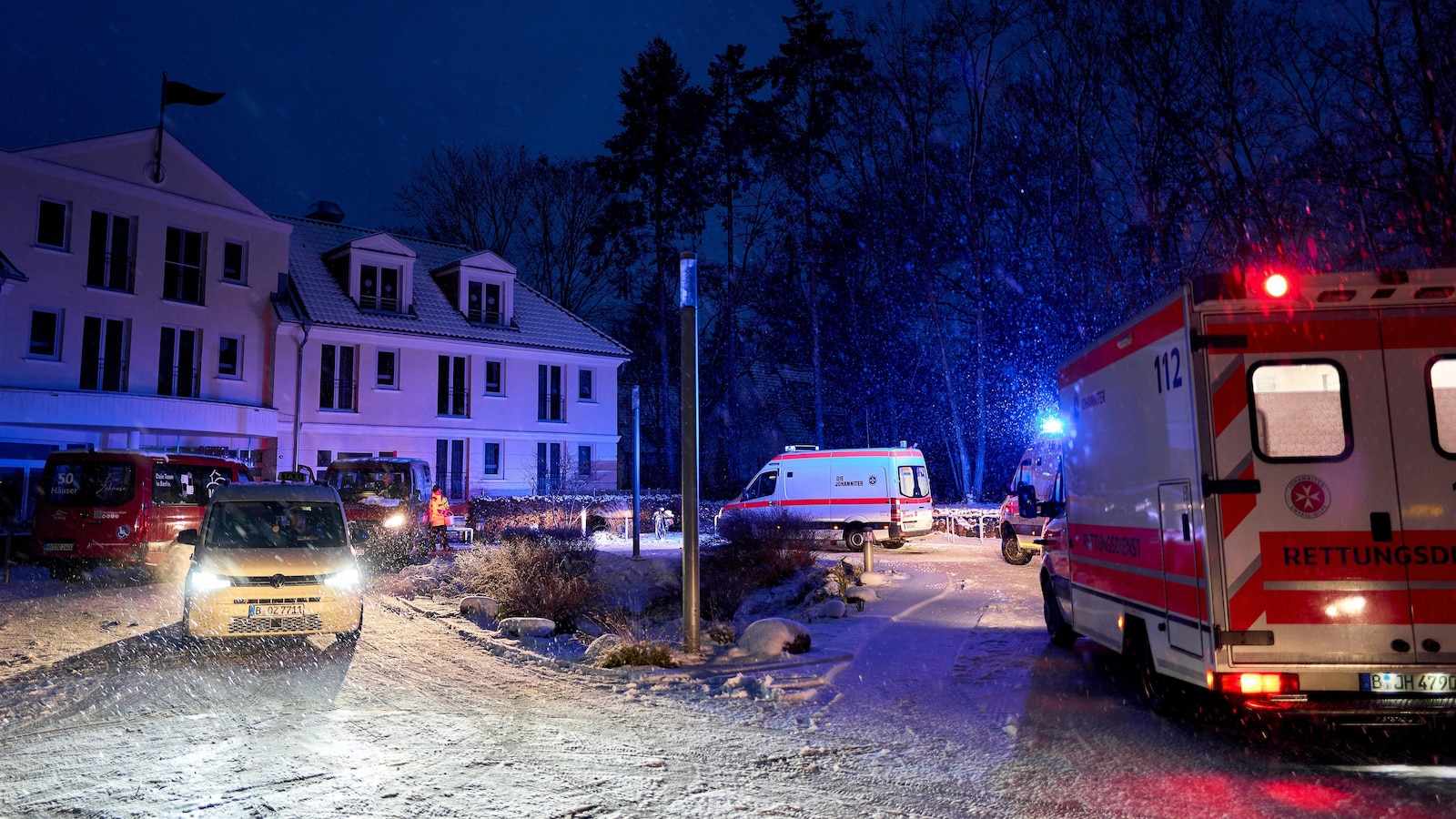
The usually vibrant heart of Germany, Berlin, found itself grappling with an unsettling crisis this past weekend as a massive power outage plunged over 45,000 households and 2,200 businesses in its southwestern districts into darkness. More than a mere technical fault, city officials have swiftly pointed fingers at what they describe as a “politically motivated attack” by left-wing extremists, igniting a serious debate about the vulnerability of critical infrastructure in one of Europe’s leading capitals.
The incident, which unfolded on Saturday morning, began with a fire on a cable bridge spanning the Teltow Canal, located perilously close to the Lichterfelde power plant. What initially might have been perceived as an accidental blaze quickly escalated into a widespread disruption, impacting not only electricity but also essential heating and internet services. The human toll was immediate and severe: beyond the tens of thousands of private residences, the outage crippled vital care facilities, hospitals, and numerous social institutions, leaving an entire community scrambling for solutions amidst freezing temperatures and snowy weather.
A City Scrambles for Light and Warmth
For the residents of districts like Lichterfelde, Steglitz, and Zehlendorf, the weekend turned into an unexpected ordeal. Imagine waking up to a world without power in the dead of winter, with temperatures plummeting and snow falling. The simple acts of brewing coffee, charging a phone, or even staying warm became monumental challenges. Businesses, from small cafes to larger enterprises, faced immediate losses, their operations grinding to a halt. The city’s Senator for Economic Affairs, Franziska Giffey, underscored the gravity of the situation, calling it “a particularly severe power outage affecting tens of thousands of households and businesses, including care facilities, hospitals, numerous social institutions and companies.”
While emergency crews worked tirelessly, their efforts were significantly hampered by the inclement weather. The icy conditions and falling snow made repairs to the high-voltage power lines a slow, painstaking process. Although power was gradually restored to thousands of homes by Sunday, authorities estimated that many others would remain without electricity until Thursday, stretching the crisis well into the working week. This prolonged disruption highlighted not just the fragility of the power grid but also the immense logistical challenges involved in recovering from such an extensive attack, especially when nature conspires against restoration efforts.
The Shadow of Extremism: A Recurring Threat?
What truly sets this incident apart from a typical blackout is the official designation of it as a deliberate, politically motivated act. Berlin’s Mayor Kai Wegner minced no words, stating, as cited by a German news agency, that the perpetrators were “clearly left-wing extremists.” His condemnation was sharp and unequivocal: “It is unacceptable that once again clearly left-wing extremists have attacked our power grid and thereby endangered human lives.” The phrase “once again” is critical, as authorities drew a direct comparison to a similar power outage that struck southeast Berlin last September, an incident for which radical activists also claimed responsibility.
This pattern suggests a worrying trend: the targeting of critical infrastructure by extremist groups to achieve political aims. Such acts are designed to sow chaos, disrupt public order, and challenge the state’s ability to protect its citizens. The choice of a power grid, an artery of modern life, as a target is particularly potent, as it immediately impacts a vast number of people and essential services. The authorities are currently investigating the latest incident as a possible act of arson and are diligently working to confirm the authenticity of a letter claiming responsibility. This process involves forensic analysis, intelligence gathering, and a meticulous cross-referencing of information to link the claims to the actual events, ensuring that justice can be pursued against those responsible.
Securing the Lifelines of a Modern City
The Berlin power outage serves as a stark reminder of the inherent vulnerabilities within even the most advanced urban infrastructures. In an increasingly interconnected world, our reliance on a stable and secure power supply is absolute. High-voltage power lines, often exposed and extensive, represent a critical weak point. Protecting these vast networks from deliberate acts of sabotage requires a multi-faceted approach, combining physical security measures, advanced surveillance, and robust intelligence gathering to anticipate and neutralize threats before they materialize.
Beyond the immediate response, such incidents force a re-evaluation of national security strategies concerning critical infrastructure. Governments and utility providers must continually adapt to evolving threats, which now include not only cyberattacks but also physical assaults by extremist elements. This involves investing in resilient infrastructure designs, developing rapid response protocols, and fostering closer collaboration between law enforcement, intelligence agencies, and private sector operators. The goal is not just to restore power quickly but to prevent such attacks from happening in the first place, safeguarding the societal functions that depend on an uninterrupted flow of electricity.
The psychological impact on the public should also not be underestimated. When essential services are deliberately disrupted, it erodes trust in public safety and the state’s protective capabilities. Residents begin to question their security, leading to anxieties that can ripple through communities. Therefore, transparent communication from authorities, coupled with visible and effective security enhancements, becomes paramount in rebuilding confidence and assuring citizens that their well-being remains a top priority. The incident underscores the delicate balance between maintaining an open society and implementing the necessary security measures to protect against those who would exploit that openness for destructive ends.
The Long Road to Full Recovery and Resilience
As Berlin slowly emerges from the shadow of this deliberate attack, the focus shifts from immediate restoration to long-term resilience. The repair efforts, although challenging, are a testament to the dedication of utility workers and emergency services. However, the deeper challenge lies in addressing the root causes and preventing future occurrences. The investigation into the ‘left-wing extremists’ responsible for this act is not just about bringing perpetrators to justice; it is about understanding their motives, capabilities, and networks to dismantle such threats effectively.
The incident also highlights the importance of community preparedness. While authorities work to secure infrastructure, individual households and businesses must also consider contingencies for prolonged outages. This might involve emergency kits, alternative heating solutions, and communication plans. Ultimately, the Berlin power outage is a sobering illustration of how modern urban life, for all its sophistication, remains fundamentally dependent on a few critical lifelines, and how easily these can be targeted by those intent on causing disruption. The path forward requires vigilance, investment, and an unwavering commitment to protecting the fabric of society.
The Berlin power outage, explicitly labeled as a politically motivated attack by left-wing extremists, transcends a mere technical failure; it is a stark demonstration of how critical infrastructure can be weaponized to destabilize society. The recurrence of such incidents, coupled with the severe human impact during winter conditions, signals an urgent need for Germany to reinforce its defenses against internal threats that exploit vulnerabilities to undermine public trust and essential services.