
Quick Read
- Wes Streeting, UK Health Secretary, warns NHS faces worst pressure since Covid due to flu surge and upcoming resident doctor strikes.
- Hospitals are treating an average of 2,660 flu patients daily; numbers could triple by the peak.
- Resident doctors plan a five-day strike from December 17, with union members voting on whether to call it off.
- The dominant flu strain is a mutated H3N2, causing earlier and faster spread; vaccines remain effective.
- Streeting urges compromise to avoid overwhelming NHS during Christmas, but union leaders say government offers fall short.
Wes Streeting Confronts a Perfect Storm: ‘Super Flu’ and Strikes Threaten NHS Stability
As December unfolds in the UK, Health Secretary Wes Streeting stands at the center of a storm that few politicians would envy. With hospitals filling rapidly due to a mutated strain of influenza — nicknamed ‘super flu’ — and resident doctors threatening a five-day strike, the National Health Service (NHS) faces what Streeting calls its gravest test since the Covid-19 pandemic. The timing, just ahead of Christmas, could not be worse.
Record Flu Admissions: ‘Super Flu’ Sends Numbers Soaring
According to NHS England, hospitals are now averaging 2,660 flu patients per day, a figure that amounts to three entire hospitals filled solely with flu cases (BBC). This wave arrived a month earlier than usual, and experts have identified a mutated H3N2 strain as the culprit. While dubbed ‘super flu’ for its rapid spread, scientists clarify that the virus is not more severe or harder to treat than previous strains — but the population’s immunity may be lower, given this version’s novelty.
Officials warn that flu hospitalizations have risen more than 50% in just one week, with fears the numbers could top 5,000 by the weekend. In Scotland, cases surged by nearly a quarter, and Wales and Northern Ireland report similar jumps, particularly among children and young people. The over-75s and children under five are most likely to require hospital care, with some schools reinstating Covid-like measures or even closing temporarily to contain the virus.
Strikes Loom: Resident Doctors and the Christmas Countdown
Compounding the crisis, resident doctors — formerly known as junior doctors — plan a five-day strike from December 17 to 22, right as flu admissions peak. Streeting, in a series of interviews, has implored the British Medical Association (BMA) to reconsider. He offered to delay the strike to January, extending the BMA’s mandate, but the union declined. Streeting speculated, “I can only assume that the reason why they refuse to do that is because they know that this week will be most painful for the NHS.” (The Guardian)
The BMA, however, is consulting its members via an online poll, with the result expected on Monday. The government’s latest offer includes new legislation giving homegrown doctors priority for specialty training, a boost of 1,000 training posts starting in 2026, and funding for mandatory exams and membership fees. Yet, union leaders insist the offer falls short of restoring pay and addressing systemic workforce shortages.
Hospital Pressure: ‘Worst Since Covid’ or ‘Within Boundaries’?
The specter of a system collapse hangs over the debate. Streeting likened the situation to a game of Jenga: “Christmas strikes could be the Jenga piece that collapses the tower.” On LBC Radio, he agreed it was “one minute to midnight” for the NHS (Bloomberg). Yet, NHS medical director Chris Streather struck a less dire note, arguing that while the surge in flu admissions is “pretty bad,” it’s “nothing like the scale” of the Covid pandemic. He credited pandemic-era improvements, including increased critical care capacity, for the NHS’s relative resilience.
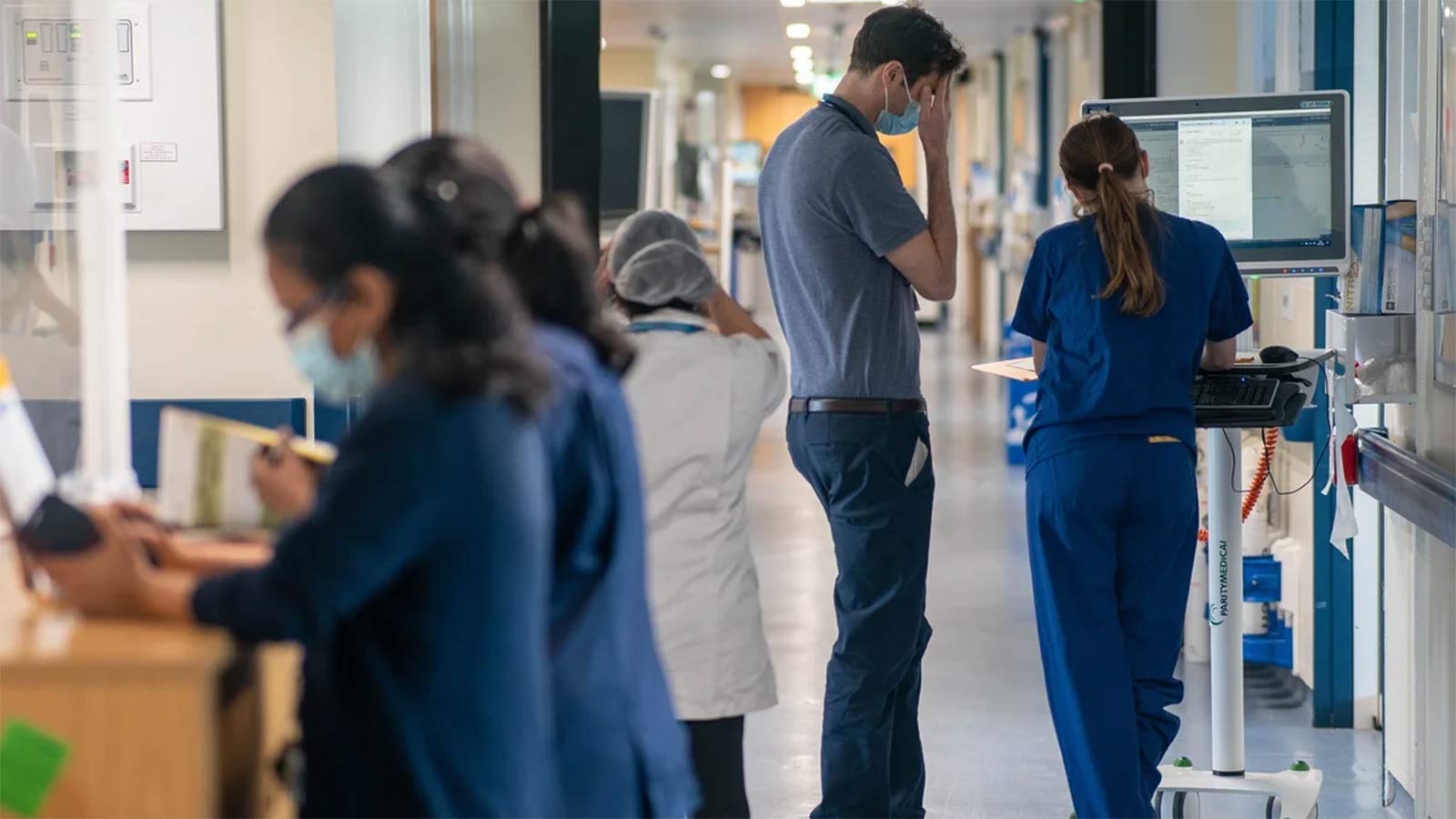
Still, Professor Meghana Pandit, NHS England’s medical director, warned that this “unprecedented wave of super flu is leaving the NHS facing a worst-case scenario for this time of year – with staff being pushed to the limit to keep providing the best possible care for patients.”
Outside government, voices like Dr Vicky Price of the Society for Acute Medicine accuse officials of using winter viruses as a “convenient scapegoat” for longstanding workforce and capacity problems. “What is happening is not an isolated emergency, but the culmination of systemic failure,” Price said.
Public Health Response: Vaccines, Masks, and Uncertainty
Streeting has not called for mandatory mask-wearing, but encourages visitors to hospitals and care homes to wear masks as a precaution. Meanwhile, the UK Health Security Agency urges those eligible — over 65s, pregnant women, and those with certain health conditions — to get their flu vaccines as soon as possible. Protection takes up to two weeks to develop, and experts say vaccines remain effective against the current strain.
Despite the rising numbers, officials caution against panic. Infection rates, while climbing, have not accelerated as sharply as in previous weeks. However, with the virus’s unpredictability, a lull could quickly give way to another surge.
What’s Next: Negotiation or Escalation?
With the BMA’s poll result pending, the NHS faces a tense waiting game. If the strike proceeds, it will intersect with the peak of flu admissions, testing the limits of staff and resources. Streeting’s leadership is under scrutiny: his direct appeals, policy proposals, and media presence reveal both urgency and frustration. The government and union are locked in a standoff, each blaming the other for risking patient safety and system stability.
For patients and frontline staff, the immediate future is uncertain. Some will see their care delayed or disrupted; others may face overcrowded wards or temporary school closures. The question remains whether compromise can avert the worst-case scenario — or whether the NHS must weather another winter crisis with resilience forged in the pandemic.
Wes Streeting’s handling of the NHS crisis is a test not only of his political acumen but of the government’s ability to balance urgent public health needs with complex labor disputes. The situation exposes deep-rooted vulnerabilities in Britain’s healthcare system, reminding policymakers that short-term fixes cannot substitute for long-term reform.