
Quick Read
- Will Hardy says Ace Bailey’s knee tendonitis is minor and not a concern.
- Bailey sat out after 10 minutes against Dallas due to soreness in both knees.
- The Jazz will be cautious with Bailey ahead of the regular season opener.
- Bailey averaged 16 points in three preseason games, showing promise.
- Hardy emphasizes player health and long-term development over immediate returns.
Will Hardy’s Calm in the Face of Rookie Injury Concerns
In the world of professional basketball, a rookie’s journey can feel like walking a tightrope. Every twist, every leap, and every minor setback gets magnified—not just by fans, but by coaches who carry the weight of both hope and responsibility. This week, Utah Jazz head coach Will Hardy found himself at the center of such a moment, tasked with managing not only the physical well-being of his young star Ace Bailey, but also the expectations swirling around him.
Bailey’s Knee Soreness: Minor, But Not Ignored
The incident unfolded on Monday night at the Delta Center, where the Jazz faced off against the Dallas Mavericks. Ace Bailey, just 19 and already the fifth overall pick in the NBA draft, was limited to a mere 10 minutes and 44 seconds in the first half. His stat line was modest—three points, one rebound, and one steal—but it was what happened off the stat sheet that drew the most attention. Bailey was ruled out for the remainder of the game due to bilateral knee soreness, a phrase that can trigger alarm bells among fans and analysts alike.
Yet, Hardy’s approach was measured. Speaking to reporters, including Andy Larsen of the Salt Lake Tribune, Hardy explained, “He has got some tendonitis in both knees. It is nothing that we’re overly concerned with. He is not going to be getting imaged or anything like that. It is just trying to take care of him. He was a little sore during his second stint.”
In the high-stakes environment of the NBA, even minor injuries can turn into major stories. But Hardy’s emphasis was clear: precaution over panic. Bailey received treatment immediately after leaving the game, and the decision to sit him out was driven by a desire to protect—not push—the young athlete.
Bailey’s Preseason Impact: Early Signs of Promise
Before the knee soreness, Bailey’s preseason performances had been turning heads. Averaging 16 points, 4.7 rebounds, 1.7 steals, and 1.3 assists across three games, he had demonstrated a mix of size, skill, and athleticism that justified the Jazz’s excitement during draft night. His shooting from beyond the arc—an efficient 41.7%—added another layer to his profile as a modern guard capable of stretching defenses.
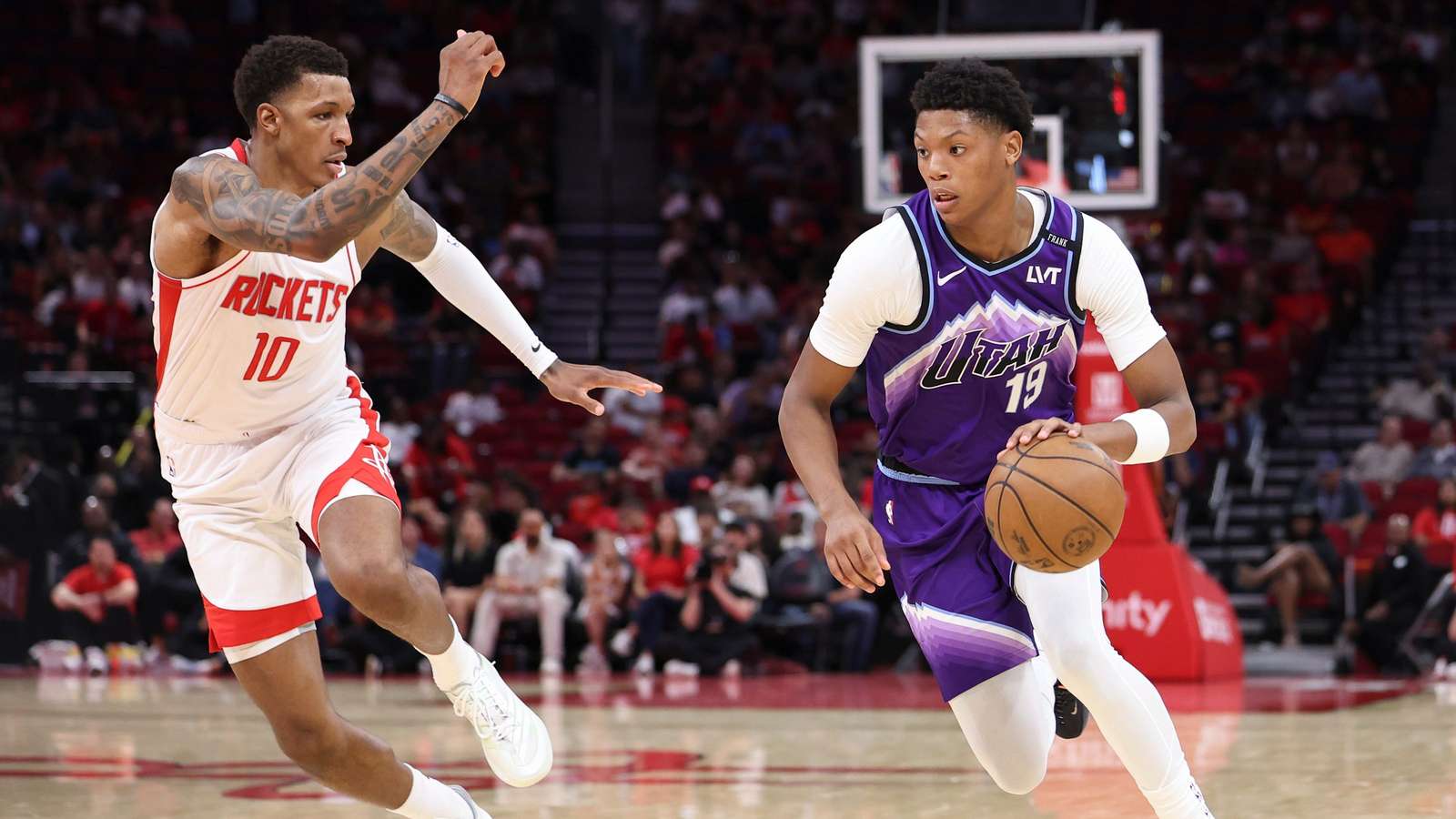
The highlights weren’t just statistical. Bailey’s 25-point explosion against the Houston Rockets on October 8 underscored his shot-making ability and his composure in high-pressure moments. Observers noted his knack for reading defenses and his smooth transition play, hinting at a player who could impact both ends of the floor.
Jazz Strategy: Caution Before the Curtain Rises
As the Jazz approach the end of their preseason slate, Hardy’s philosophy is anchored in long-term thinking. With the regular-season opener set for October 22, the team is expected to be cautious with Bailey, choosing to prioritize his health over short-term gains. In professional sports, where the margins between glory and disappointment are razor-thin, this kind of restraint can be the difference between a fleeting flash and sustained brilliance.
“The team was excited to add him in the draft and will look to ensure a healthy season ahead,” Hardy remarked, signaling both faith in Bailey’s talent and recognition of the need for careful management. The Jazz’s investment in Bailey isn’t just about numbers on a stat sheet; it’s about nurturing a potential cornerstone for years to come.
The Rookie’s Road: Challenges, Expectations, and Resilience
For Ace Bailey, the journey is just beginning. At 19, he embodies the aspirations of a franchise and the hopes of a fanbase eager for new heroes. His early preseason success, paired with the minor setback of knee soreness, paints a picture both familiar and instructive in the NBA landscape. It’s a reminder that talent alone isn’t enough—adaptability, resilience, and the support of a measured coaching staff are equally vital.
Hardy’s handling of Bailey’s situation offers a window into the culture he’s cultivating in Utah: one where young players are given room to grow, where injuries are managed with an eye on tomorrow, and where the pressure to perform is balanced by the wisdom to pause. As the regular season looms, all eyes will be on Bailey—not just for his box score contributions, but for how he navigates the unpredictable rhythm of life as an NBA rookie.
In the coming weeks, the story of Ace Bailey’s debut will be shaped not only by his on-court exploits, but by the choices made behind the scenes. Hardy’s steady hand, informed by experience and empathy, may be the quiet force that helps Bailey turn potential into lasting impact.
Hardy’s decision to prioritize Bailey’s health over immediate returns reflects a modern approach to athlete management, recognizing that a player’s long-term value often depends on restraint and patience as much as raw talent or early performance.