
Quick Read
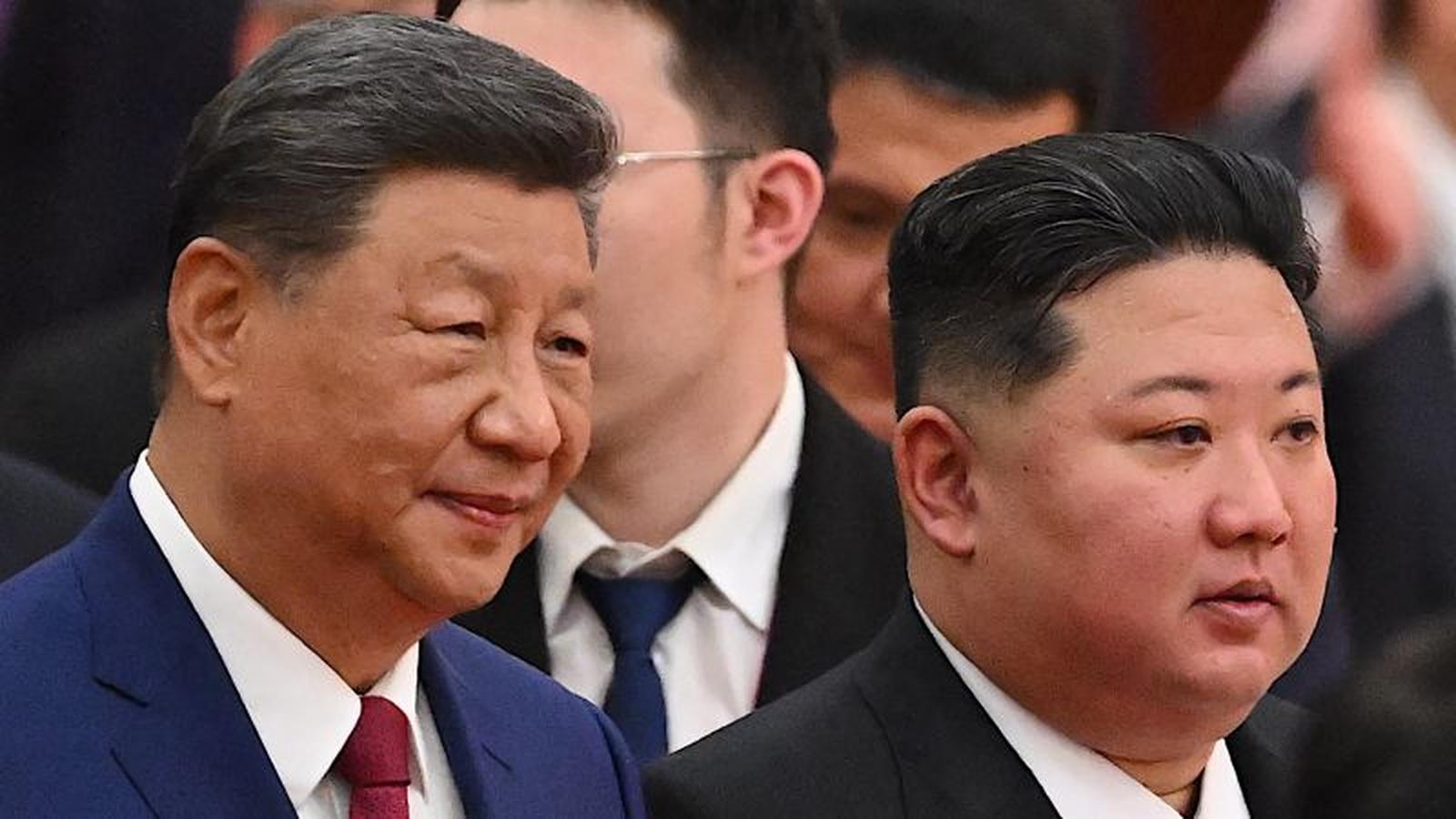
- Xi Jinping and Kim Jong Un held their first formal talks in six years in Beijing.
- The meeting followed a military parade showcasing unity with Vladimir Putin.
- China remains North Korea’s largest trading partner and key ally.
- Concerns rise over North Korea’s growing ties with Russia amid regional tensions.
- The talks aim to stabilize the Korean Peninsula while countering U.S. influence.
Chinese President Xi Jinping and North Korean leader Kim Jong Un held a significant meeting in Beijing on September 4, 2025, marking their first formal talks in six years. The encounter came a day after both leaders, alongside Russian President Vladimir Putin, showcased a striking display of unity at a Chinese military parade commemorating the 80th anniversary of the end of World War II.
Diplomatic Reunion After Six Years
The meeting between Xi and Kim, held at Beijing’s Great Hall of the People, was their first since Xi’s state visit to North Korea in 2019. According to CNN, the talks were characterized as “in-depth” and focused on strengthening bilateral ties. Observers noted that this meeting carried significant weight, as it followed Kim’s rare international appearance at the military parade, where he stood alongside Putin and Xi in a show of defiance against Western influence.
Kim, who arrived in Beijing by train on September 3, was among 26 foreign leaders attending the parade. This marked his first major international engagement since taking office in 2011. The North Korean leader’s participation was seen as an effort to solidify his role on the global stage while reaffirming North Korea’s close ties with China, its largest trading partner and main source of aid.
A New Axis in Global Politics?
The military parade on September 3 brought together Xi, Kim, and Putin in a rare public alignment, signaling what some analysts see as a potential new bloc of authoritarian states challenging Western dominance. According to Reuters, the parade was a culmination of days of diplomatic activities aimed at positioning China as a counterbalance to U.S. influence, particularly as tensions rise over trade and geopolitical conflicts.
Kim and Putin held a separate meeting after the parade, discussing “long-term cooperation” and exchanging mutual praise. North Korean troops have reportedly been involved in supporting Russian forces in Ukraine, a development that has raised concerns in Beijing about the growing closeness between Moscow and Pyongyang. Experts, such as Edward Howell from the University of Oxford, have suggested that while China is uneasy about this alliance, it continues to support North Korea economically and diplomatically to maintain its influence in the region.
Strategic Implications for East Asia
The Xi-Kim talks come at a time when East Asia’s security dynamics are increasingly fragile. As noted by ABC News, North Korea’s expanding missile and nuclear programs remain a source of tension for China, which has traditionally viewed Pyongyang as both a strategic ally and a potential liability. Beijing’s concerns are compounded by the deepening military ties between North Korea and Russia, formalized through a mutual defense pact signed in 2024.
Analysts believe that China’s primary goal is to maintain stability on the Korean Peninsula while preventing North Korea from becoming overly reliant on Russia. This balancing act underscores the complexities of Beijing’s foreign policy, which aims to counter U.S. influence without fully aligning itself with Pyongyang’s or Moscow’s more provocative actions.
The Road Ahead
Kim’s visit to China is also seen as a move to bolster his position ahead of potential future negotiations with the United States. With the ongoing Russia-Ukraine conflict and heightened U.S.-China tensions, Kim appears to be leveraging his relationships with both Beijing and Moscow to maximize North Korea’s strategic advantages.
While the parade and subsequent meetings have fueled speculation about a formalized alliance between China, North Korea, and Russia, experts like Zhu Feng of Nanjing University caution against overinterpreting these developments. “China remains wary of being too closely associated with North Korea’s authoritarian regime, as it could damage its international image,” Zhu said.
The Xi-Kim meeting highlights the shifting dynamics in East Asia and the broader geopolitical landscape. As these leaders navigate their complex relationships, the implications for regional and global stability will continue to unfold in the months ahead.