
Quick Read
- Zara’s Antwerp flagship store immediately merchandised Bad Bunny’s Super Bowl performance outfit.
- The white ensemble was prominently displayed within hours of the Super Bowl event.
- Merchandising optimized for easy customer recreation of the viral look.
- This strategy prioritizes instant sales conversion over traditional brand visibility.
- The approach highlights a new phase of fashion marketing focused on ‘commercial readiness’.
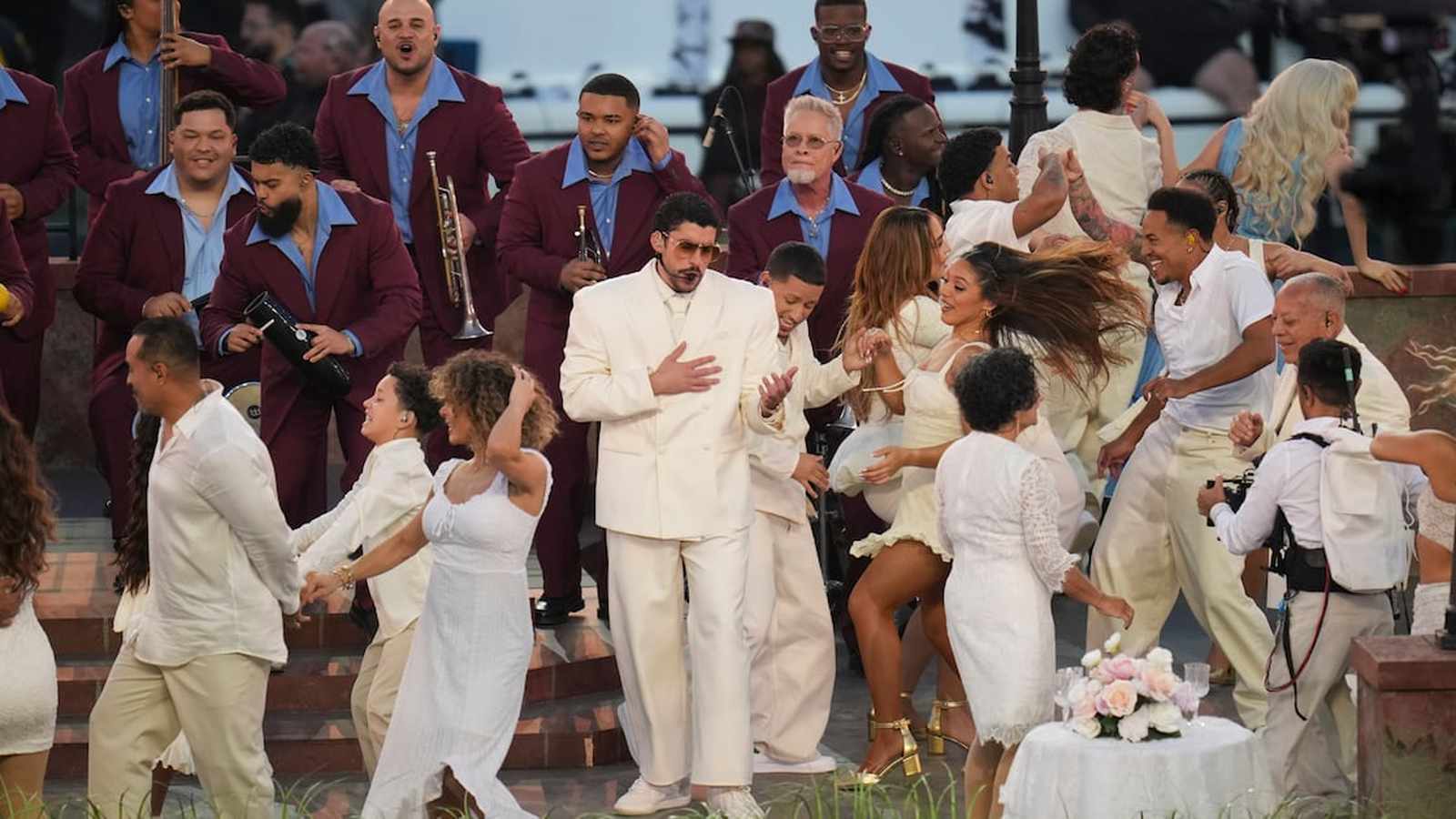
ANTWERP (Azat TV) – Global fashion retailer Zara has demonstrated a pivotal shift in modern fashion marketing, swiftly converting a viral cultural moment into immediate in-store sales by replicating Bad Bunny’s Super Bowl performance outfit. Within hours of the widely viewed event, Zara’s Antwerp flagship store prominently displayed a mannequin dressed head-to-toe in the instantly recognizable white ensemble worn by the superstar, signaling a new, aggressive phase in retail strategy focused on rapid conversion.
This agile response highlights a growing trend where mere brand visibility is no longer the ultimate goal; instead, the emphasis has dramatically shifted to translating fleeting cultural relevance directly into actionable product sales. As reported by FashionUnited, Zara’s merchandising was optimized to allow customers to easily recreate the look, with trousers, shirts, and ties, along with closely aligned alternatives, intuitively grouped for purchase. This strategy transforms a high-profile spectacle into an immediate, tangible retail experience.
The Instant Retail Response to a Viral Moment
The Super Bowl performance by Bad Bunny, which garnered over 128 million streams, became a significant cultural touchstone, generating immense buzz across social media and traditional media alike. His choice of attire, a distinctive white outfit, quickly became a talking point. Zara’s swift action in merchandising this specific look at its flagship location in Antwerp exemplifies a proactive approach to capturing consumer demand at its peak. The in-store display, featuring the full outfit, allowed shoppers to purchase the components with ease, bypassing traditional marketing lead times.
This rapid deployment underscores a strategic move beyond conventional advertising. Instead of relying on campaigns planned months in advance, brands like Zara are now leveraging real-time cultural events to drive immediate commercial engagement. The focus is on ‘commercial readiness’ – the ability to move seamlessly from spectacle to product, ensuring that when consumer attention is captured, the path to purchase is direct and frictionless.
Beyond Visibility: The New Fashion Marketing Imperative
The traditional model of fashion marketing often prioritized brand awareness, logo placement, and aspirational imagery. However, Zara’s approach with the Bad Bunny outfit demonstrates that for leading retailers, visibility is now just the starting point. The true measure of success lies in the ability to convert that visibility into tangible sales, almost instantaneously. This requires an unparalleled level of supply chain agility, inventory management, and in-store execution.
This paradigm shift is not unique to Zara. The intersection of sports and fashion, particularly at global events, has become a fertile ground for this ‘moment as message’ strategy. For instance, at the Winter Olympics in Italy, Oakley unveiled its new AURA collection, reworking eyewear and apparel styles with a color-shift paint treatment. Their rollout centered on performance credibility and the athletes, aligning product innovation directly with the sporting context. While different in execution, both strategies share the core principle: leveraging major events for direct product engagement rather than just brand exposure.
Cultural Moments, Commercial Readiness, and Zara’s Strategy
The seamless integration of cultural relevance with commercial readiness is becoming the hallmark of effective fashion marketing in 2026. Brands are increasingly recognizing that the biggest moments in sports, entertainment, and pop culture offer unparalleled opportunities, but only if they are prepared to meet consumers where their attention lands, with product ready for immediate purchase. This requires a deep understanding of consumer behavior, real-time trend analysis, and a highly responsive operational framework.
Zara, known for its fast-fashion model, is particularly well-suited to capitalize on such rapid-response strategies. Its integrated supply chain allows for quick design, production, and distribution, enabling the brand to react to emerging trends and cultural phenomena with a speed unmatched by many competitors. This incident with Bad Bunny’s Super Bowl outfit is a clear signal that the future of fashion retail will increasingly be defined by such instantaneous conversions, turning fleeting attention into concrete sales.
The immediate in-store merchandising of Bad Bunny’s Super Bowl attire by Zara represents a significant evolution in fashion retail, underscoring how brands are now prioritizing instant commercial conversion over delayed brand-building, effectively transforming viral cultural moments into direct, actionable sales opportunities.