
Quick Read
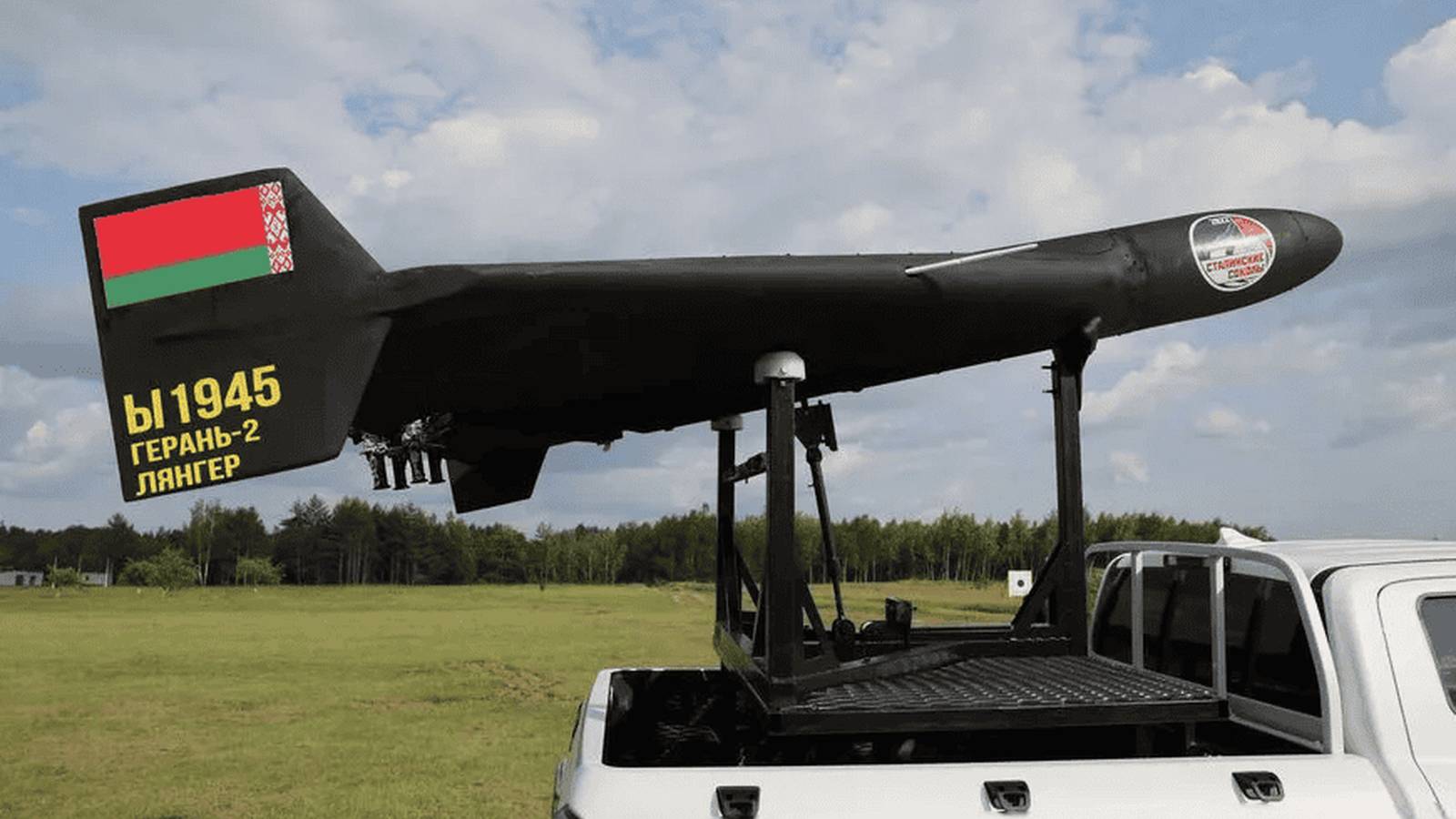
- Russian Shahed drone operators are conducting attacks on Ukraine from Belarusian territory.
- Ukrainian President Volodymyr Zelensky confirmed this during a speech in Vilnius.
- Belarusian airspace is reportedly used by Russian drones to bypass Ukrainian air defense systems.
- Russia also uses Belarus as a testing ground for Oreshnik missiles.
- A new ammunition production plant in Belarus, set for 2026 commissioning, will supply both Belarusian and Russian armies with 152mm artillery shells and 122mm rockets.
VILNIUS (Azat TV) – Ukrainian President Volodymyr Zelensky has confirmed that Russia is actively using Belarusian territory to control Shahed kamikaze drones and maintain vital communications during its ongoing attacks on Ukraine. Speaking in Vilnius, President Zelensky underscored that this operational integration marks a significant escalation in Belarus’s involvement in Moscow’s war effort, posing an increased and more complex danger to Ukraine and the broader region.
Escalating Belarusian Involvement in Drone Operations
President Zelensky explicitly stated that Russian strike drone operators are conducting their operations against Ukraine, including the command and control of Shahed drones, from within Belarusian territory. This arrangement extends to the use of Belarusian infrastructure for critical communications with these drones during their attack trajectories. Previously, reports indicated that Russian drones frequently attempt to circumvent Ukrainian air defense and interception systems by utilizing Belarusian airspace, adding a strategic layer to their operational planning.
This direct operational support from Belarus signifies a marked shift from what might be perceived as passive facilitation to active participation in military aggression. The deployment of command and control elements on Belarusian soil provides Russian forces with tactical advantages, potentially reducing flight times and offering alternative routes for bypassing Ukrainian defenses.
Zelensky’s Stark Warning on Dependence
In his address, President Zelensky did not shy away from criticizing Belarusian President Alexander Lukashenko’s continued alignment with Moscow. “So far, Lukashenko has more rights than the people of Belarus, unfortunately,” Zelensky stated, reflecting on the missed opportunity in 2020 for political change in Belarus. He expressed certainty that another chance would arise but emphasized the current, grave consequences of Belarus’s deepening dependence on Moscow.
“We all feel how much more difficult, how much more expensive, and how much more dangerous everything has become because of Belarus’s dependence on Moscow — a dependence that is not diminishing,” the Ukrainian president warned. He further elaborated that Russia leverages Belarus not only for drone operations but also as a testing ground to menace Europe and the world with advanced weaponry, such as Oreshnik missiles. Furthermore, Belarusian industry actively supports Russia’s war machine, with trade ties facilitating Moscow’s efforts to circumvent international sanctions.
Industrial Support for Russia’s War Effort
The extent of Belarus’s commitment to Russia’s military objectives is further evidenced by its burgeoning defense industrial cooperation. As reported in late December 2025, construction of a dedicated ammunition production plant has been underway in Belarus since 2023. This facility, slated for commissioning in 2026, is designed to meet the significant needs of both the Belarusian and Russian armies.
The plant’s expected output includes crucial munition types, specifically 152 mm artillery ammunition and 122 mm unguided rockets. These calibers are standard for Russian and Soviet-era artillery systems widely employed in the conflict in Ukraine. The operationalization of such a plant would provide Russia with a significant, reliable, and geographically proximate source of critical ammunition, potentially alleviating some of the logistical and supply chain pressures imposed by the ongoing conflict and international sanctions.
The confirmed use of Belarusian territory for direct Russian drone operations, coupled with its role as a missile testing ground and a hub for military industrial production, underscores a profound and increasingly formalized integration of Belarus into Russia’s strategic military apparatus. This transformation from a logistical staging area to an active operational and manufacturing partner deepens Belarus’s complicity in the conflict and significantly amplifies the security challenges facing Ukraine and the wider European continent.