
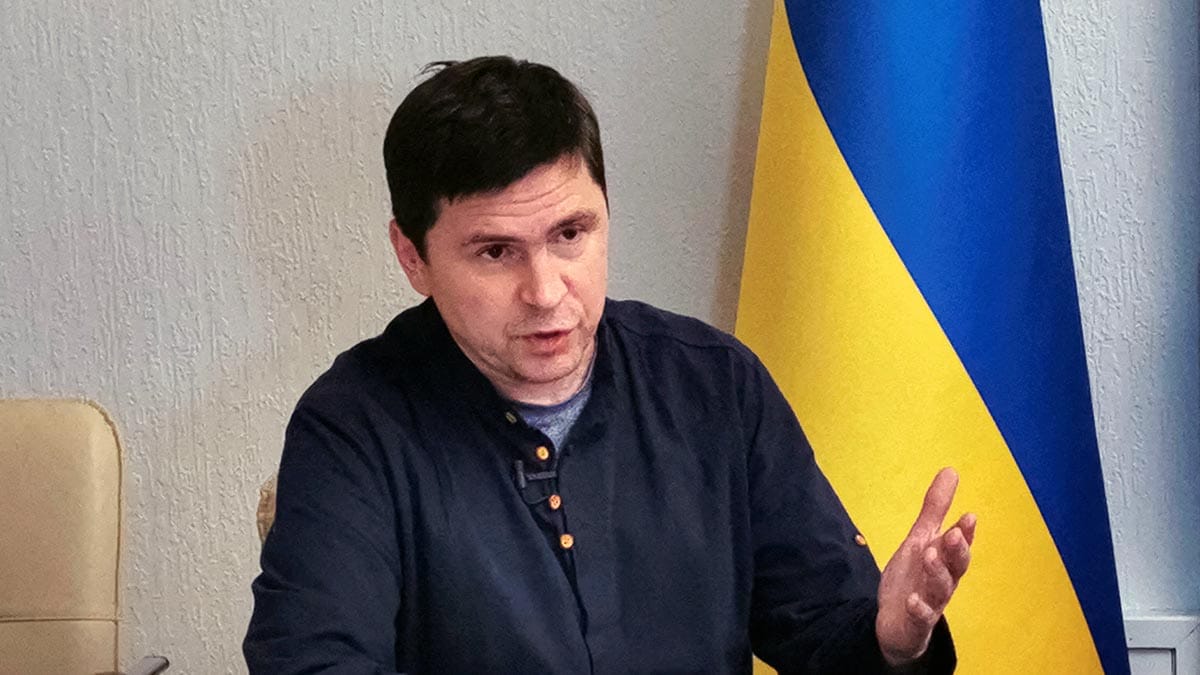
Senior Ukrainian presidential adviser Mykhailo Podolyak stated in an interview with FRANCE 24 that he expects peace talks to commence “soon” between Ukrainian President Volodymyr Zelensky, US President Donald Trump, and Russian President Vladimir Putin. Podolyak indicated Ukraine’s readiness for a “constructive discussion,” emphasizing Zelensky’s “pragmatic” approach. Despite accusing Russia of “not being interested” in genuine negotiations or a ceasefire, Podolyak expressed confidence that “we can find the instrument of pressure on Russia.” This announcement sheds light on diplomatic efforts to resolve the Ukrainian crisis and directs international attention to the prospects of potential negotiations.
Key Points of Podolyak’s Announcement: Why is Ukraine hopeful about talks now?
The key highlight of Podolyak’s statement is Ukraine’s expressed hope for peace talks, even amid ongoing military operations. He underscored Zelensky’s “pragmatism,” suggesting Ukraine’s willingness to engage in constructive dialogue to resolve the conflict diplomatically. This announcement could be interpreted as an initiative from Ukraine to advance the negotiation process with the support of international partners. One potential reason for initiating talks now could be the current stalemate in military actions, coupled with uncertainties surrounding the continuity of Western military aid. Negotiations might be seen as a way to seek a resolution to the existing situation, especially considering the potential negative consequences of a prolonged conflict.
The Trump Factor: How could the US President’s involvement alter the negotiation process?
The potential participation of Donald Trump adds a layer of intrigue to the prospective negotiations. Trump, known for his unconventional diplomatic approaches, could become a factor that reshapes the dynamics of the talks. His possible involvement might introduce new ideas and approaches to the negotiation table that have not been considered before. Simultaneously, Trump’s unpredictable policies and his past stances towards Russia raise questions about the US position in these negotiations. Regardless, Trump’s participation, should it materialize, would undoubtedly amplify the significance and international interest in these talks.
Russian Skepticism: Why is Podolyak doubtful of Russia’s genuine willingness to negotiate?
Despite announcing the possibility of talks, Podolyak voiced skepticism regarding Russia’s genuine desire to negotiate. He asserted that Russia is “not interested” in a peaceful resolution, indicating a deep-seated mistrust from Kyiv towards Moscow. This skepticism is rooted in Russia’s past actions and the continuation of military operations in Ukraine. Podolyak’s doubt, however, did not preclude his hope that “instruments of pressure on Russia can be found.” This implies that Ukraine is relying on international pressure, possibly from the US, to compel Russia to engage constructively in negotiations.
The Issue of Territorial Concessions: How does Ukraine intend to safeguard its national interests?
During the interview, Podolyak avoided directly answering whether Ukraine was prepared to make territorial concessions for peace. Instead, he emphasized the importance of “correct pressure instruments” based on “international law.” This suggests Ukraine’s intention to maintain a principled stance in negotiations, aiming for a just resolution that respects its territorial integrity and sovereignty. The topic of territorial concessions is highly sensitive for Ukraine, and the government will likely try to avoid such commitments at the initial stages of any negotiation process. Ukraine will probably focus on reaching an agreement based on international law and principles of justice.
Europe’s Role: Why does Ukraine emphasize the European Union’s involvement?
Podolyak specifically highlighted the importance of Europe’s presence in ending the war on the European continent. “It is impossible to finish war on the European continent without the presence of Europe,” he declared. This underscores Ukraine’s desire to ensure the full involvement of the European Union in the negotiation process. Europe, being Ukraine’s neighbor and key economic and political partner, has a crucial role to play in establishing peace. The EU’s involvement could provide legitimacy and stability to any potential agreement, as well as guarantee its implementation. Securing European support for post-war reconstruction and European integration is also vital for Ukraine.
Prospects of a Ceasefire: How realistic is a truce in aerial and maritime strikes?
Podolyak deemed a potential truce in aerial and maritime strikes in the near future as a “very realistic scenario.” This could be seen as one of the initial steps in a negotiation process. A ceasefire, even in a limited format, could de-escalate tensions and create a more favorable environment for further talks. Cessation of aerial and maritime strikes might be a comparatively easier step to implement compared to a complete halt of ground military operations. If the parties can agree on this issue, it could serve as a first confidence-building measure and pave the way for more comprehensive peace negotiations.
Impact of Frozen US Aid: How does the suspension of US military aid affect negotiating positions?
Podolyak also addressed the potential implications of the suspension of US military aid, noting that Ukraine is assessing the consequences of this situation. The freezing of US military aid undoubtedly complicates Ukraine’s position in the conflict and could impact its negotiating leverage. Reduced aid may create pressure on Ukraine to seek diplomatic solutions to the conflict, as prospects for military success become less certain. At the same time, Podolyak emphasized that Ukraine is not losing its resolve and will continue to defend its interests based on international law. In this context, negotiations are seen as a means to stabilize the situation and prevent potentially adverse military developments.
Trump’s Criticism of Zelensky: How is Kyiv perceiving these accusations?
Podolyak commented on Donald Trump’s claim that Zelensky is a “dictator,” urging the US president to instead focus on strengthening the position of Europe and Ukraine. Trump’s criticism, voiced on the eve of potential negotiations, could be seen as pressure on Ukraine to adopt a more conciliatory stance. However, Podolyak’s response indicates Ukraine’s willingness to defend its position and resist external pressure. Instead, Ukraine is attempting to redirect Trump’s attention towards broader goals, such as strengthening the security of Europe and Ukraine, which aligns with US national interests as well. Ukraine’s rejection of such accusations and its call for constructive dialogue demonstrates Kyiv’s aspiration to maintain its dignity and agency in international relations.