
Quick Read
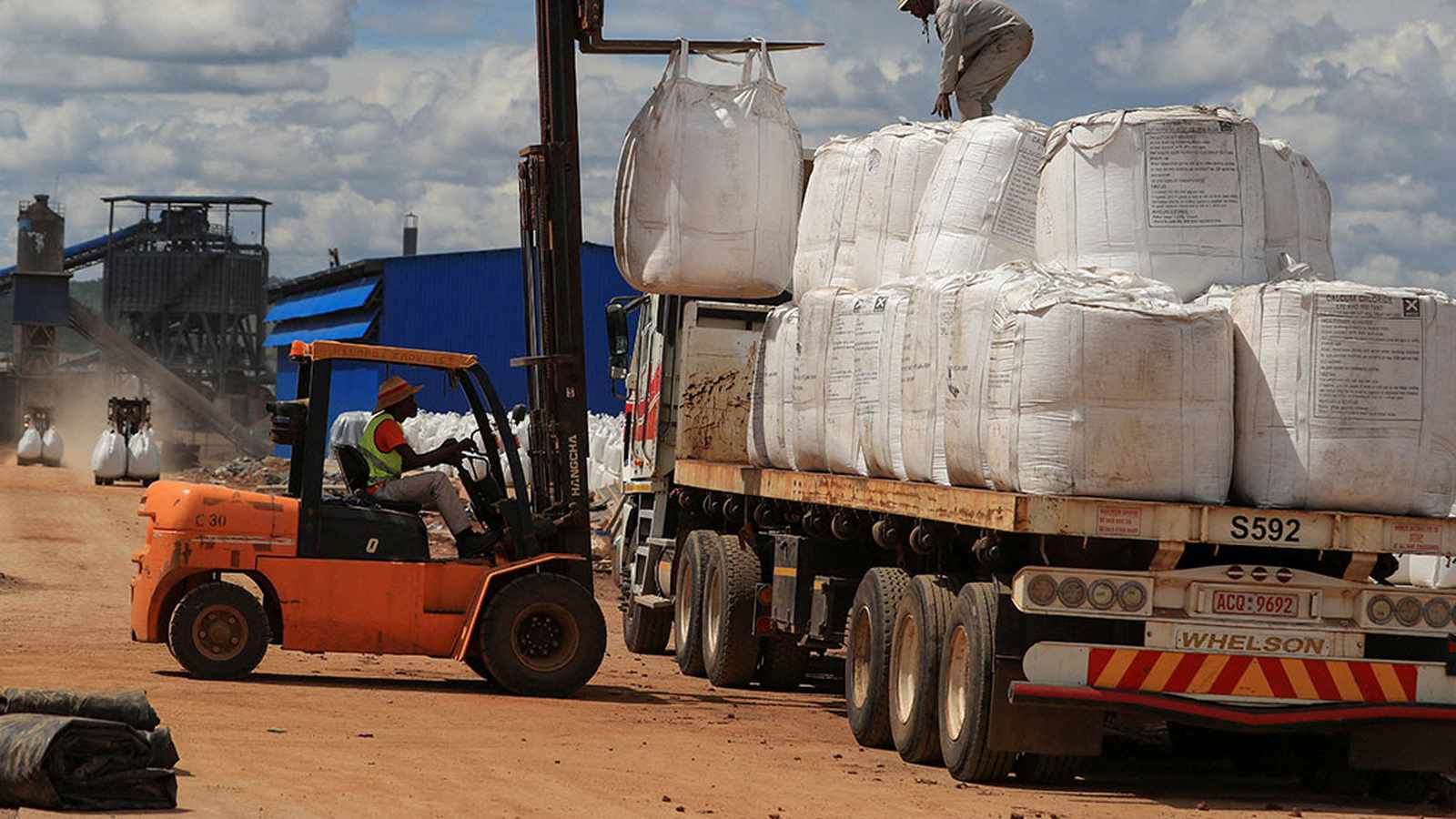
- Zimbabwe has enacted an immediate ban on all raw mineral and lithium concentrate exports to mandate domestic processing.
- The policy forces Chinese mining firms to choose between localized technology transfer and losing access to key lithium reserves.
- Major private investments, including an 800-acre Tech City and a $1 billion urban development in Bulawayo, are accelerating the nation’s industrialization strategy.
HARARE (Azat TV) – Zimbabwe has implemented an immediate ban on the export of all raw minerals and lithium concentrates, a bold policy shift that directly challenges the country’s traditional extraction-led economic model. The move, which gained momentum in February 2026, is designed to force Chinese mining firms and other international operators to pivot toward domestic refining and value-added industrialization.
Leveraging National Mineral Wealth
With Africa’s largest lithium reserves, Zimbabwe’s decision to tighten control over its resources is already causing friction in its primary trade relationship. China, which accounts for over 90% of Zimbabwe’s mineral exports, is now facing pressure to invest in local technology transfer and processing facilities. Analysts suggest this strategy marks a departure from historical practices, signaling a broader trend across the continent where resource-rich nations are prioritizing domestic security and community benefit over simple raw material extraction.
The government’s directive, confirmed by Minister of Mines and Mining Development Polite Kambamura, aims to curb systemic leakages and ensure that the country’s 14.3% GDP contribution from mining translates into sustainable national growth. While the state pushes for industrialization, local communities—such as those in Shurugwi—are concurrently petitioning Parliament to hold mining operations accountable for environmental degradation, including heavy metal contamination and air pollution.
Urban Development and Industrial Hubs
As the nation redefines its trade policies, it is also aggressively courting international capital through massive infrastructure projects. Strive Masiyiwa, Zimbabwe’s wealthiest entrepreneur, is spearheading the development of an 800-acre Tech City near Harare. Managed by Econet InfraCo—recently listed on the Victoria Falls Stock Exchange—the project aims to host 300 businesses and create 20,000 jobs by offering a self-sustaining environment for global investors.
Complementing these industrial efforts, the hospitality sector is seeing renewed interest in large-scale urban development. Dubai-based LEVA Hotels has finalized a management agreement for a four-star property within the $1 billion Kings City project in Bulawayo. This 2,100-hectare development is positioned as a next-generation hub intended to anchor Zimbabwe’s industrial and commercial revitalization, serving as a gateway for international business and tourism.
The Shift Toward Transactional Partnerships
The convergence of strict mineral export regulations and the proliferation of self-contained industrial hubs reflects a coordinated effort to move Zimbabwe up the global value chain. The success of this transition depends on whether international investors, particularly those from China, will accept the government’s new terms regarding downstream investment. By linking access to minerals with mandatory local infrastructure and technology development, Zimbabwe is attempting to transition from a supplier of raw materials to a hub for high-tech manufacturing and regional services.
The aggressive push for domestic processing, coupled with the rapid development of specialized economic zones, indicates that Zimbabwe is successfully leveraging its critical mineral reserves to force a structural reset in its foreign investment landscape, effectively trading raw access for mandatory industrial infrastructure.