
Quick Read
- Adobe launched Firefly Image Model 4 and Image Model 4 Ultra for improved AI-generated images.
- The redesigned Firefly web app integrates Adobe and third-party AI models.
- Firefly Video Model now generates 1080p video clips from text prompts.
- New Firefly Boards feature enables collaborative ideation and moodboarding.
- APIs for text-to-image, video, and avatars are now generally available.
Adobe Expands Firefly AI Models and Introduces Redesigned Web App
Adobe has unveiled significant updates to its Firefly family of artificial intelligence (AI) models, alongside a redesigned web app that consolidates its own AI tools and select third-party models. These advancements aim to enhance creative workflows for professionals and hobbyists alike. Below, we delve into the key updates and features.
Firefly Image Model 4 and Image Model 4 Ultra
The centerpiece of Adobe’s announcement is the introduction of Firefly Image Model 4, which offers improved quality, speed, and control over generated images. Users can now adjust intricate details such as structure, style, camera angles, and zoom levels. Notably, the model supports resolutions up to 2K, catering to high-quality content demands.
A more advanced version, Image Model 4 Ultra, is also available. This model excels at rendering complex scenes with fine details, making it ideal for professionals requiring precision in their visual projects. Alexandru Costin, Adobe’s Vice President of Generative AI, highlighted that these models were trained using higher computational power, enabling them to produce more detailed and realistic outputs.
Firefly Video Model: Text-to-Video Capabilities
Another major update is the general availability of the Firefly Video Model, which allows users to generate 1080p video clips from text prompts or reference images. The model includes tools for customizing motion, camera settings, and start and end frames, providing users with greater creative control. Atmospheric elements and motion design can also be tailored to suit specific needs.
Firefly Vector Model for Editable Graphics
Adobe has introduced the Firefly Vector Model, which focuses on creating vector-based artwork. This feature enables users to generate editable logos, icons, patterns, and product packaging directly from text prompts. It’s a significant addition for graphic designers looking to streamline their workflows.
Redesigned Firefly Web App
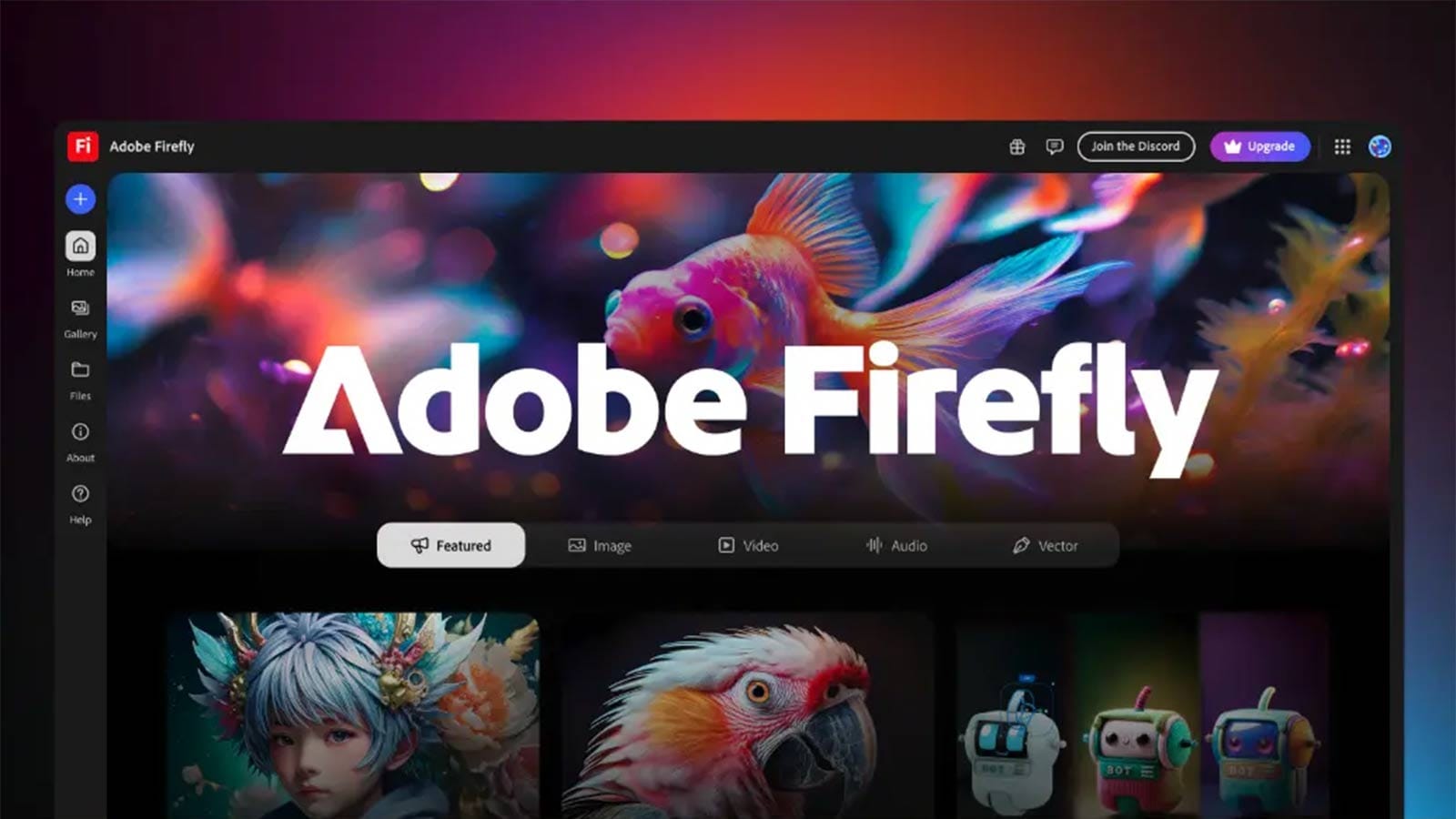
The revamped Firefly web app consolidates all of Adobe’s AI models into a single platform, alongside third-party tools from OpenAI, Google, and Flux. Users can seamlessly switch between models, and all generated content includes content credentials to ensure transparency and attribution. Adobe hinted at the possibility of integrating more third-party models in the future.
Additionally, the web app now serves as a hub for Adobe’s new Firefly Boards feature, a digital canvas designed for ideation and collaboration. Users can generate, import, and remix images, making it a versatile tool for moodboarding and brainstorming sessions.
APIs and Integration Across Adobe’s Ecosystem
Adobe is expanding its Firefly Services collection with APIs for text-to-image, text-to-video, and avatar generation. These APIs are now generally available, allowing developers to integrate Firefly’s capabilities into their own applications. The company also announced the beta release of a Text-to-Video API, further broadening its offerings for developers and content creators.
Moreover, Adobe plans to integrate these new models and features into its Creative Cloud suite, including Photoshop, Illustrator, Premiere Pro, and Express. While no specific timeline was provided, this integration will likely enhance the functionality of these widely used tools.
Content Authenticity and Ethical AI
In line with its commitment to ethical AI, Adobe is testing a web app called Adobe Content Authenticity. This tool allows users to attach credentials to their work, indicating ownership and attribution through metadata. Users can also specify whether their content can be used for training AI models, addressing growing concerns about data privacy and intellectual property.
Adobe’s latest updates to Firefly demonstrate its dedication to pushing the boundaries of AI-driven creativity. By combining advanced models, a user-friendly web app, and ethical considerations, the company is setting a new standard for AI in the creative industry. As these tools become more accessible, they are likely to redefine how professionals and hobbyists approach content creation.