


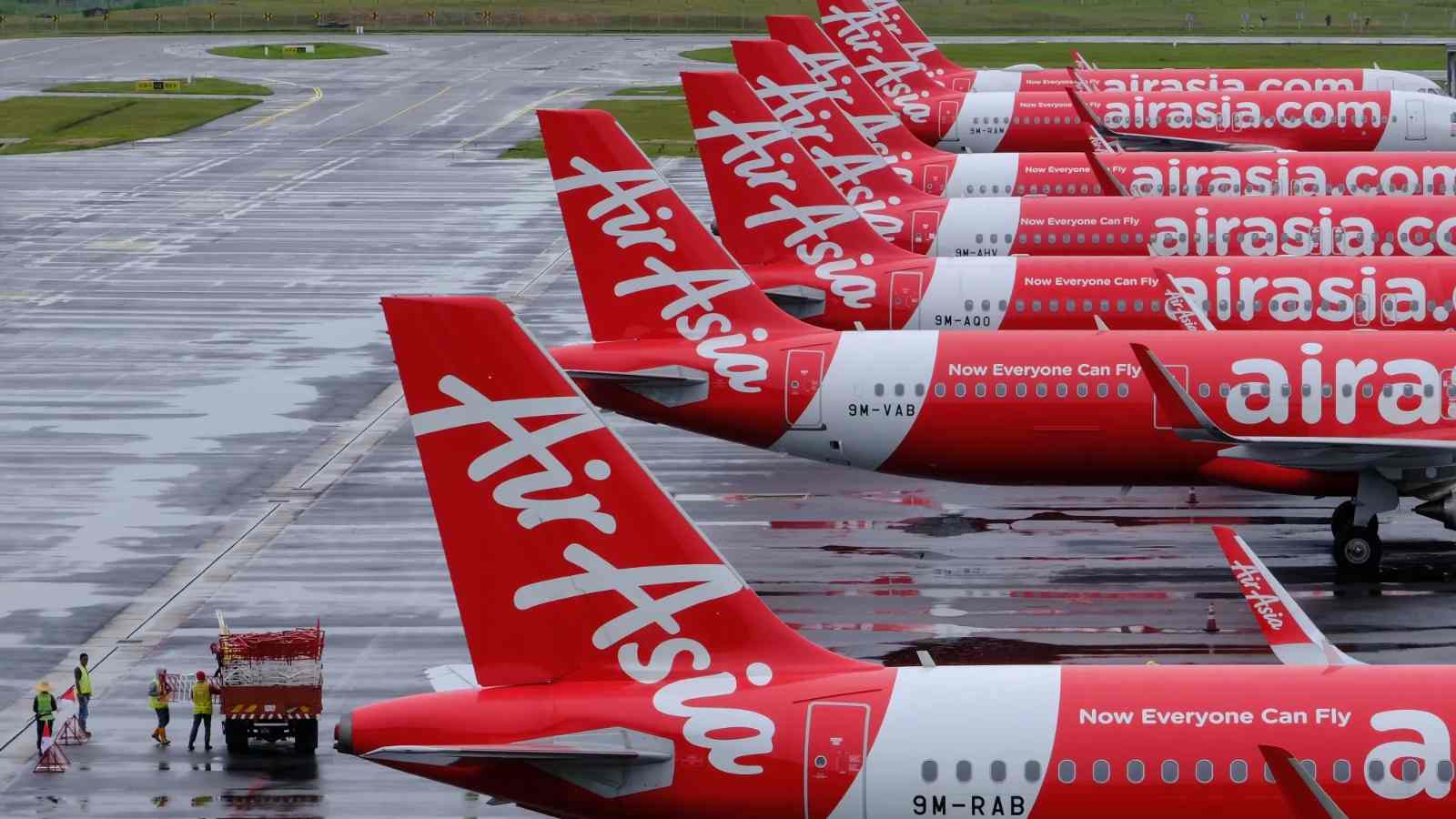
YEREVAN (Azat TV) – AirAsia’s ongoing efforts to streamline its flight schedule coincided with extensive flight disruptions across numerous Asian hubs on February 22, 2026, leaving thousands of passengers stranded and impacting operations for the low-cost carrier and its affiliates. The widespread operational strain, which included 1,721 delays and 83 cancellations, saw AirAsia and Thai AirAsia registering hundreds of delays across key airports in Southeast Asia, reflecting the challenges inherent in optimizing complex flight networks.
Data compiled from various airports and FlightAware revealed that Kuala Lumpur International Airport experienced the highest volume of delays, with 309 incidents, significantly affecting AirAsia. Bangkok’s Don Mueang International also reported 273 delays, largely driven by Thai AirAsia’s operations, while other major hubs like Singapore Changi, Jakarta Soekarno-Hatta, and Manila International faced similar widespread disruptions.
AirAsia Operations Face Significant Delays
On February 22, AirAsia flights alone accounted for 161 delays across the region, with its affiliate, Thai AirAsia, registering 200 delays at Bangkok’s Don Mueang. This made AirAsia and its related brands among the most affected airlines during the operational slowdown. The impact was felt across a broad geographical area, encompassing Indonesia, China, India, Malaysia, Thailand, Singapore, the Philippines, and the United Arab Emirates.
Key airports such as Kuala Lumpur, Bangkok, Singapore, Jakarta, and Manila were particularly hard-hit, showing a pattern of congestion-driven delays, especially in high-density low-cost carrier operations. While delays were the predominant issue, with 1,721 recorded incidents, 83 cancellations also contributed to passenger inconvenience, primarily at regional Chinese airports.
Philippines Air Travel Surges Amidst Regional Strain
The disruptions occurred even as the broader aviation sector in the Philippines, a significant market for AirAsia, continued its robust recovery. According to the Civil Aeronautics Board (CAB), the Philippines’ air passenger volume soared to a new record of 62.34 million in 2025, surpassing pre-pandemic levels. This marked a four percent increase from 2024 and exceeded the previous high of 60.06 million set in 2019.
In this burgeoning market, AirAsia Philippines played a notable role, carrying 1.03 million international passengers and 4.6 million domestic passengers in 2025. While it ranked third among major carriers in the Philippines behind Philippine Airlines and Cebu Pacific, its substantial passenger volume underscores its importance in the regional travel landscape. The overall surge in demand, particularly for domestic travel which hit a record 33.24 million passengers in 2025, highlights the vibrant but increasingly strained operational environment for airlines.
Government Initiatives and Future Outlook
Despite the recent operational challenges, the Philippine government is actively pursuing measures to sustain growth and alleviate flying costs, which could further stimulate demand. Proposals to scrap travel tax on passengers and efforts to reduce passenger service charges at government-managed airports are currently being considered. Additionally, there is a focus on extending runways at regional airports to accommodate larger jets, aiming to enhance domestic connectivity.
The CAB also announced that fuel surcharges would remain steady for March, a welcome development for passengers as the summer season approaches. These initiatives indicate a commitment to fostering a favorable environment for air travel, even as airlines like AirAsia navigate the complexities of optimizing their networks to meet escalating demand.
The confluence of AirAsia’s strategic operational adjustments and the broader regional surge in air travel demand suggests that such streamlining efforts, while aimed at long-term efficiency, may continue to present short-term logistical hurdles for both carriers and passengers in the dynamic Asian aviation market.