
Quick Read
- Former U.S. Vice President Al Gore heckled Commerce Secretary Howard Lutnick at a private dinner in Davos.
- Lutnick’s speech criticized European energy policies and influence, sparking widespread jeering and walkouts.
- European Central Bank President Christine Lagarde was among those who left the event early.
- The incident occurred amidst heightened U.S.-European tensions over President Trump’s “America First” policies and his proposal to acquire Greenland.
- Al Gore also publicly responded to President Trump’s demands for U.S. control of Greenland.
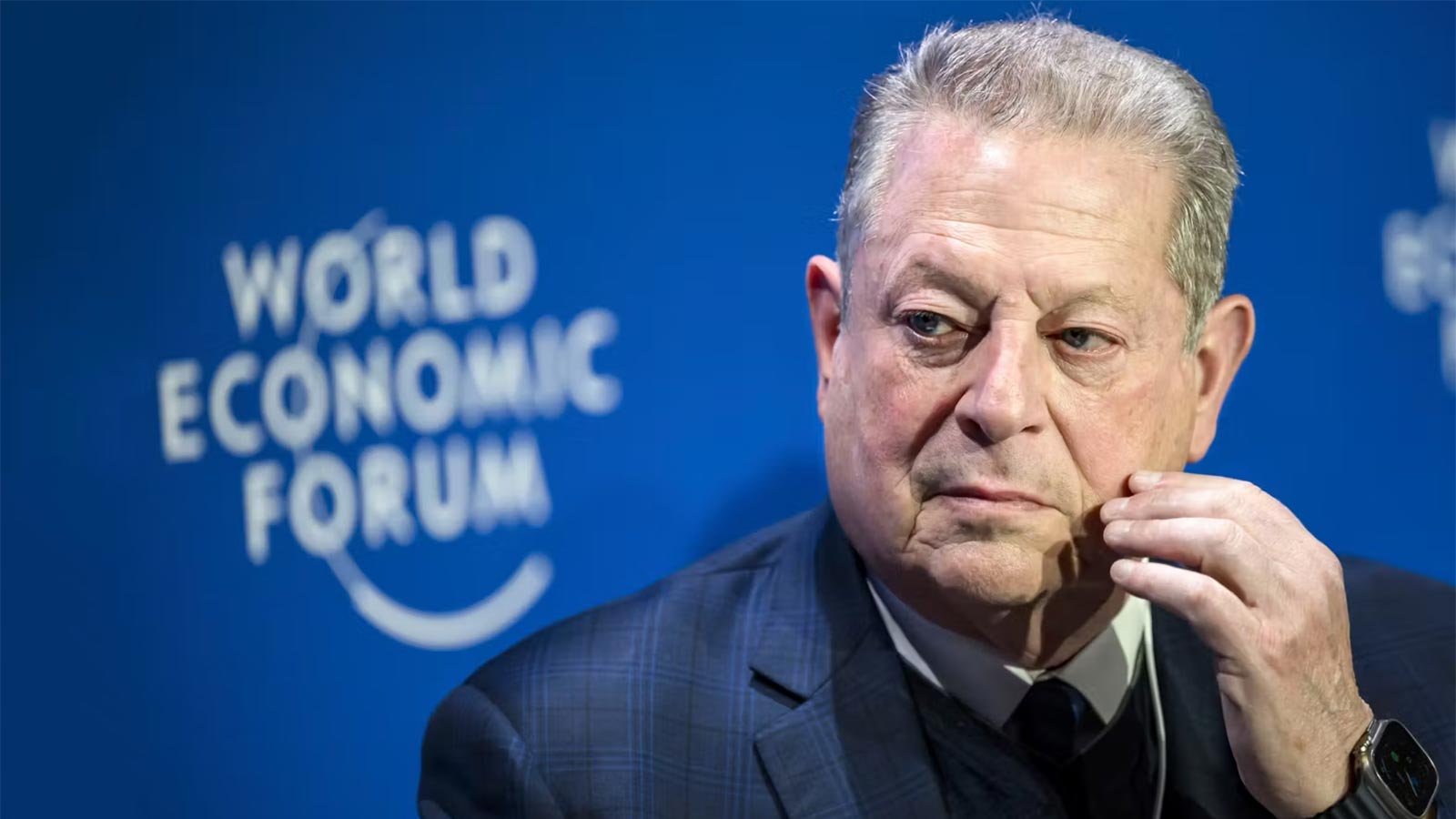
Former U.S. Vice President Al Gore openly challenged Commerce Secretary Howard Lutnick at a high-profile dinner during the World Economic Forum in Davos, Switzerland, by heckling and booing the Trump administration official. The dramatic incident, which saw other dignitaries walk out and prompted the early conclusion of the event, underscored the deep and increasingly public rift between the United States and its European allies, particularly concerning President Trump’s ‘America First’ policies, energy strategy, and the contentious proposal for the U.S. to acquire Greenland.
The confrontation unfolded on a Tuesday evening at an invite-only dinner hosted by BlackRock CEO Larry Fink, who also served as interim co-chair of the World Economic Forum. Lutnick, who was the last speaker of the night, used his platform to deliver a combative address that reportedly criticized Europe’s declining influence and its energy policies, which he had earlier described as overly reliant on China. His remarks were met with a mixture of ‘widespread jeering’ and a ‘dismal atmosphere,’ according to attendees cited by the Financial Times and The Wall Street Journal.
Amidst Lutnick’s speech, the atmosphere in the room grew increasingly tense. Sources reported that multiple high-profile diners began to heckle the Commerce Secretary. Among the most prominent figures to voice their disapproval was former Vice President Al Gore, who was observed booing Lutnick. The dissent was not limited to verbal expressions; Christine Lagarde, President of the European Central Bank, was reported to be among several individuals who walked out of the dinner in protest. The escalating chaos ultimately led Fink to appeal for calm and, according to a Reuters source, to call off the event before desserts could be served. A spokesperson for Lutnick, however, disputed the extent of the walkout, claiming there was no mass exodus and that Gore was the sole individual who booed, speaking only for three minutes.
The highly unusual public display of disapproval came against a backdrop of already strained U.S.-European relations. Earlier that day, Lutnick had published an op-ed in the Financial Times that adopted an unapologetically confrontational tone, mirroring President Trump’s own rhetoric. In the piece, Lutnick declared, “We’re not going to Davos to uphold the status quo. We’re going to confront it head-on,” and asserted, “With President Trump, capitalism has a new sheriff in town.” He further lamented that “For far too long, the fate of the global economy has been decided by an international establishment who took America’s economic power and gave it to the rest of the world.” These statements set a contentious stage for his Davos appearance.
President Trump’s visit to Davos coincided with these tensions, following a Tuesday amplification of a social media post suggesting NATO, rather than Russia or China, was the primary adversary of the U.S. Trump arrived in the Swiss mountain town on Wednesday, expected to elaborate on his grievances in a keynote speech. Before departing for Switzerland, when asked about potentially raising the topic of Greenland, he cryptically responded, “You’ll find out.” This remark underscored the ongoing controversy surrounding his administration’s interest in acquiring Greenland from Denmark, a NATO ally, a proposal that has drawn international condemnation and further alienated allies.
French President Emmanuel Macron has been a vocal critic of Trump’s rhetoric, delivering a sharp rebuke at the World Economic Forum on Tuesday. Sporting Top Gun-style sunglasses, Macron urged leaders, “Let’s not be divided, let’s not accept the global order which will be decided by those who claim to have the bigger voice, or the bigger teeth, or the bigger… I don’t know.” He advocated for coordination and dismissed “crazy ideas,” taking a clear swipe at what he termed “bullies” on the world stage. “We do prefer respect to bullies. We do prefer science to politicism. And we prefer the rule of law to brutality,” Macron stated, clearly articulating a contrasting vision for global leadership and cooperation.
Al Gore’s involvement in the Davos incident extends beyond the dinner confrontation. In an interview with CNN’s Kaitlan Collins, the former Vice President directly responded to President Trump’s continued demands for U.S. control of Greenland, a topic Trump revisited during his own speech at the World Economic Forum. While Trump reportedly ruled out using force to acquire the territory, Gore’s public comments further solidified his stance against the administration’s controversial foreign policy initiatives, particularly those perceived as disruptive to established international norms and alliances. Gore, a long-standing advocate for environmental protection and international cooperation, has frequently been at odds with the current administration’s approach to global issues.
The World Economic Forum traditionally serves as a platform for global leaders, policymakers, and business executives to discuss pressing international issues and foster cooperation. However, the events in Davos this week have instead highlighted profound divisions and a willingness of prominent figures to openly challenge the U.S. administration’s policies on a global stage. The public nature of the heckling, walkouts, and strong rebukes from European leaders signal a significant departure from the diplomatic courtesies often observed at such high-level gatherings, reflecting the deep ideological chasm that has emerged in international relations.
The incident at Davos, marked by Al Gore’s direct challenge to a Trump official, underscores a growing trend of open defiance and ideological conflict in international diplomacy. It signals that traditional diplomatic norms are increasingly being set aside in favor of direct confrontation, as global leaders and former officials feel compelled to voice strong opposition to policies they perceive as destabilizing or contrary to shared values.