


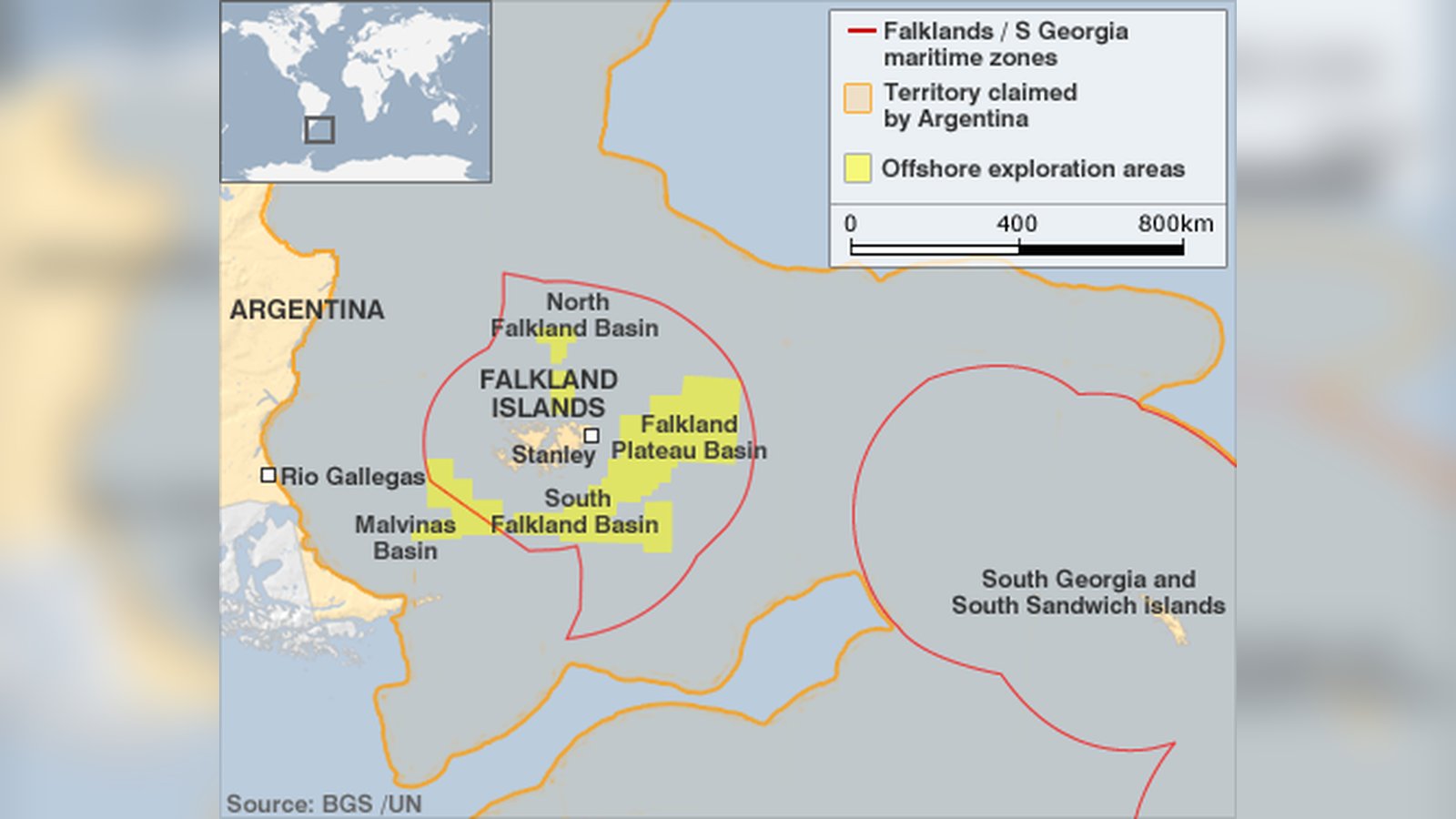
Argentine President Javier Milei has issued a two-week ultimatum to the United Kingdom, demanding an immediate halt to oil exploration work off the coast of the Falkland Islands or face international legal proceedings (The Independent). The escalation centers on the Sea Lion offshore oilfield, a multi-decade venture situated approximately 220 kilometers north of the archipelago (Deutsche Welle).
Writing on social media, Mr. Milei stated that he has instructed Argentina’s Foreign Ministry and legal teams to initiate international arbitration if the UK and operating firms do not abandon the project within the stipulated fortnight (The Independent). He characterized the development as the “illegal plundering of our resources” (The Independent), marking a sharp intensification of Buenos Aires’ historic sovereignty campaign over the islands, which Argentina refers to as the Malvinas (Deutsche Welle).
The Sea Lion Project and Corporate Stakes
The Sea Lion field represents a significant economic venture for the Falkland Islands, with production projected to commence in March 2028 and span over three decades (Oilprice.com). The project is being advanced as a joint initiative between Israel’s Navitas Petroleum and Britain’s Rockhopper Exploration (Deutsche Welle).
Earlier this year, the partner companies reached a final investment decision, securing all necessary funding and regulatory approvals for full-scale execution (Oilprice.com). In response to Buenos Aires’ pressure, both companies have maintained that they operate under valid exploration and exploitation licenses officially issued by the Falkland Islands authorities (The Independent, Al Jazeera). Meanwhile, the British government has reiterated its commitment to supporting businesses operating in the territory and defending the islanders’ right to develop local natural resources (Deutsche Welle, Al Jazeera).
Diplomatic Fronts and Legal Grounds
The ultimatum follows a high-profile address by Mr. Milei at the United Nations General Assembly in New York, where he criticized the international organization for failing to advance Argentina’s sovereignty claims (The Independent). Arguing that the UN had chosen to look the other way, the Argentine leader asserted that his administration would pursue unilateral judicial remedies (The Independent).
Buenos Aires contends that British authorization of offshore drilling violates United Nations resolutions urging both nations to refrain from unilateral acts while sovereignty remains contested (Deutsche Welle). If the deadline passes without compliance, Argentina plans to bring the dispute before the International Tribunal for the Law of the Sea, an independent judicial body based in Hamburg operating under UN convention guidelines (The Independent, Al Jazeera).
Simultaneously, the Argentine government has submitted legislative proposals to Congress seeking prison sentences of up to 20 years for unauthorized resource extraction around the islands, alongside broader criminal investigations targeting dozens of corporate executives (Deutsche Welle).
Geopolitical Context and Local Positions
The dispute builds upon decades of tension rooted in the 1833 British establishment of control and the 1982 Falklands War, a 70-day conflict that resulted in the deaths of 655 Argentine personnel, 255 British service members, and three islanders (The Independent, Deutsche Welle). London maintains that the wishes of local residents remain paramount; in a 2013 referendum, approximately 99.8 percent of voters opted to remain a British Overseas Territory with a turnout exceeding 92 percent (Deutsche Welle, Al Jazeera).
Mr. Milei, however, has dismissed the islanders’ self-determination referendum, arguing that the population was implanted by an occupying power (The Independent). The diplomatic atmosphere has been further charged by recent discussions between British officials and Washington, following remarks from U.S. President Donald Trump indicating a potential review of American neutrality regarding the sovereignty dispute (The Independent, Al Jazeera). As the two-week deadline advances, legal teams in London and Buenos Aires are preparing for potential maritime court battles.