
Quick Read
- Armenian culture has never been an isolated system.
- It remains connected to historical lands, memory, and symbols.
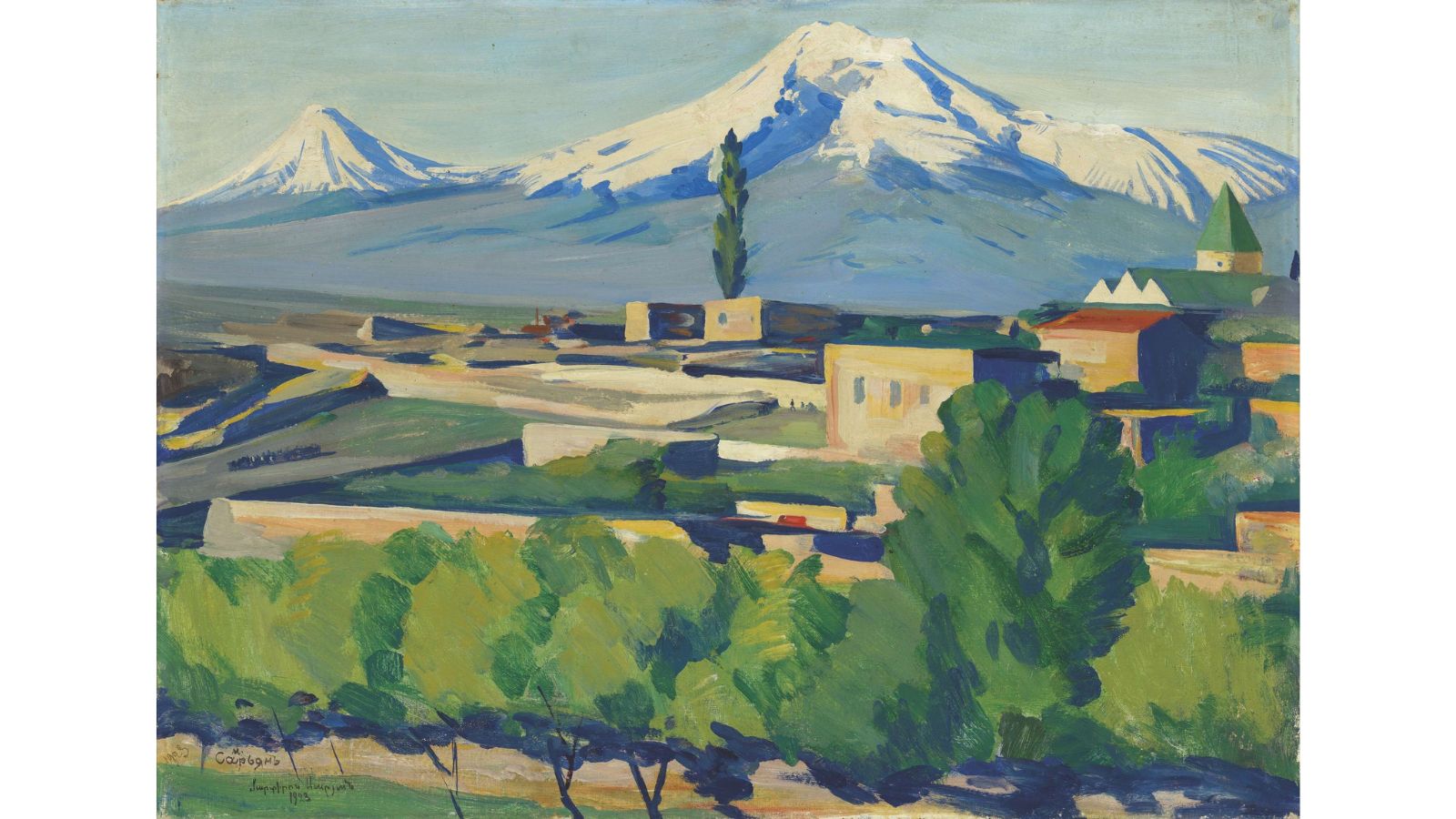
- Mount Ararat stands as a central symbol in Armenian consciousness.
- The cultural landscape is a living dialogue between past and present.
Armenian culture, the article asserts, has never existed as a closed, self-contained system cut off from its own history. Rather, it has continually braided the land it calls home with a living memory that traverses centuries and a spectrum of symbols that confer meaning across generations. In this framing, culture is not a static archive but a dynamic network—from the grain of the countryside to the cadence of urban speech; from the ruins and churches that mark historical geography to the contemporary works that reinterpret those marks for new audiences. The argument undertakes to show that the Armenian cultural project is built on an ongoing dialogue: with geography, with memory, with the signs that make sense of both.
At the symbolic center of this discourse stands Mount Ararat, the white peak that anchors the collective imagination. The title evokes a call to move forward while acknowledging that no peak can serve as a solitary emblem for a people whose identity has been molded by upheaval, relocation, and renewal. The text treats Ararat not merely as a backdrop but as a reference point around which memory orients itself, guiding conversations about what it means to belong to a homeland whose borders have shifted across centuries.
Historically, Armenian life has been inseparable from the memory of lands and from the symbols associated with them. The article notes that culture thrives through tightly knit ties to historically layered space, to the memories carried in stories and songs, and to the shared signs that survive through upheaval. In this sense, cultural vitality arises not from isolation but from the tension between memory and change, continuity and adaptation. The discussion proposes that the endurance of Armenian culture is a result of its capacity to translate ancient references into modes of living that resonate in the present.
Language, ritual, music, and craft function as carriers of this complex relationship. A culture that remains deeply aware of its past can translate that awareness into practice—whether in schools that teach classical forms of language, in religious and community spaces that preserve liturgical traditions, or in contemporary works that reinterpret motifs for new audiences. The article suggests that such practices keep history accessible, enabling younger generations and curious outsiders alike to participate in an ongoing story that feels both intimate and global at once.
Global connections are part of this picture, even as the homeland remains a touchstone. The Armenian cultural sphere extends beyond national borders through institutions, exhibitions, and creative collaborations that carry memory beyond geography. The article frames these links not as outside interference but as essential threads in a living tapestry, allowing symbols to travel, be reinterpreted, and acquire new resonance without losing their roots. In this sense, Armenian culture is imagined not as a relic of the past but as a continuous project in dialogue with the world.
To international readers, the argument offers two practical lessons. First, it invites engagement with cultural life that does not pretend to erase the past; second, it emphasizes the value of memory and symbols as sources of resilience in times of rapid social change. By presenting culture as an interface between history and the present, the piece encourages audiences to see Armenian creativity as something that can enrich global conversations rather than merely reflect a distant heritage. The narrative thus positions Armenian culture as both anchored and outward-looking, a combination that has allowed it to endure while evolving.
Another through-line concerns the role of symbols as bridges: monuments, emblematic dates, textual traditions, and visual motifs that recur across generations. When communities face risk—whether through migration, political disruption, or cultural shifts—these symbols become anchors that guide collective action. The article frames their persistence as evidence that identity is not a fixed container but a living system capable of absorbing new meanings without dissolving its core references. In this sense, the Armenian cultural project resembles a lattice, where each new thread strengthens the whole rather than breaking it.
The piece invites readers to reflect on the implications of viewing culture as interconnected rather than insular. In a world where national narratives often close borders, the Armenian example offers a reminder that a culture gains stamina by sharing its stories, adapting, and inviting others to participate in its language of memory. The article leaves international audiences with a simple, enduring message: the strength of Armenian culture lies in its ability to link a storied past with a dynamic present, while remaining open to future possibilities.
FINAL ANALYSIS: Taken together, the piece suggests that Armenian culture thrives precisely because it remains both anchored in memory and open to ongoing exchange. Looking ahead, its vitality will hinge on preserving linguistic and symbolic heritage while inviting new perspectives that broaden its resonance within a global cultural conversation.