


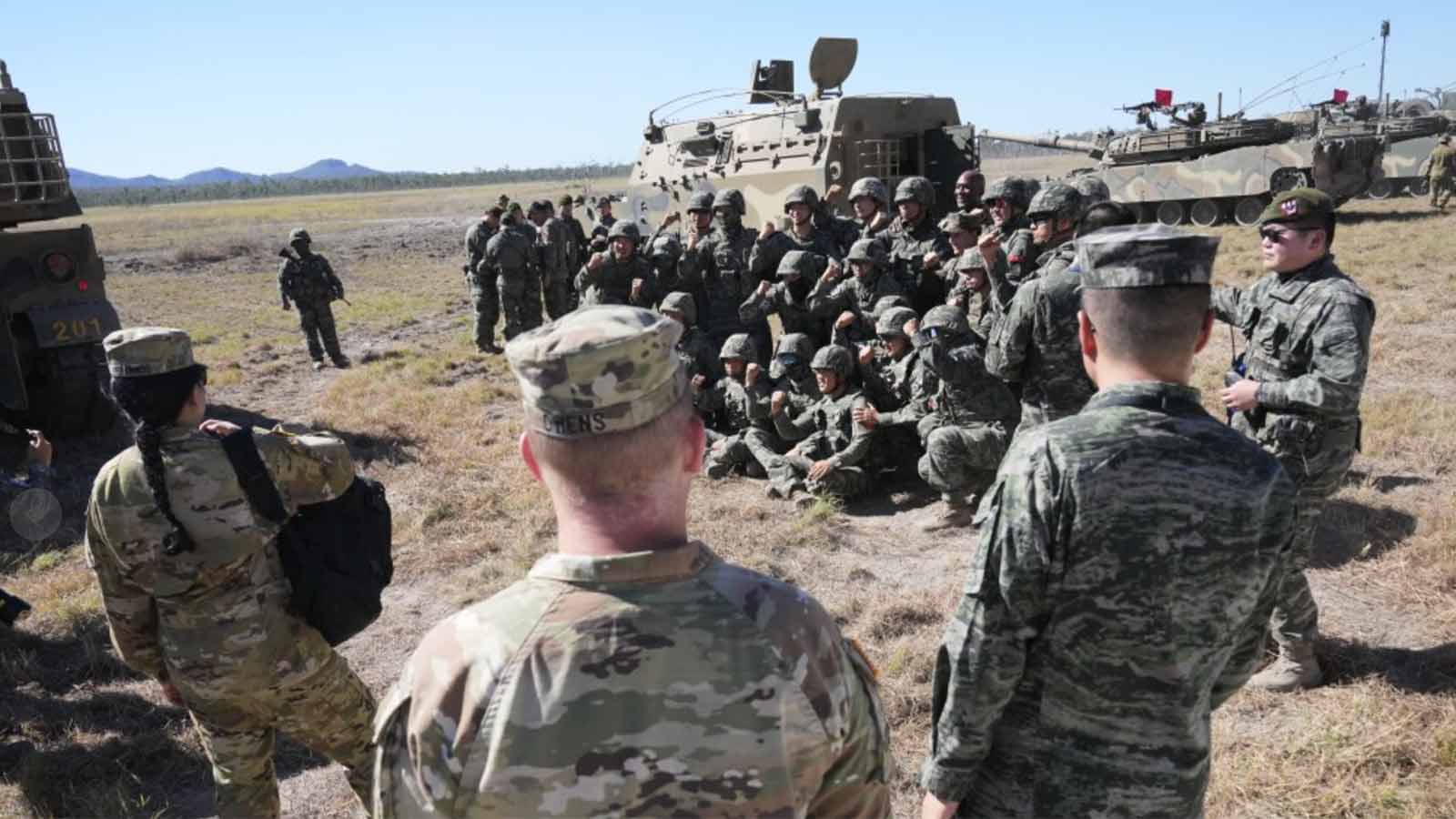
Australia is at the center of global attention this month as it hosts its largest-ever Talisman Sabre military exercise, a biennial event designed to strengthen allied cooperation and readiness in the Indo-Pacific. This year’s drills, running from mid-July for three weeks, bring together 40,000 troops from 19 nations, underscoring the heightened geopolitical significance of the region amid mounting tensions with China.
The Largest Talisman Sabre Yet
On Monday, July 15, artillery, rocket launchers, and self-propelled howitzers roared into action in northern Australia, marking the start of the 11th iteration of Talisman Sabre. According to Hindustan Times, this year’s exercise is the largest in its history, involving nations such as Japan, South Korea, India, and several European allies. The drills aim to demonstrate collective resolve in countering aggression from Beijing, which has been increasingly assertive in the Asia-Pacific region.
Vice Admiral Justin Jones of Australia’s military emphasized the significance of the event, stating, “The fact that we have 19 nations participating this year in Exercise Talisman Sabre tells you that we’re all in search of a common goal: stability, a free and open Indo-Pacific, and adherence to international law.” The exercise includes land, sea, air, space, and cyber warfare drills, showcasing the versatility of modern military operations.
Geopolitical Significance and China’s Monitoring
While Talisman Sabre does not explicitly target any nation, its strategic undertones are unmistakable. As noted by The Australian, the exercise is a direct response to China’s growing influence and military activities in the region. Over recent years, Chinese surveillance ships have consistently monitored the drills, and Australian officials expect similar actions this year.
China’s assertiveness has been a recurring concern for regional democracies. In February 2025, Chinese warships conducted live-fire drills near Australia’s coast, a move that raised alarms in Canberra. Prime Minister Anthony Albanese addressed the issue during a summit in Beijing, stating, “There was no breach of international law by China, but we were concerned about the motive and the way it happened.”
Australia’s Balancing Act
The military exercise comes at a time of complex diplomatic maneuvering for Australia. On July 15, Prime Minister Albanese met with Chinese President Xi Jinping to discuss economic ties, highlighting China’s role as Australia’s largest trading partner. According to The Washington Times, Albanese stressed the importance of diversifying trade relations, particularly as the U.S. prepares to impose higher tariffs on Australian goods starting in August.
Economic tensions with the U.S. have added another layer of complexity. Albanese has criticized the tariffs as unfair, noting that Australia’s trade surplus with the U.S. is modest compared to its deficits with other major economies. Nevertheless, Australia remains a key U.S. ally, as demonstrated by its commitment to the AUKUS security pact and its involvement in Talisman Sabre.
Strengthening Defense Capabilities
Australia has been investing heavily in its defense infrastructure to address regional threats. As reported by The Australian, the country is boosting its long-range strike capabilities and enhancing its northern air bases, which could serve as logistical hubs in the event of conflict. These measures align with broader U.S. efforts to fortify the Indo-Pacific against potential aggression from Beijing.
The Talisman Sabre exercise also extends beyond Australian borders for the first time, with Papua New Guinea hosting portions of the drills. This expansion reflects the growing importance of regional partnerships in maintaining stability and deterring potential adversaries.
Looking Ahead
The Talisman Sabre exercise underscores the evolving dynamics of the Indo-Pacific, where military readiness and diplomatic engagement are increasingly intertwined. As Australia navigates its relationships with both China and the United States, its role as a regional leader becomes ever more critical.
By hosting its largest-ever military exercise, Australia sends a clear message: it is committed to safeguarding regional stability while balancing the complex demands of its economic and strategic partnerships.