
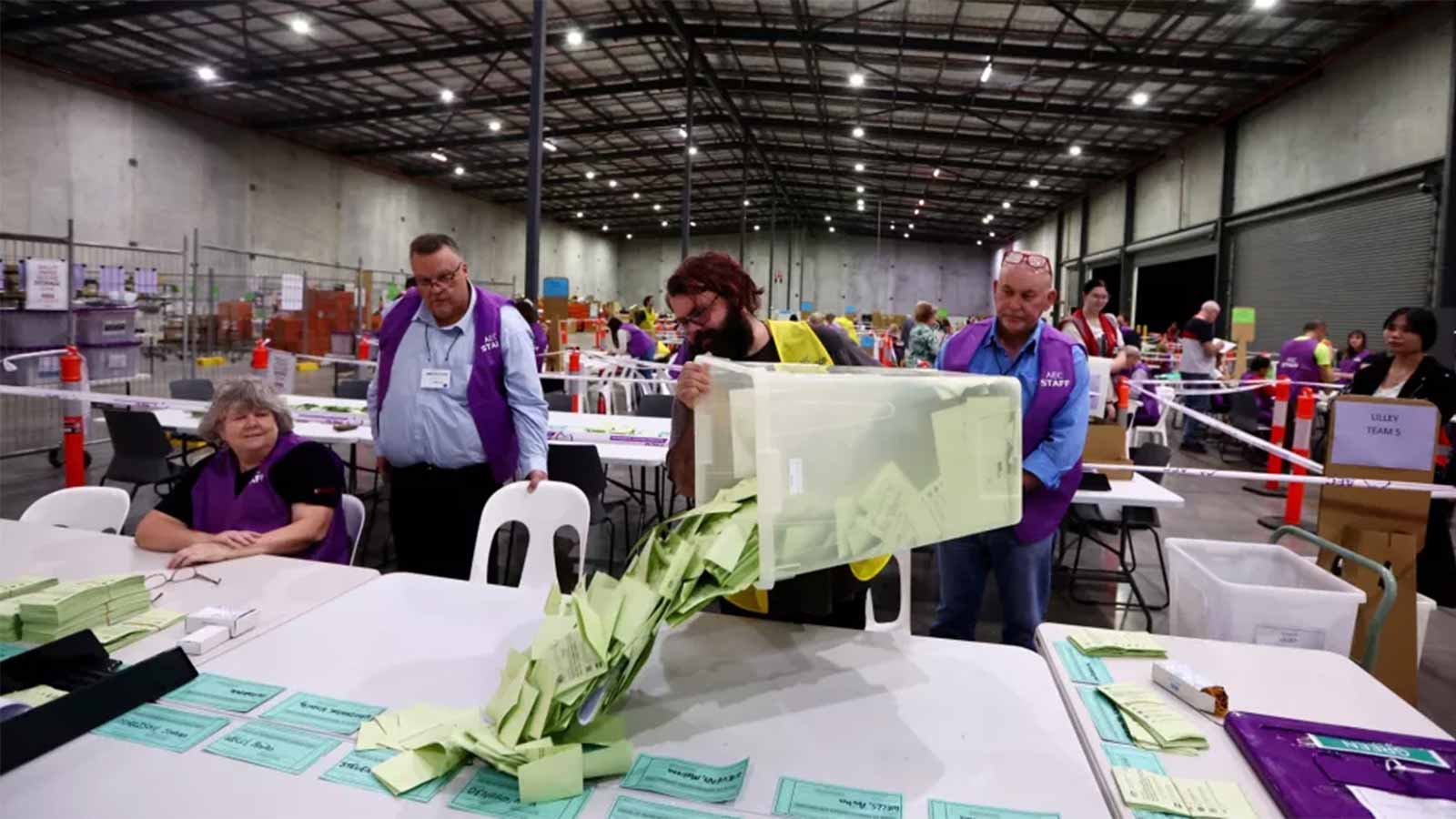
- Polling closed at 6 p.m. in Australia’s eastern states, including Sydney and Melbourne.
- Vote counting has begun, with results expected to trickle in within hours.
- Prime Minister Anthony Albanese’s Labor Party holds a narrow lead over the opposition.
- Western Australia polls will close at 10 p.m. local time, delaying final results.
- This election has been dominated by cost-of-living concerns and U.S. policy influence.
Polling Concludes in Eastern Australia
As of 6 p.m. local time on May 3, 2025, polling stations in Australia’s eastern states, including major cities like Sydney, Melbourne, and Brisbane, have officially closed. The Australian Electoral Commission (AEC) has begun the process of counting votes, with early results expected to emerge within hours. However, due to the staggered closing times across the country, final results may take longer to confirm.
Western Australia Delays Final Results
While eastern states have concluded voting, polling stations in Western Australia will remain open until 10 p.m. local time (1000 GMT). This delay, coupled with the complexity of counting early votes and postal ballots, means the final outcome may not be known for several days, especially if the race is close.
A Closely Contested Election
Opinion polls leading up to the election have shown a tight race between Prime Minister Anthony Albanese’s Labor Party and the conservative opposition led by Peter Dutton. Labor, which had been trailing in the polls earlier this year, has gained momentum in recent months, largely due to a campaign focused on addressing the high cost of living. Analysts have noted that Dutton’s perceived alignment with controversial U.S. policies has been a point of contention among voters.
Key Battlegrounds to Watch
As vote counting begins, attention is turning to key battleground seats in Sydney, Melbourne, and Brisbane. These areas, which represent a significant portion of the 150-seat parliament, will play a crucial role in determining the election’s outcome. Both major parties are aiming to secure at least 76 seats to form a majority government, but the rise of independent and minor party candidates could complicate this goal.
Early Voting Trends
This election has seen a significant increase in early voting, with over 8.5 million Australians casting their ballots before election day. This trend, which includes pre-poll and postal votes, has added a layer of complexity to the counting process. Early votes are often counted later in the evening, meaning initial results may not fully reflect the final outcome.
Potential Outcomes
Given the political fragmentation in Australia, there is a possibility that neither major party will secure a majority. In such a scenario, the focus would shift to independent and minor party candidates, whose support could be pivotal in forming a government. Key seats to watch include those held by high-profile independents in Sydney and Melbourne, as well as marginal seats in Queensland and Western Australia.
International Context
This election has also drawn international attention due to its parallels with recent political trends in other countries. For instance, the Labor Party’s resurgence mirrors the comeback of Canada’s Liberal Party, which recently returned to power after a campaign that capitalized on voter dissatisfaction with U.S. policies.
As Australians await the results, the 2025 federal election is shaping up to be one of the most closely watched and unpredictable contests in recent history.
Source: Reuters, ABC News, Australian Electoral Commission