
Quick Read
- An emergency-level grassfire is burning out of control near Clarkefield, northwest of Melbourne.
- Residents in multiple suburbs, including Clarkefield, have been told it is ‘too late to leave’ and to shelter indoors immediately.
- The blaze has already consumed over 250 hectares, with wind changes complicating containment efforts.
- Firefighters have saved at least one property and are protecting caravan storage areas.
- Dry conditions and hot, north-westerly winds have elevated fire danger across Victoria.
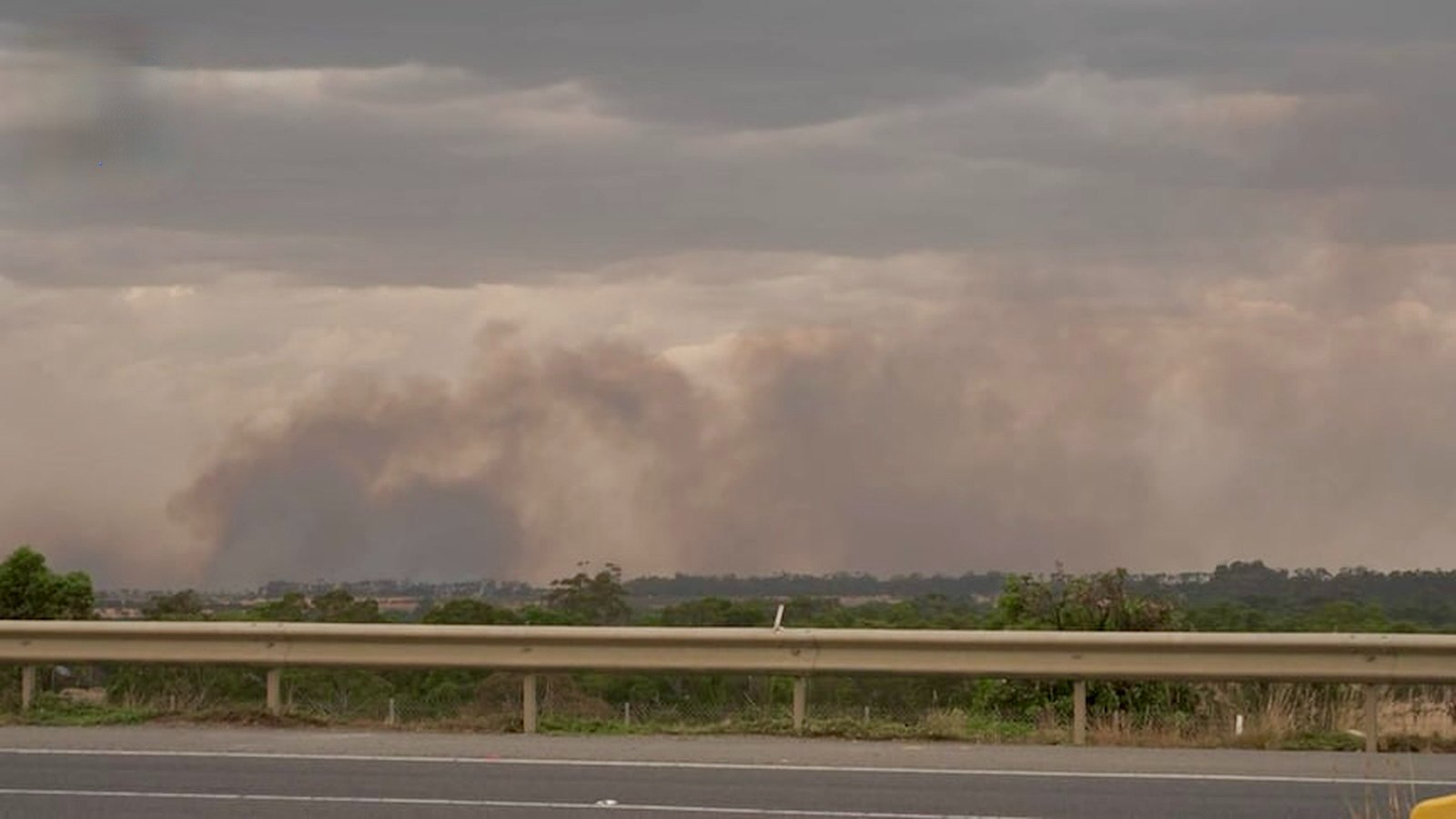
MELBOURNE (Azat TV) – An emergency-level grassfire is burning out of control near Clarkefield, northwest of Melbourne, prompting authorities to issue a stark “too late to leave” warning for residents across multiple suburbs. As of Wednesday, February 11, 2026, the fast-moving blaze has consumed over 250 hectares, forcing thousands to shelter indoors immediately as firefighters battle challenging conditions exacerbated by strong winds and an exceptionally dry landscape.
Emergency Warnings Issued for Northwest Melbourne
The Country Fire Authority (CFA) has upgraded its alert to an emergency warning for Clarkefield and surrounding areas, including Beveridge, Bolinda, Darraweit Guim, Mickleham, Oaklands Junction, Sunbury, and Wildwood. Residents in these communities are advised that the safest option is to take shelter indoors immediately, as it is no longer safe to evacuate. The fire, which originated near Clarkefield, northeast of Sunbury, is not yet under control, and firefighters have struggled to contain its rapid spread.
The situation intensified following a recent wind change, which shifted the flames in a north-easterly direction towards Old Sydney Road in Mickleham. Earlier, the fire was reported to be travelling easterly towards Boggy Rate Road. Authorities are particularly concerned about an imminent second wind change predicted later tonight, which could further worsen conditions and complicate firefighting efforts.
Responding to the Clarkefield Blaze
Dozens of fire vehicles and water aircraft are actively engaged in combating the widespread grassfire. John Deering from the Gisborne Incident Control Centre informed ABC Radio Melbourne that an earlier wind change, coming from the south, had provided some temporary relief, allowing the fire to burn back on itself in certain sections. Despite this, the fire remains active and unpredictable.
Firefighters have managed to save at least one house that came under immediate threat. Efforts are also underway to protect several caravan storage areas located within the fireground, which Mr. Deering confirmed were safe for the moment. However, the CFA stated it was aware of reports of a caravan ablaze elsewhere near the fireground, indicating the destructive potential of the blaze.
Macedon Ranges Mayor Kate Kendall noted that the initial location where the fire started was not heavily populated, and locals had responded swiftly, with some already moving livestock out of harm’s way. Councillor Jarrod Bell from neighboring Hume City Council described the affected area as a “green wedge zone” between Sunbury and Craigieburn, characterized by numerous hobby farms. He emphasized that while the fire was still some distance from dense housing in his municipality, the threat was significant.
Conditions Fueling the Grassfire
The intense grassfire is being driven by a combination of extreme weather conditions. The Bureau of Meteorology (BOM) had issued warnings earlier this week about hot, north-westerly winds coupled with the driest start to the year since 2009 in Victoria. Senior meteorologist Kevin Parkyn highlighted on Tuesday that “the hot north-westerly winds in combination with the parched landscape” were elevating the fire danger risk across the state.
Temperatures in Melbourne were forecast to reach 32 degrees Celsius, with Mildura expected to hit 40C. A total fire ban was declared for most of Victoria, excluding the South West and East Gippsland districts, underscoring the widespread risk. The lack of significant rainfall for approximately a month and a half, apart from a couple of days prior to the current blaze, has left the landscape exceptionally dry and susceptible to rapid fire spread.
The current Clarkefield fire adds to an already challenging fire season for Victoria, with several other bushfires, including the Carlisle River fire in the Otways, the Longwood blaze in central Victoria, and the Walwa fire in the north-east, continuing to burn after destroying homes and threatening communities in January.
Local Impact and Ongoing Efforts
The “too late to leave” warning has created immediate challenges for residents. Faye Ridis, who owns Mickleham Lodge and runs a greyhound rehoming program, recounted receiving a CFA message and promptly evacuating all her dogs with the help of friends. She utilized a van with cages and a dog trailer for the evacuation. However, Ms. Ridis made the difficult decision to stay behind due to three litters of pups that could not be moved, demonstrating the difficult choices residents face.
Another local, Andrew, a farmer with two properties in Clarkefield, described the scene as “pretty hairy” and “literally everywhere I look.” He is actively assisting fire authorities by using his excavator to create firebreaks. His experience highlights the immediate and personal threat faced by those on the ground, noting how the wind change brought the fire “back on us” after initially blowing through.
The ongoing efforts by emergency services, supported by local residents, are critical in mitigating the immediate danger posed by the Clarkefield grassfire. The severe “too late to leave” warning underscores the urgent and dynamic nature of the situation, emphasizing the need for residents to adhere strictly to safety directives as conditions remain volatile.