


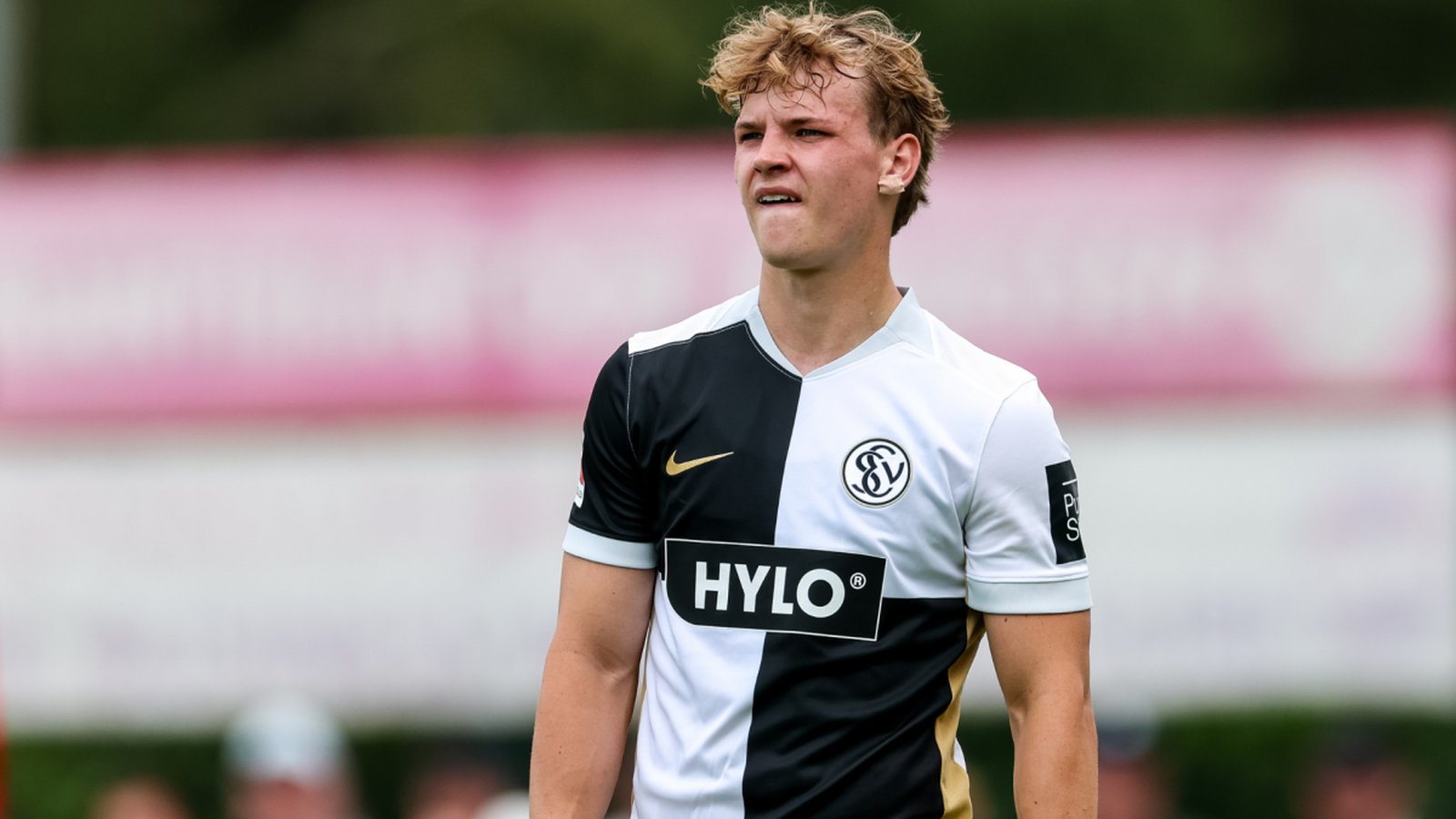
In a small village in southwestern Germany, a historic football story unfolded on Saturday, August 29, 2026, as newly-promoted SV Elversberg marked their Bundesliga debut with a stunning 3-2 home victory over former champions Bayer Leverkusen. The victory, reported widely by AFP and CBS Sports, was highlighted by a dream debut for 20-year-old American winger Cole Campbell, who scored his first senior goal less than ten minutes into his first official appearance for the club.
Elversberg, representing a tiny town of just over 13,000 inhabitants in Germany’s Saarland, has officially become the smallest locality to ever host a Bundesliga club. Despite their modest scale and a home stadium still undergoing renovations to meet the top flight’s 15,000-capacity minimum, the newcomers refused to be intimidated by Carles Martinez Novell’s Leverkusen side. Within the opening ten minutes, the home fans at the URSAPHARM-Arena an der Kaiserlinde witnessed a breathtaking sequence that set the tone for their maiden top-flight campaign.
This report draws on information published by cbssports.com and france24.com.
An Unprecedented Bundesliga Arrival
According to match reports from SBS Soccer, the hosts took the lead in the eighth minute when Lukas Petkov capitalized on early defensive disorganization from Leverkusen. Just 60 seconds later, directly from the ensuing kickoff, a high-pressing Elversberg forced a critical turnover in the Leverkusen backline. Campbell, alert to the mistake, pounced on the loose ball and drilled a precise low shot into the bottom corner of the net to make it 2-0.
Though Leverkusen attempted to mount a comeback, David Mokwa extended Elversberg’s lead early in the second half. A late surge by Leverkusen, featuring fellow American international Malik Tillman, narrowed the deficit to 3-2, but Vincent Wagner’s squad held firm to claim an invaluable three points. Campbell played 65 minutes in a left midfield role, registering three shots on target and drawing two fouls, solidifying his role as a key focal point in Elversberg’s tactical setup.
The Record-Breaking Bet on Cole Campbell
Campbell’s move to Elversberg represents a major turning point for both the player and the club. As reported by Transfermarkt, Elversberg paid a club-record €6 million transfer fee to Borussia Dortmund to secure the young winger on a permanent four-year contract this summer. Having spent the last three seasons developing within Dortmund’s youth ranks and training around their senior squad, Campbell was eager for a platform where consistent first-team minutes were guaranteed.
“He was our record signing, which probably shows how much we believe in Cole,” Elversberg Technical Director Josef Welzmüller stated. “He’s a fantastic player. He’s very fast, very strong with the ball, and exceptional in one-on-one situations. We just want him to go into those isolated spaces and solve problems for us. We are highly confident that he will have a breakout season here.”
For USMNT supporters and Olympic team scouts, Campbell’s immediate impact in one of Europe’s top leagues is highly encouraging. His ability to create individual opportunities out of defensive transitions adds a dynamic profile to the national team’s developmental pool. After his stint at Dortmund did not yield consistent senior appearances, the transition to Elversberg offers the perfect balance of top-flight exposure and developmental patience.
The Elversberg Model: Elite Development on a Budget
Elversberg’s rapid ascent to the Bundesliga is nothing short of remarkable. In 2022, the club was still competing in Germany’s fourth division (Regionalliga Südwest). Back-to-back promotions brought them to the 2. Bundesliga, where they narrowly missed out on promotion in the 2024-25 season due to a heart-wrenching playoff loss to Heidenheim. Despite subsequently losing their head coach Horst Steffen to Werder Bremen and their sporting director Ole Book to Borussia Dortmund, the club reconstructed its leadership under manager Vincent Wagner and secured automatic promotion the following year.
Operating with a scouting department consisting of just two people, Elversberg has built a reputation as an elite incubator for young talent. The club previously helped develop Werder Bremen’s Nick Woltemade, Hoffenheim’s Fisnik Asllani, and Bayern Munich prospect Paul Wanner. This summer, they continued this recruitment strategy by securing loans for high-profile youngsters like Maurice Krattenmacher, Noah Darvich, Francis Onyeka, and Noel Futkeu.
“We can’t afford proven players,” Welzmüller explained. “That is our core business. But this year, recruiting is actually easier because we can offer immediate Bundesliga playing time. We cannot offer high wages, but we can offer a clear, proven development pathway.”
Preserving Identity Over Pragmatism
Before entering the Bundesliga, Elversberg’s leadership conducted an extensive statistical analysis to determine whether they should adopt a more defensive, pragmatic style of play to survive relegation. Pragmatic numbers suggested playing long balls and minimizing risks in the build-up phase. However, the club ultimately decided to reject a defensive retreat.
“We sat together and said, ‘Hey, we made our playing style part of our identity, and this is bigger than everything else,’” Welzmüller revealed. “We chose players, coaches, and staff who fit this proactive identity. We cannot change now. We must play the Elversberg way, even if it means taking risks.”
This commitment to high-tempo, offensive football was fully vindicated against Leverkusen. By refusing to sit deep, Elversberg forced the mistakes that allowed Campbell and Petkov to decide the match early. While maintaining this intensity over a grueling 34-match Bundesliga season will be a monumental task, Elversberg has proved that their identity is robust enough to challenge Germany’s elite. For Cole Campbell, this fearless environment offers the ultimate stage to prove his readiness for the international level.