
Quick Read
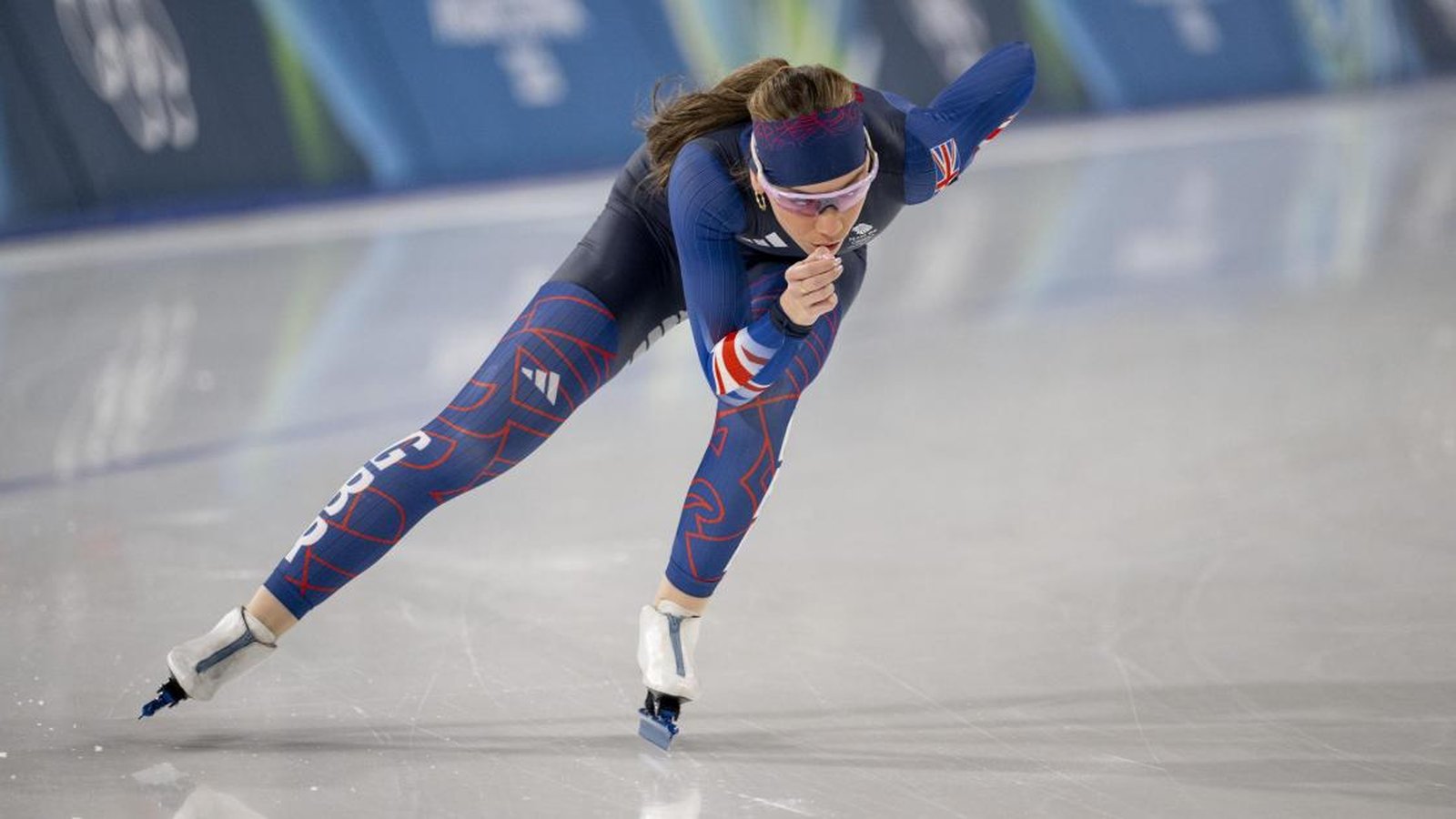
- Ellia Smeding is set to compete in the Women’s 1,000m speed skating event at the Milano Cortina 2026 Winter Olympics.
- She relocated her training to Calgary, Canada, under coach Bart Schouten, after a hip injury in the 2024/25 season.
- Smeding aims to raise the profile of long track speed skating in the UK, a sport that receives significantly less funding than others like skeleton.
- She and her partner, Cornelius Kersten, operate a coffee business to help fund their Olympic ambitions.
- Smeding made history in Beijing 2022 as the first Team GB female long track speed skater since 1980, setting British records in 1,000m and 1,500m.
MILANO CORTINA (Azat TV) – British speed skater Ellia Smeding is poised to compete in the Women’s 1,000-meter event at the ongoing Milano Cortina 2026 Winter Olympics, a significant moment that not only marks her return to the ice after a challenging season but also brings into sharp focus the perennial struggle for long track speed skating investment in the United Kingdom.
Smeding, an Aylesbury native raised in Chinnor, Oxfordshire, aims to significantly elevate the profile of long track speed skating in Great Britain. Her participation is eagerly anticipated by fans and supporters, who hope her performance will inspire a new generation of British winter sports enthusiasts. The event is scheduled for Monday, with live coverage available in the U.K. via TNT Sports on discovery+.
Smeding’s Olympic Bid and Training Shift
Ellia Smeding arrives at the Milano Cortina Games with a renewed sense of purpose and physical well-being. Following a persistent hip injury that plagued her during the 2024/25 season, she made the crucial decision to relocate her training base from the Netherlands to Calgary, Canada. There, she has been working under the guidance of coach Bart Schouten, seeking a “clean slate” and a fresh perspective on her technique and conditioning.
“It has been a year of getting my energy back, my happiness back,” Smeding stated ahead of her 1000m event. She described her experience in the Canadian mountains and the new training environment as highly beneficial, noting that her body is once again performing as she desires. This change, she explained, has instilled a new appreciation for her sport and the privilege of competing among the world’s elite, directly contributing to her improved performances.
The Challenge of UK Speed Skating Investment
Smeding’s journey underscores the significant challenges faced by speed skating in the United Kingdom, particularly concerning funding. Despite the sport offering 14 different medal opportunities at the Winter Olympics, compared to just three for skeleton, it receives only a fraction of the investment. British Ice Skating, which oversees multiple disciplines, is allocated £1.9 million, but speed skating’s share is described as a mere sliver. In stark contrast, skeleton receives a substantial £5.7 million from UK Sport.
This disparity reflects a broader issue within the UK’s sports funding model, which, as observed by figures like Sir Steve Redgrave 16 years ago, tends to prioritize immediate success over long-term strategic investment in developing sports with high potential. Redgrave had advocated for a 400m oval in the UK, believing it could yield multiple Olympic medals within a decade by attracting athletes from high-cardiovascular sports like cycling and rowing. Smeding and her partner, Cornelius Kersten, who also competed in Beijing, have resorted to running a coffee business to help fund their Olympic ambitions, highlighting the personal sacrifices required to pursue excellence in an underfunded discipline.
Previous Achievements and Future Aspirations
Ellia Smeding is no stranger to making history for Team GB. At the 2022 Beijing Winter Olympics, she became the first female long track speed skater to represent Great Britain since 1980. During those Games, she not only competed but also set new British records in both the 1,000m and 1,500m events, finishing 23rd and 27th, respectively. Her experience from her first Olympics has contributed to her increased confidence heading into Milano Cortina.
As Smeding prepares for her 1,000m race, the wider Winter Olympics are already showcasing intense competition. Norway currently leads the medal tally with 31 medals, including 26 golds, followed closely by Switzerland with 31 medals and 4 golds. The United States, Austria, and Italy also feature prominently among the top five nations. The Netherlands, a powerhouse in speed skating, is anticipated to secure its 50th Olympic gold medal in the sport in the coming days, setting a high bar for all competitors.
Ellia Smeding’s renewed form and determined pursuit of excellence, despite the significant financial hurdles she faces, critically highlights the ongoing debate within UK sports funding regarding the allocation of resources. Her individual efforts to raise the profile of long track speed skating underscore a broader systemic challenge where promising disciplines with high medal potential struggle for investment against established successes, potentially limiting Britain’s overall Olympic reach.