


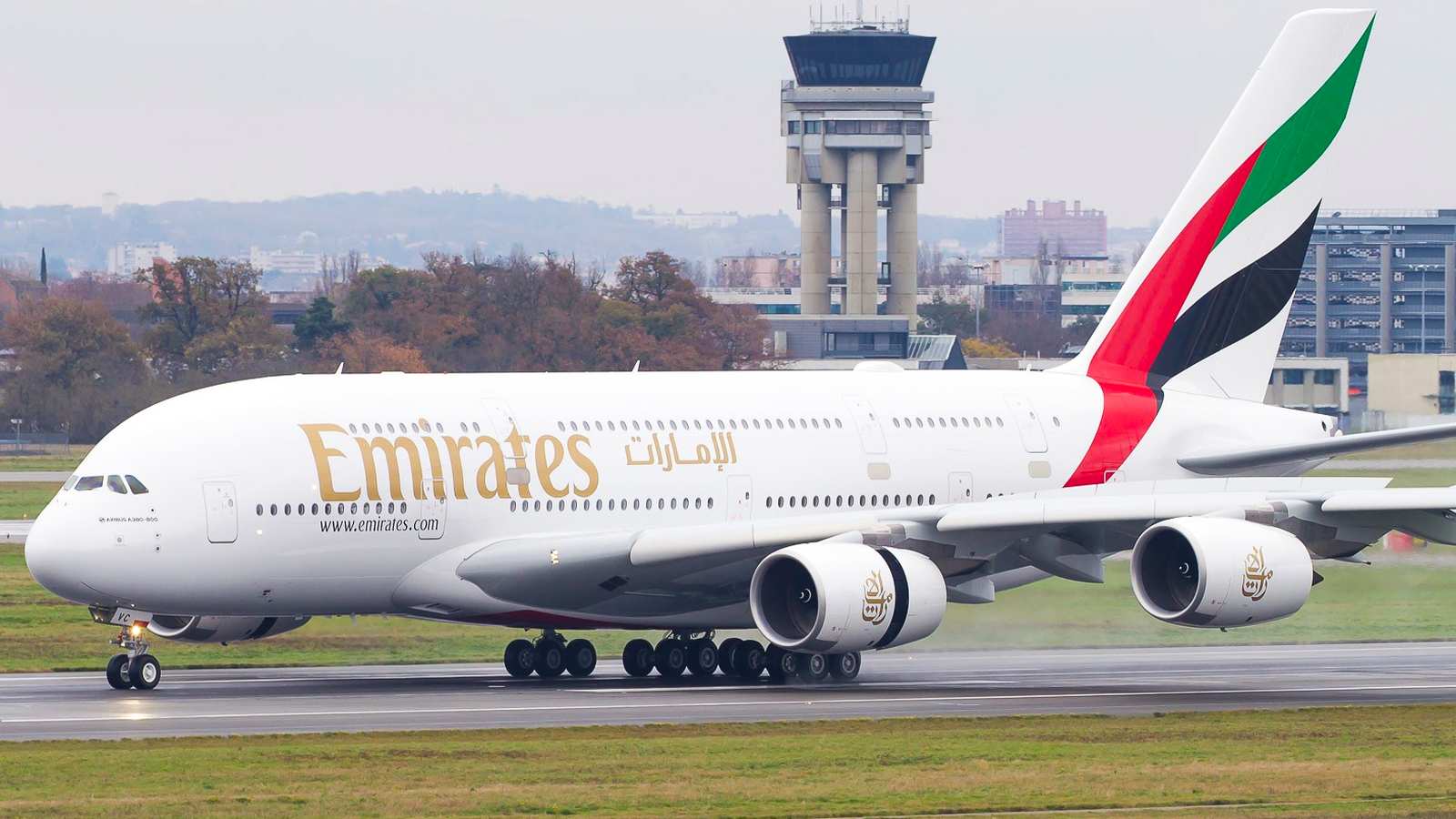
DUBAI (Azat TV) – Emirates has finalized the purchase of 29 Airbus A380 aircraft, a decisive move that transitions these superjumbos from lease agreements to full airline ownership. Announced alongside the carrier’s most successful financial year to date, the acquisition underscores a unique commitment to the world’s largest passenger jet at a time when most global competitors have phased out the model in favor of smaller, more fuel-efficient twin-engine planes. By taking direct ownership of nearly 30 aircraft previously operated under lease, Emirates is positioning itself to control operational costs and maintain its high-capacity hub-and-spoke model well into the next decade.
The Strategic Shift to Airbus A380 Ownership
The acquisition of the 29 Airbus A380s was confirmed in the airline’s latest annual financial report for the 2025-26 period. These aircraft were already active members of the Emirates fleet but were nearing the end of their respective leasing contracts. By purchasing the jets outright, the Dubai-based carrier eliminates recurring leasing fees, which often represent a significant portion of an airline’s fixed overhead. This transition to ownership allows the airline to manage the lifecycle of the aircraft with greater flexibility, particularly as it continues a massive multi-billion dollar retrofit program to modernize cabin interiors.
While Airbus ended production of the A380 in 2021, Emirates remains its most vocal champion. The airline currently operates more than 90 active A380s, with several others held in reserve for spare parts or future reactivation. Company executives have stated that the superjumbo will remain the backbone of their international network until at least 2040, a timeline that necessitates the kind of structural control that only full ownership can provide.
Economic Logic Behind the Emirates Superjumbo Fleet
The financial rationale for the purchase is rooted in both the current market value of the aircraft and the airline’s unprecedented liquidity. Industry analysts estimate that used A380s are currently valued at approximately $45 million each, a sharp decline from their original list prices. For Emirates, which has built its entire infrastructure around the double-decker’s 500-plus passenger capacity, these purchases represent a cost-effective way to maintain scale. The airline reported an overall investment of $4.9 billion during the fiscal year, covering aircraft acquisitions, infrastructure, and technological upgrades.
This aggressive reinvestment was made possible by a record-breaking financial performance. Emirates posted a pre-tax profit of $6.2 billion (AED 22.8 billion), the highest in its history. This fiscal strength has allowed the carrier to ignore the industry trend toward smaller widebody jets like the Boeing 787 or Airbus A350 for its highest-density routes, even as it integrates those newer models into its broader fleet for secondary markets.
Emirates Record Profits and Network Resilience
The airline’s ability to post record profits is particularly notable given the geopolitical volatility in the Middle East during the reporting period. Regional instability required frequent route diversions and airspace adjustments, yet Emirates managed to restore 96 percent of its global network. Revenue for the group reached approximately $41 billion, driven by a surge in passenger demand and a robust cargo sector. The decision to double down on the A380 is a reflection of this demand; on many of the airline’s flagship routes, such as Dubai to London or New York, the high capacity of the A380 is essential for maintaining market share at slot-constrained airports.
To celebrate its national ties and the continued relevance of its fleet, Emirates recently unveiled a new UAE flag-themed livery on one of its A380s. The aircraft, registered as A6-EVG, features a 3D-style national flag across the fuselage. This branding effort, part of the “This Flag Will Always Fly” campaign, serves as a visual reminder of the airline’s role as a global ambassador for the United Arab Emirates.
The Future of the Airbus A380 in a Modernizing Fleet
Despite the focus on the A380, Emirates is not ignoring the need for modernization. The airline currently has an order book of over 360 aircraft, including more than 270 Boeing 777X jets and 54 Airbus A350s. Fifteen A350-900s were delivered in the last year alone, already serving 20 destinations. However, the A380 remains the only aircraft capable of delivering the specific luxury experience, including onboard showers and lounges, that has defined the Emirates brand.
As the airline prepares for the entry into service of the Boeing 777X next year, the newly owned A380s will provide a bridge, ensuring that capacity remains high while the newer fleet matures. With 91 aircraft already through the cabin retrofit process, the “superjumbo” era at Emirates shows no signs of slowing down, even as the rest of the aviation world moves in a different direction. The decision to purchase depreciated A380s rather than lease new aircraft suggests Emirates is prioritizing the protection of its high-capacity hub-and-spoke model against future market volatility, betting that the sheer volume of the superjumbo remains its most potent competitive advantage.