
Quick Read
- Spain’s RTVE has withdrawn from broadcasting Eurovision 2026, citing the inclusion of Israel.
- The ‘No Music For Genocide’ boycott movement has gained support from over 1,100 artists and public figures.
- The 2026 contest is scheduled to take place in Vienna, with the first semi-final set for May 12.
A Contest Divided by Values
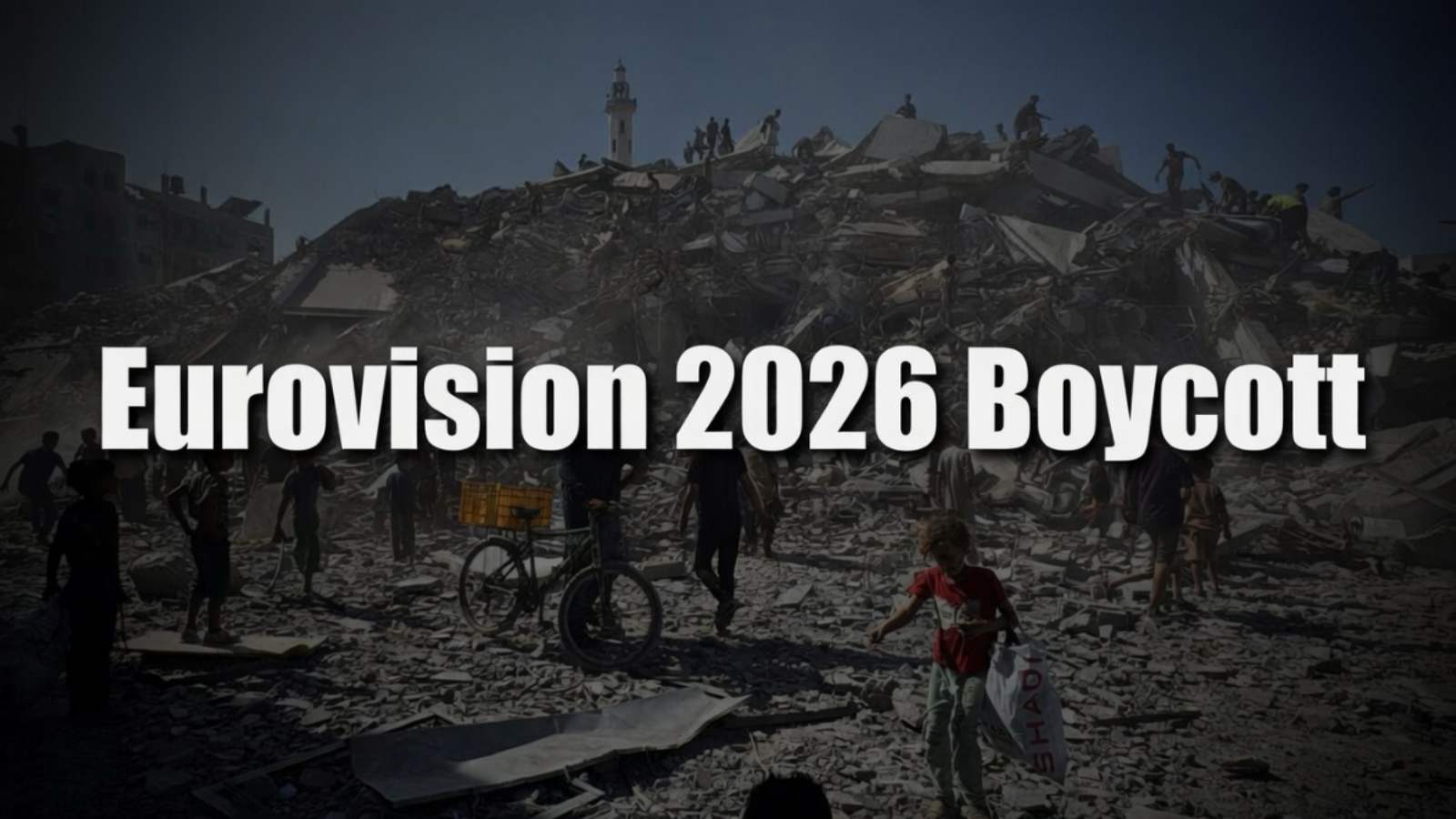
As the countdown to the 70th Eurovision Song Contest in Vienna begins, the event finds itself at a defining crossroads. While the musical preparations continue—with artists like Montenegro’s Tamara Živković readying for the first semi-final on May 12—the cultural atmosphere is dominated by a growing movement of institutional and individual dissent. The core of this tension centers on the inclusion of Israel, a decision that has prompted public broadcasters and prominent artists to challenge the European Broadcasting Union’s (EBU) traditional stance on neutrality.
Spain’s public broadcaster, RTVE, recently confirmed it would not air the 2026 competition, marking its first absence from the broadcast since 1961. Unlike nations that have simply opted out of competing, RTVE’s decision to pull the broadcast entirely suggests that the contest’s foundational commitment to neutrality has become increasingly difficult to reconcile with the current geopolitical reality. This move echoes a broader pattern of protest, following the 2024 decision by Swiss winner Nemo to return their trophy, an act that signaled deep internal fractures within the Eurovision community.
The Power of Refusal
The “No Music For Genocide” (NMFG) campaign has crystallized this dissent, gathering momentum as artists like Brian Eno, Massive Attack, and Sigur Rós join the call for a boycott. For these figures, the contest’s refusal to ban the Israeli broadcaster, KAN, stands in stark contrast to the EBU’s 2022 decision to exclude Russia, which the union explicitly stated would “bring the competition into disrepute.” By highlighting this perceived inconsistency, the movement challenges the democratic accountability of the EBU, arguing that cultural platforms cannot remain neutral when human rights are at the center of the discourse.
While the administrative and political wrangling continues, the contest remains a vital space for national representation and cultural diplomacy. For participating nations, the stakes involve more than just a trophy; it is a platform for soft power and European integration. Despite the controversy, betting markets and fan sentiment remain high for contenders such as Finland and France, reflecting the enduring appeal of the spectacle even as its governance faces its most significant scrutiny in decades.
Synthesis of a Changing Stage
The 2026 edition of Eurovision is not merely a song contest; it is a mirror reflecting the broader tensions of a continent navigating the balance between artistic celebration and moral responsibility. The decision of broadcasters to withdraw or artists to boycott is a manifestation of a liberal democratic demand for consistency in institutional values. Whether the EBU chooses to reform its governance or faces further fragmentation remains the central question. For audiences, this year’s competition will be defined as much by who is missing from the stage as by those who choose to perform upon it, marking a permanent shift in how we perceive the role of international cultural exchange in times of conflict.