
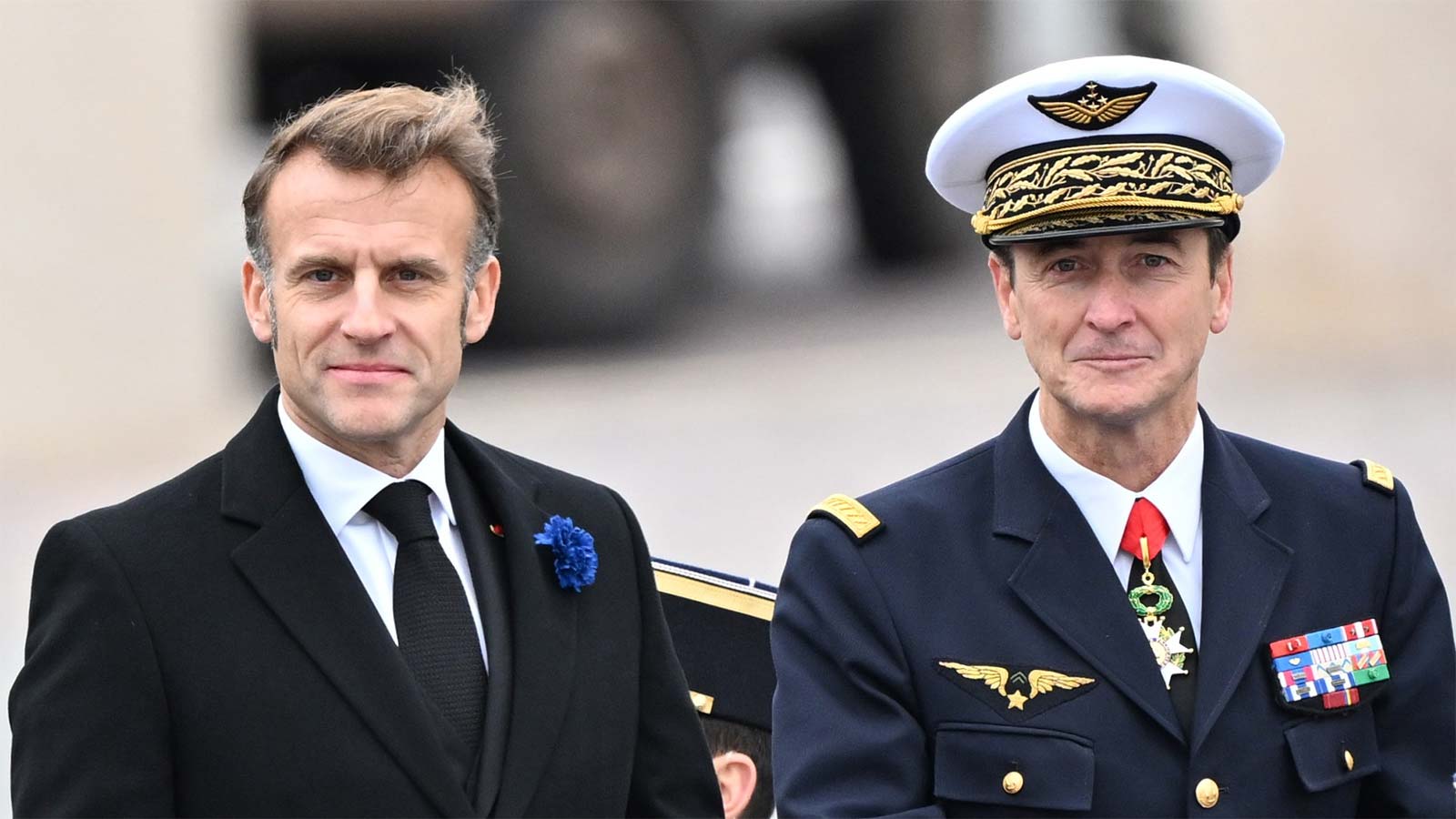
Quick Read
- General Fabien Mandon warned France must be ready to ‘lose its children’ in the face of possible conflict with Russia.
- The speech sparked fierce criticism from both left and right political leaders, but President Macron defended Mandon’s intent.
- Government clarified that French soldiers are not being sent to Ukraine and emphasized the country’s professional army.
- Mandon’s remarks reflect wider European concerns about security and national resilience amid rising geopolitical tensions.
- France is preparing to introduce voluntary military service for young people by 2030.
General Fabien Mandon’s Warning: A Nation Called to Prepare
In late November 2025, General Fabien Mandon, the newly appointed chief of staff of the French armed forces, delivered a speech that would become one of the most quoted and controversial of the year. Standing before the Congress of French Mayors, Mandon urged France to brace itself for a new era of geopolitical tension, specifically warning that the country must be psychologically and materially ready to face the possibility of losing its children in defense of national security. His message, stark and unflinching, was clear: “If our country falters because it is not ready to accept the loss of its children, to suffer economically because priorities will be given to defense production, then we will be in danger.” (Le Monde)
Mandon’s remarks were not delivered in a vacuum. As Europe contends with Russia’s ongoing war in Ukraine and the prospect of further escalation, senior defense officials across the continent have raised alarms about the potential for future conflict. Mandon’s speech was in line with previous warnings: “Moscow prepares for confrontation with our countries in the period between today and 2030.” He stressed the need for a new kind of resilience—a willingness to accept pain and sacrifice in order to defend the nation’s values and sovereignty. (AOL News)
Political Firestorm: Left, Right, and Presidential Response
The general’s words ignited fierce debate across France’s political spectrum. Leaders from the far-left, including Jean-Luc Mélenchon of France Insoumise, condemned the speech as an overstep of military authority and accused Mandon of warmongering. Mélenchon stated, “It’s not his job to invite mayors or anyone else to start making military preparations that no-one has agreed on.” Fabien Roussel of the Communist Party echoed this sentiment, rejecting what he called “intolerably belligerent speeches.” On the right, National Rally’s Sébastien Chenu denounced Mandon’s comments as a “mistake,” arguing that the general lacked legitimacy to make such pronouncements.
Yet not all voices were critical. Raphael Glucksmann, a pro-Ukraine MEP, defended Mandon, arguing that the outrage merely highlighted a pervasive state of denial in French politics. “Gen Mandon is right to alert the nation about the need to change its state of mind,” Glucksmann declared. The debate quickly expanded beyond military circles, becoming a lightning rod for broader concerns about France’s readiness and political will in a rapidly changing world.
President Emmanuel Macron, himself commander-in-chief, stepped into the fray to defend Mandon. Speaking from Johannesburg during the G20 summit, Macron insisted that the general’s speech was “much more thoughtful than a phrase taken out of context to scare people.” He expressed his “full trust” in Mandon and called for pride in France’s army, which “has never let us down in fulfilling its mission.” Macron also criticized those who, in his words, seized upon the statement for their own agendas, reaffirming France’s commitment to resilience and strategic awareness. (Reuters)
Clarifications and Government Reassurance
The uproar prompted swift clarification from government officials. Minister of Armed Forces Catherine Colonna and government spokesperson Maud Bregeon both emphasized that France maintains a professional army and that “our children, in the sense we understand it, are not going to fight and die in Ukraine.” They insisted that Mandon’s remarks were about the broader need for national preparedness, not imminent deployment of conscripts.
General Mandon himself took to France 5 to clarify his intent, noting that he “has his own children” and understands public concern. He explained that his aim was to “warn and prepare,” highlighting that “the situation is rapidly deteriorating” and that it is crucial for local leaders to communicate the seriousness of the threat. Mandon’s comments reflected an evolving conversation in French society about the meaning of service, sacrifice, and defense in a new era of uncertainty.
As an additional policy measure, the French government is preparing to announce voluntary military service aimed at recruiting 10,000 young people by 2030—a move seen as part of a broader push to restore national service and bolster civic readiness, in line with similar efforts in neighboring European countries.
European Context: Warnings Beyond France
The shockwaves from Mandon’s speech reverberated across Europe. German Defense Minister Boris Pistorius recently warned that a Russian act of aggression could be possible as early as 2028, with some experts suggesting that Europe may already have lived through its last peacetime summer. These warnings underscore a shifting consensus among NATO and EU defense officials: the continent must prepare not only militarily but also psychologically for the possibility of direct confrontation with Russia.
French media outlets such as Le Monde and Figaro highlighted that Mandon’s assessment of the threat is shared by many in the Western defense establishment. The Parisian daily noted that “General Mandon’s fears and assessments that Russia is preparing to attack Western Europe by 2030 are shared by military and partly political officials of NATO members.” The resulting public debate has exposed deep divisions in French society about the acceptable costs of security, the boundaries of military authority, and the role of civilian leaders in shaping national policy.
The Heart of the Controversy: Sacrifice, Readiness, and National Identity
At the center of the storm lies a fundamental question: What does it mean for a country to be ready to defend itself? Mandon’s call for “resilience” is not just about military budgets or force numbers—it is about the willingness of a society to face suffering and loss in defense of its values. For some, the rhetoric evokes painful memories of past wars and the countless memorials scattered across French towns and villages. For others, it is a necessary wake-up call, a reminder that peace cannot be taken for granted in a world of shifting alliances and emerging threats.
The controversy also highlights the delicate balance between civilian oversight and military expertise. Critics argue that generals should not dictate national policy or stoke fears of war, while supporters contend that honest assessments of risk are essential for informed decision-making. The debate has become a proxy for broader anxieties about France’s place in the world, its relationship with allies, and its ability to respond to crisis.
In the words of Mandon, “To face something, you need to be prepared.” His analysis of the Russian threat, shared by many European neighbors, reflects a new reality for France and its allies: the need to restore a sense of civic duty, collective resilience, and readiness in the face of uncertainty.
General Fabien Mandon’s speech has forced France to confront uncomfortable truths about war, sacrifice, and national preparedness. While his words may have been blunt, they have catalyzed a vital debate about the country’s resilience and the responsibilities of both leaders and citizens in a time of heightened risk. The controversy, far from being a momentary shock, marks a turning point in France’s ongoing conversation about security, identity, and the future of European defense.