


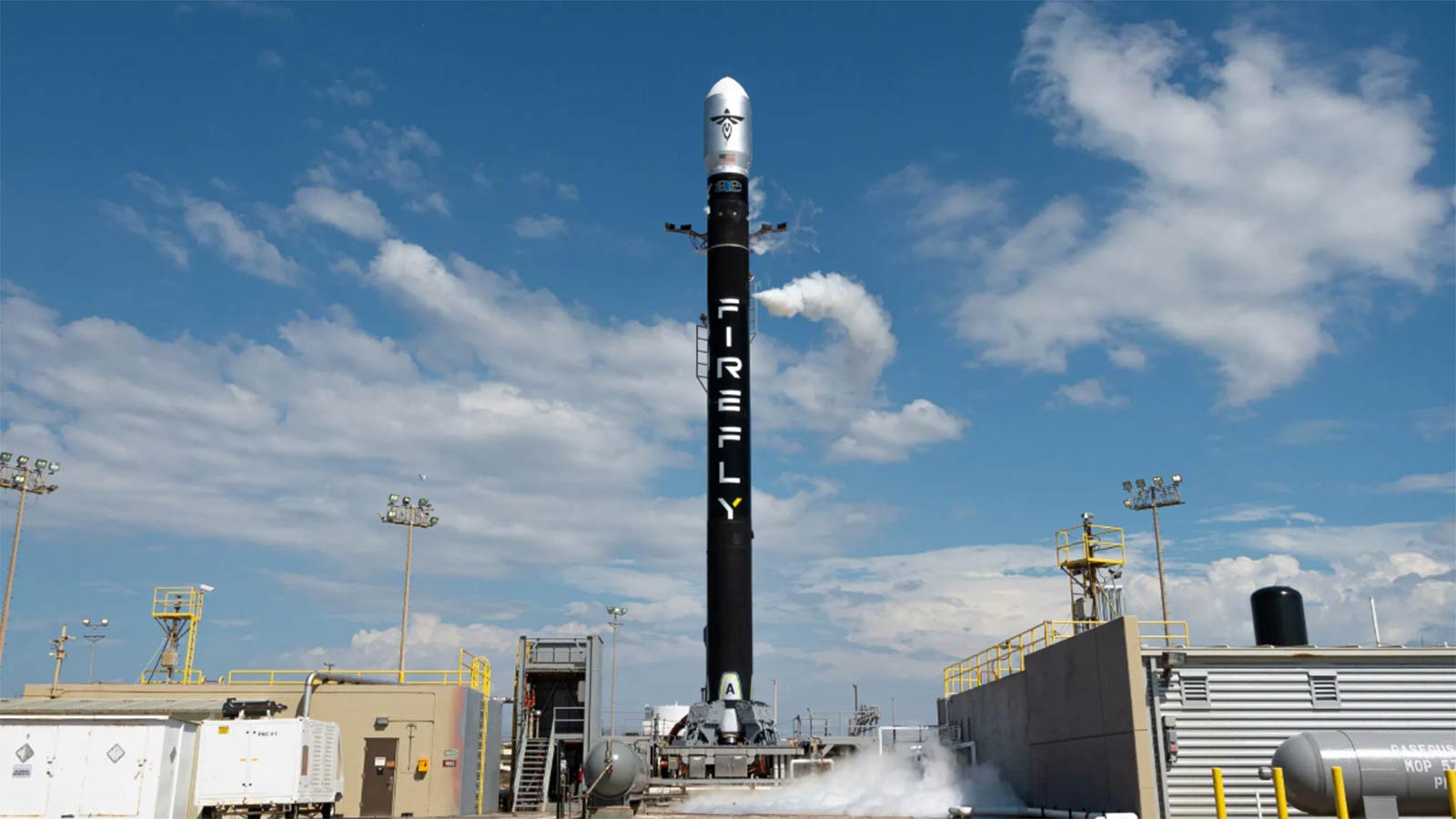
Firefly Aerospace saw its stock price surge on Thursday following the successful launch of its Alpha Flight 7 mission, a critical milestone for the commercial launch provider as it seeks to demonstrate consistent reliability in the small-lift launch market. The rocket lifted off from Vandenberg Space Force Base in California at 5:50 p.m. local time on Wednesday, successfully reaching orbit and delivering a demonstrator payload for Lockheed Martin.
Validating Key Systems for Block II Upgrades
The mission, internally dubbed “Stairway to Seven,” served as more than just a delivery flight; it acted as a vital testbed for the company’s upcoming Block II configuration. According to Firefly officials, the flight validated several key systems, including a new in-house avionics suite and an enhanced thermal protection system. The successful execution of a second-stage engine relight was also a primary objective, further proving the resiliency of the vehicle’s architecture.
“Alpha Flight 7 was flawlessly executed with all mission requirements completed, further proving the resiliency, innovation and passion of the Firefly team,” said Jason Kim, CEO of Firefly Aerospace. The company confirmed that the performance was nominal throughout the flight, providing the necessary data to proceed with the full rollout of the Block II upgrade, which is expected to debut on the upcoming Alpha Flight 8 mission.
Market Reaction and Strategic Context
Investors responded positively to the news, pushing the stock higher as market analysts noted the importance of the successful flight following a period of technical challenges. The successful launch marks the first time the Alpha rocket has reached orbit since July 2025, a result that analysts at Jeffries described as a necessary step toward validating the vehicle’s improved configuration against competitors in the crowded aerospace sector.
Beyond the Alpha rocket, Firefly is positioning itself as a major player in broader space infrastructure. The company’s ongoing partnerships include developing the Miranda engines for Northrop Grumman’s Antares 330 rocket and preparing for its second lunar landing mission under NASA’s Commercial Lunar Payload Services program. The upcoming Blue Ghost Mission 2, scheduled for later in 2026, aims to deploy a low-frequency radio telescope on the far side of the moon.
While market enthusiasm reflects a positive reception to the successful mission, the long-term stock performance for Firefly will likely depend on the company’s ability to maintain a consistent launch cadence and demonstrate the reliability of its Block II configuration in future operational flights.