


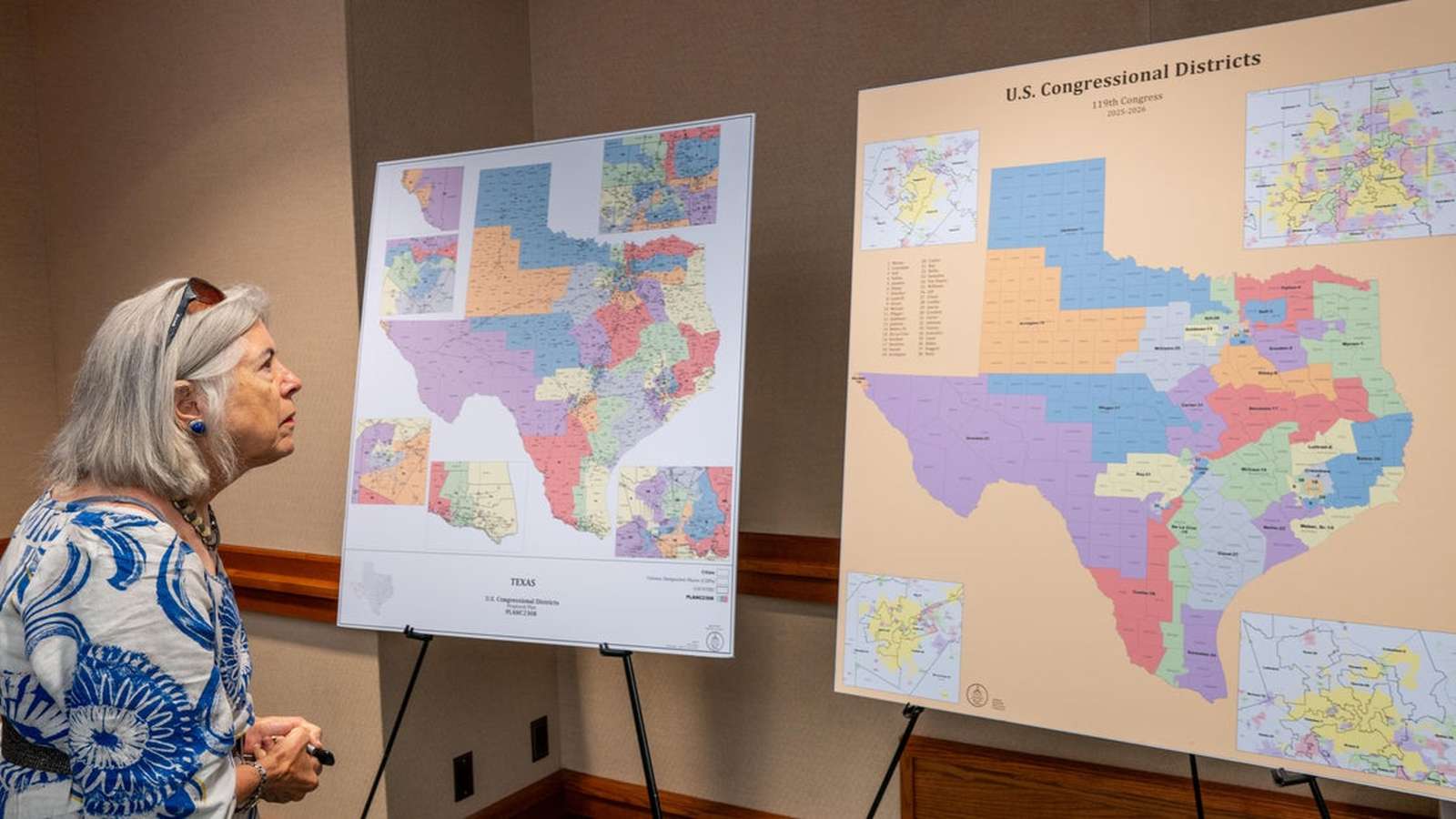
The Rise of the ‘Dummymander’
Following the November 3, 2026, general election, it has become clear that an unprecedented, nationwide Republican effort to redraw congressional district boundaries mid-decade has largely collapsed. Aimed at securing a firmer grip on the House of Representatives, these aggressive maneuvers—often pursued under pressure from national party leadership—have instead produced a phenomenon known as a “dummymander.” In this scenario, partisan map-making efforts designed to consolidate power inadvertently backfire, providing the opposition with a structural advantage or failing to eliminate competitive districts.
As reported by CBS News, the Democratic Party has secured control of the House of Representatives, with current estimates projecting they will hold between 251 and 268 seats. This shift marks a significant reversal for the GOP, which had prioritized mid-decade redistricting in several states to neutralize Democratic electoral strength. Instead, the party finds itself defending seats that were previously considered safe or losing ground in areas where they had sought to expand their influence.
State-Level Failures and Strategic Miscalculations
The scale of the failure is evident in key states where the GOP attempted to aggressively reshape the electoral map. In Texas, where Republicans aimed to net five additional seats by leveraging gains made by Donald Trump in South Texas, the effort stalled. As of Wednesday, November 4, 2026, Republicans maintained 24 seats while Democrats held 14, effectively maintaining the status quo and rendering the redistricting attempt a net failure in terms of its primary objective. Similarly, in Ohio, a commission of GOP-appointed members drew maps targeting Democratic incumbents, including Reps. Marcy Kaptur and Greg Landsman. Despite these efforts, seven Democrats held their seats, and the state’s delegation shifted toward the minority party.
North Carolina presents perhaps the most stark example of the strategy’s volatility. Despite holding a veto-proof majority in the statehouse, Republican attempts to oust Democratic Rep. Don Davis and redraw the map have resulted in a landscape where five seats are currently leaning Democratic, with four others remaining as toss-ups. Similar outcomes were observed in Tennessee and Alabama, where legal challenges following a Supreme Court ruling on the Voting Rights Act complicated GOP efforts to reduce the influence of majority-Black districts. In Alabama, the failure to net additional seats despite targeting these districts has left the state’s delegation unchanged, cementing the “dummymander” outcome.
Institutional Stakes and Political Consequences
The “dummymander” phenomenon illustrates the risks inherent in mid-decade redistricting, a practice that was once rare in American politics. By attempting to maximize partisan advantage, Republican lawmakers often pushed for maps that were thinner in their margins, leaving them vulnerable to shifts in voter turnout or candidate performance. In Florida, where Gov. Ron DeSantis led a push to net four additional seats, the GOP has seen five districts remain as toss-ups as of the post-election count, a far cry from the projected expansion.
Furthermore, the internal political pressure to deliver on these maps led to resistance even within party ranks. In Indiana, the state Senate rejected a map pushed by national leadership that would have targeted the state’s two remaining Democratic lawmakers. By retaining the previous boundaries, the state avoided a potential legal or political catastrophe, though the GOP still faced losses in other races. The cumulative effect of these failures has left the Republican caucus in a precarious position, with their legislative power in the House significantly diminished as a direct result of their own strategic overreach.