


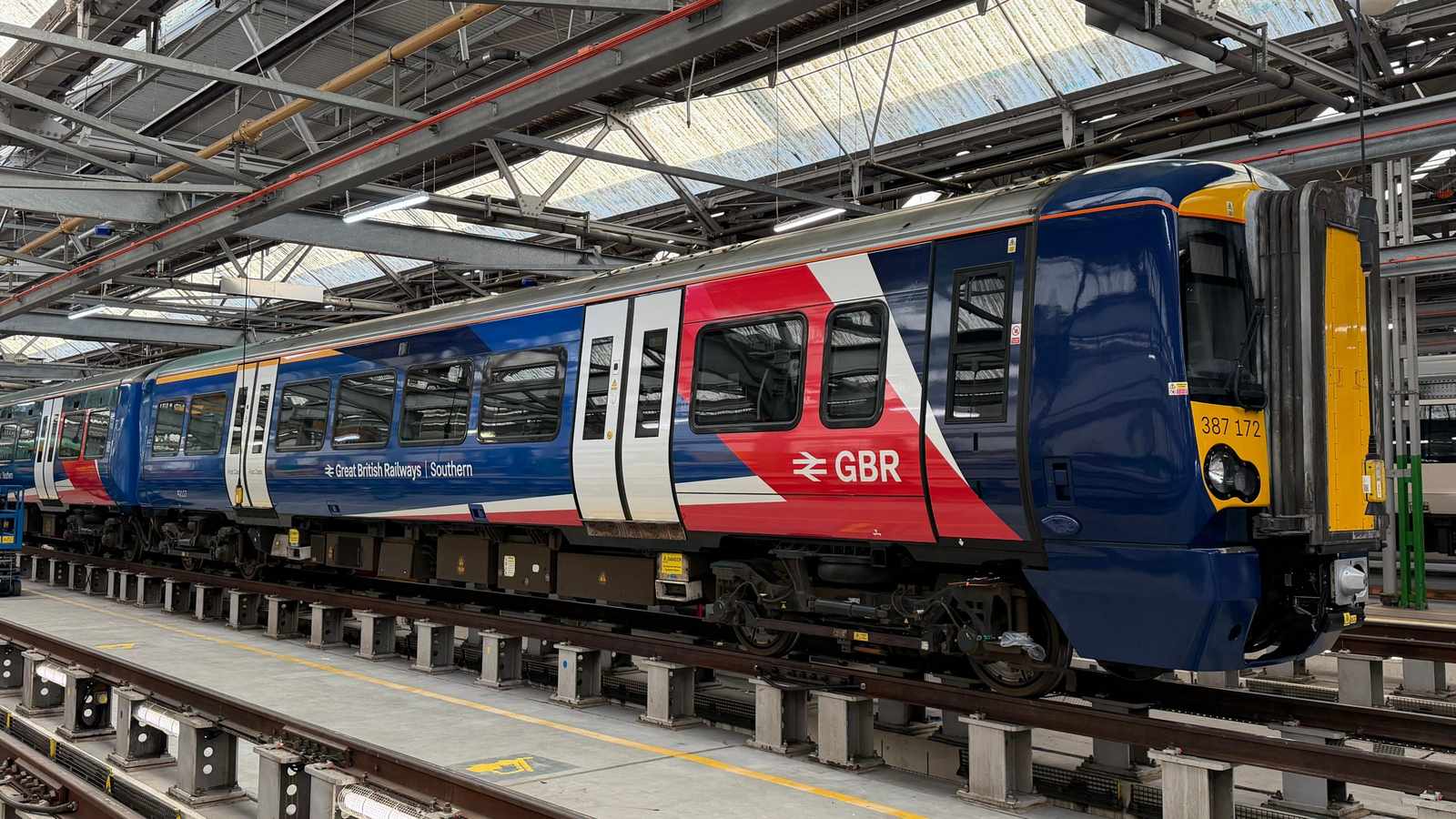
A New Identity for a Unified Network
The unveiling of the first Great British Railways (GBR) branded train in Brighton marks a pivotal moment in the systematic restructuring of the United Kingdom’s rail infrastructure. The Class 387 train, operated by Southern, now features a distinct red, white, and blue livery inspired by the Union flag, incorporating the iconic double-arrow logo long associated with British Rail. This aesthetic shift is not merely cosmetic; it serves as a visual precursor to the formal transition of Govia Thameslink Railway (GTR) into public ownership, scheduled for May 31, 2026.
As GTR joins the expanding portfolio of publicly managed operators—which already includes LNER, Northern, and South Western Railway—the scale of the reform becomes clear. Upon the completion of this latest transfer, approximately 80% of all passenger rail journeys in Britain will fall under the purview of publicly owned services. This consolidation represents the culmination of a multi-year effort to reverse three decades of fragmentation, aiming to replace a disjointed market with a cohesive, passenger-focused institution.
Operational Integration and Performance Metrics
The government’s strategy relies on the premise that a unified public entity can deliver superior service reliability compared to the fragmented private model. According to Department for Transport (DfT) data, publicly owned operators such as c2c and Greater Anglia are currently demonstrating higher punctuality benchmarks, with over 90% of trains arriving within three minutes of their scheduled time and cancellation rates consistently below 2%. These figures provide a baseline for the expectations placed on the newly integrated network.
Transport Secretary Heidi Alexander has framed this transition as a fundamental reform rather than a superficial rebrand. The integration is supported by tangible operational adjustments, including a 76,000-seat weekly increase in capacity introduced in the December timetable and the successful reopening of the Northumberland Line. Furthermore, the introduction of a centralized GBR ticketing app is intended to simplify the passenger experience, offering a single platform for schedules, ticket purchases without booking fees, and the management of accessibility requirements.
The Timeline of Nationalisation
The transition of GTR is a major milestone, but it is part of a broader, phased schedule. The government has committed to completing the full nationalization of remaining rail operators by the end of 2027. Following the inclusion of Chiltern Railways in September 2026 and Great Western Railway in December 2026, the structural overhaul will be largely complete. The GBR brand will be rolled out gradually across stations, uniforms, and rolling stock, a strategy designed to manage costs and ensure fiscal responsibility for taxpayers.
The shift toward a unified, publicly owned rail system reflects a significant departure from the privatization era that began in the 1990s. While the logistical challenge of integrating diverse regional operators is substantial, the government maintains that a single, joined-up identity is essential for fostering long-term economic growth, supporting housing development, and providing a reliable service that prioritizes the needs of the traveling public over operational fragmentation.
The success of Great British Railways will ultimately depend on its ability to sustain these performance improvements across a vastly larger network. By aligning the interests of passengers, freight customers, and taxpayers under one institutional umbrella, the government is betting that centralization will resolve the chronic inefficiencies that have plagued the rail sector for years. The transition remains a complex political and operational undertaking, but the early metrics from already nationalized operators provide a cautious optimism that a more unified approach can deliver the consistency and value that the British rail network has long struggled to maintain.