
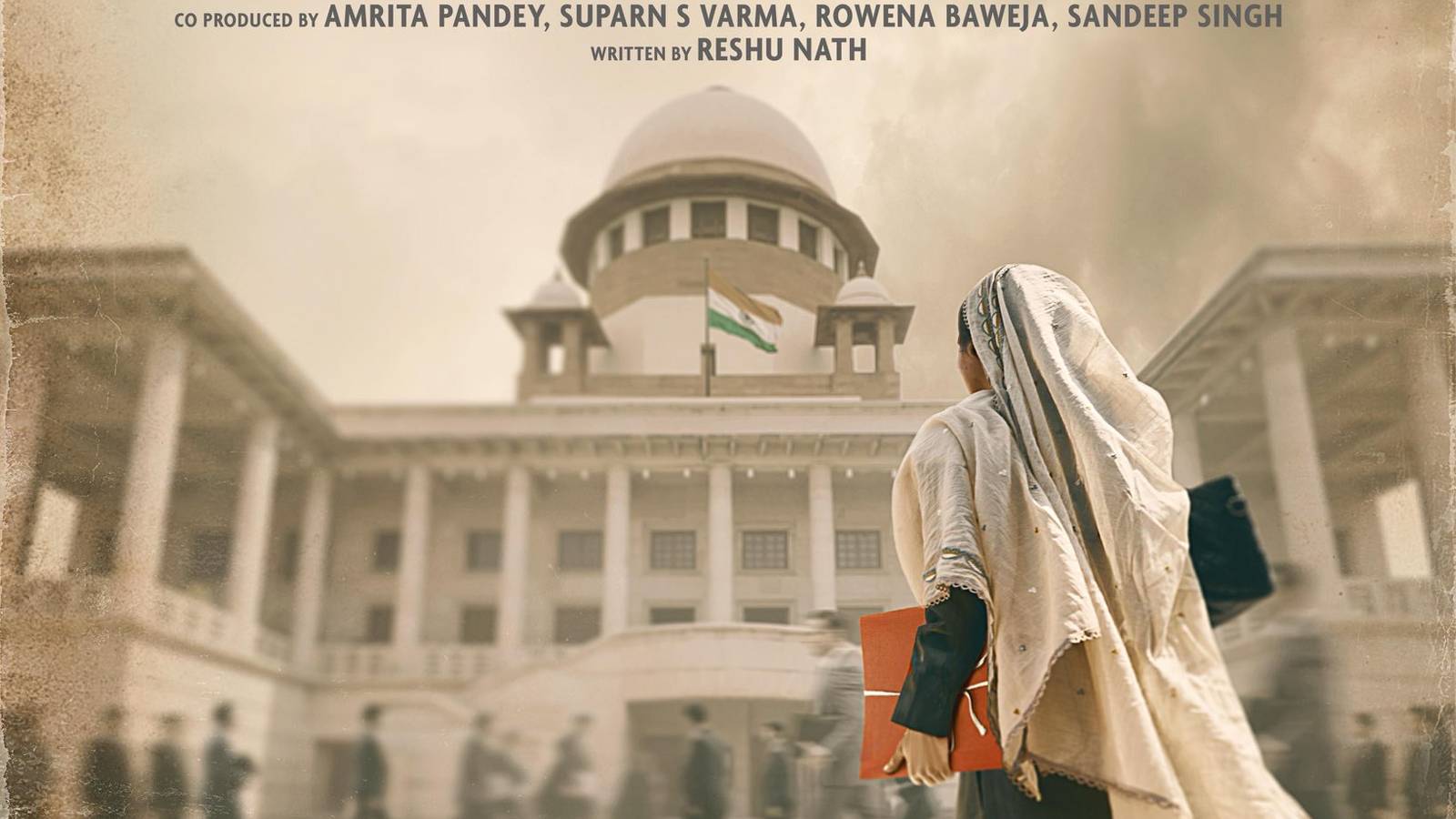
Quick Read
- The film ‘Haq’ is inspired by the real-life Shah Bano case.
- Shah Bano fought for maintenance after divorce, leading to a landmark 1985 Supreme Court ruling.
- The case sparked debates and led to new legislation affecting Muslim women’s rights in India.
Few films in recent memory have ignited public debate like “Haq,” a courtroom drama that blends cinematic storytelling with the gravity of real-world legal history. Released in theaters in November 2025 and landing on Netflix at the start of 2026, “Haq” dives deep into the journey of Shazia Bano, whose fight for justice echoes the landmark Shah Bano case that reshaped the conversation on women’s rights and personal law in India.
Fiction Meets Fact: The Story Behind “Haq”
At the heart of “Haq” lies the story of Shazia Bano, played by Yami Gautam. Shazia’s life unfolds in the late 1960s in Uttar Pradesh, where she marries Abbas Khan, a respected lawyer portrayed by Emraan Hashmi. Raised in a conservative Muslim household, Shazia devotes herself to her marriage and family. For a time, happiness prevails as the couple welcomes children and builds a life together.
The plot twists sharply when Abbas returns from a trip to Pakistan, introducing his new wife Saira (Vartika Singh) into the household. Shazia, blindsided and forced into a fractured home, finds herself increasingly isolated and emotionally battered. The situation escalates when Abbas divorces Shazia through the controversial practice of triple “Talaq,” leaving her with little support and pressing financial need. Her struggle for maintenance and dignity propels her into the legal system, setting the stage for a confrontation that mirrors a real-life legal watershed.
The Shah Bano Case: A Turning Point in Indian Law
“Haq” draws inspiration from the case of Shah Bano Begum, whose fight for maintenance after divorce became a defining moment in Indian judicial history. In 1978, Shah Bano, abandoned by her husband Mohd. Ahmed Khan, sought legal recourse when he ceased supporting her and their children. The case, formally known as Mohd. Ahmed Khan v. Shah Bano Begum, challenged the boundaries of Muslim personal law versus secular legislation.
Shah Bano’s journey was fraught with personal and social obstacles. Ostracized by her community and forced to live apart, she nonetheless persisted, backed by her father and supported by lawyers Bela Jain and Farhaan Ansari. The legal battle reached the Supreme Court, which ruled in her favor in 1985, granting maintenance under Section 125 of the Criminal Procedure Code. This precedent secured divorced Muslim women’s right to maintenance, despite religious opposition.
The backlash was swift. While the verdict was hailed by women’s rights advocates, it faced resistance from religious authorities who saw it as a challenge to Islamic law. The controversy resulted in the passage of the Muslim Women (Protection of Rights on Divorce) Act, 1986, which diluted the Supreme Court’s judgment and carved out a separate legal framework for divorced Muslim women. Still, the Shah Bano case remains a reference point in discussions of secularism, women’s rights, and legal reform in India.
Personal Costs and Lasting Impact
The legal battle had profound effects on those involved. Mohd. Ahmed Khan, Shah Bano’s husband, reportedly never practiced law again after losing in court. He died in 2006 at the age of 94, leaving behind children from both marriages. Shah Bano, meanwhile, struggled with declining health and the emotional toll of the fight. Her son Jameel and daughter Siddiqua Ahmed recalled in interviews the dramatic changes in their father’s attitude and their family’s situation after the second marriage and the subsequent legal proceedings (Hindustan Times, The Indian Express).
The legacy of Shah Bano’s struggle endures. The case remains a touchstone for legal scholars, activists, and those advocating for gender justice, sparking ongoing debates about the intersection of faith, law, and women’s rights in India. It also forced a reckoning within Indian society about the need to balance religious autonomy with constitutional guarantees of equality.
Critical Reception: “Haq” and Its Cultural Resonance
“Haq” has earned widespread acclaim for its portrayal of complex, real-life issues through compelling drama. Viewers and critics alike have praised Yami Gautam’s nuanced performance, calling it among her finest work, while Emraan Hashmi’s depiction of Abbas Khan has been singled out for its emotional depth. The film’s restrained approach, authentic direction, and powerful script have drawn favorable comparisons to classics such as “Nikaah.”
Netizens have applauded the film’s refusal to sensationalize, instead offering a thoughtful reflection on a difficult subject. Its success is rooted in the honesty of its narrative, the strength of its performances, and its willingness to confront uncomfortable truths about law, religion, and family.
Based on the available facts, “Haq” stands as a rare example of Indian cinema that bridges art and activism. Its depiction of the Shah Bano-inspired legal battle is grounded in reality, resisting exaggeration while illuminating the human costs of legal reform. The film’s impact lies not just in its storytelling, but in its ability to spark conversation about justice and equality—issues that remain as vital in 2026 as they were decades ago.