


The Institutional Reset: Baldini’s Interim Mandate
In the immediate aftermath of Italy’s catastrophic failure to qualify for the 2026 FIFA World Cup—a collapse punctuated by a play-off defeat to Bosnia and Herzegovina—the Federazione Italiana Giuoco Calcio (FIGC) has entered a period of profound structural introspection. The resignation of Gennaro Gattuso left a leadership vacuum that has been temporarily filled by Silvio Baldini, the U21 head coach. Baldini’s appointment for the upcoming June friendlies against Luxembourg and Greece is not merely a stop-gap measure; it represents a calculated attempt to decouple the national team from the trauma of the senior squad’s recent failures and reintegrate it with the burgeoning talent of the youth sectors.
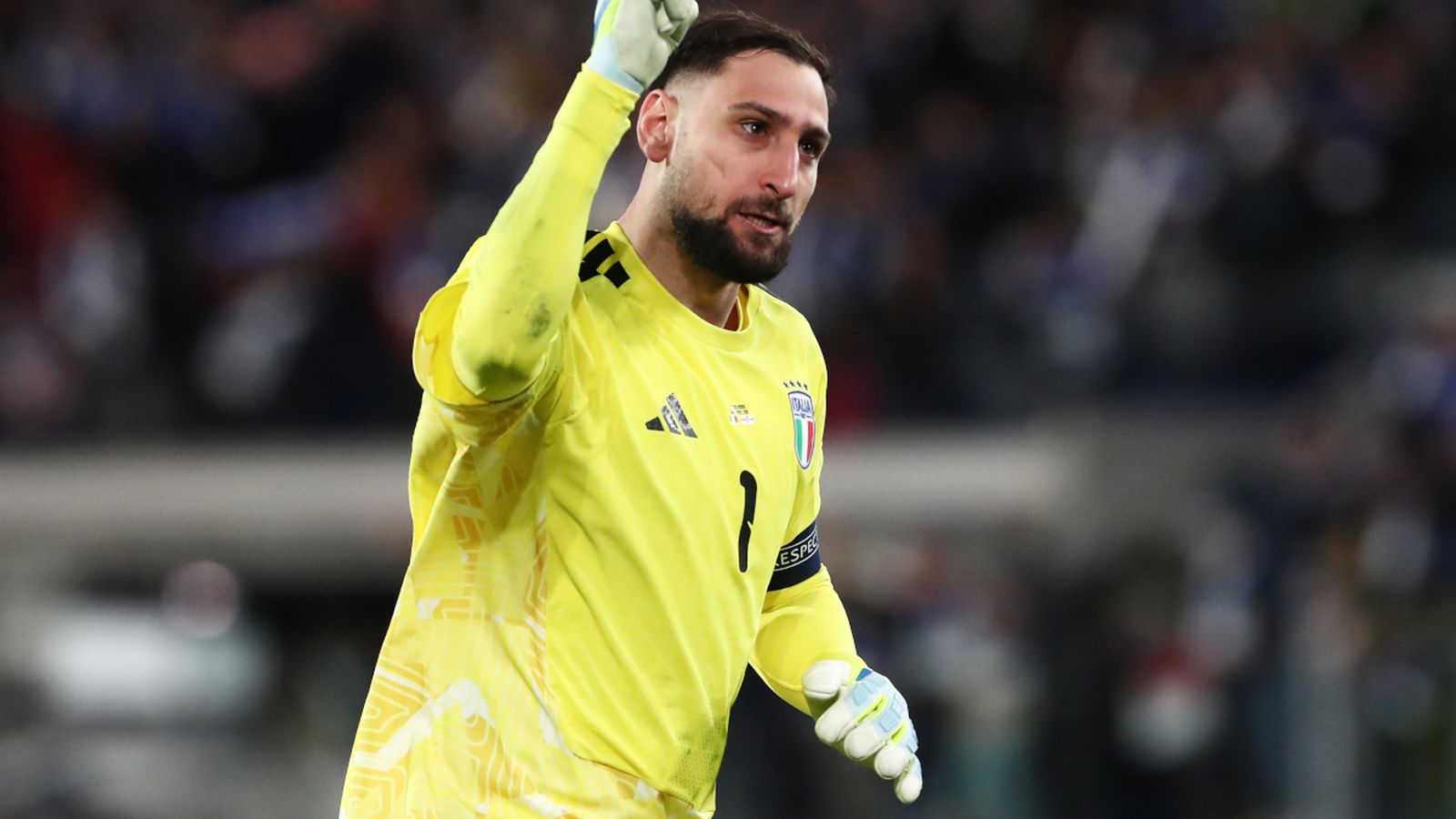
Baldini’s initial roster selection serves as a manifesto for this new era. Of the 24 players summoned, only four—Gianluigi Donnarumma, Marco Palestra, Niccolo Pisilli, and Francesco Pio Esposito—possess senior international experience. This radical pruning of the squad indicates a policy shift toward a total rebuild, prioritizing psychological resilience and long-term development over the preservation of an established, yet underperforming, veteran core. The exclusion of most senior mainstays is not entirely a selection choice by Baldini; rather, it reflects a broader emotional withdrawal within the Italian camp. Baldini confirmed that Donnarumma was the only member of the regular senior squad to voluntarily offer his availability for the June window, a gesture that underscores the captain’s commitment to institutional continuity despite the prevailing atmosphere of defeatism.
The 2028 Olympic Prospect: A Strategic Pivot
The most significant policy revelation from Baldini’s introductory press conference was the explicit linking of the current squad to the 2028 Los Angeles Olympics. Under FIFA and IOC regulations, Olympic football is primarily an U23 tournament, but nations are permitted three overage players. Baldini’s suggestion that Donnarumma and Francesco Pio Esposito are already being considered for these slots four years in advance is a rare example of long-range strategic planning in Italian football. According to Baldini, “I’ve called two senior level players like Donnarumma and Pio Esposito into the group because I see the possibility of having these players, also ahead of the Olympics.”
This Olympic focus serves two purposes. First, it provides a tangible competitive goal for a nation that will be conspicuously absent from the 2026 World Cup stage. Second, it allows the FIGC to utilize Donnarumma’s leadership in a mentorship capacity for the U21 players who will form the backbone of the 2027 U21 European Championship campaign—the qualifying tournament for the Olympics. By integrating Donnarumma now, the federation is attempting to bridge the gap between the disgraced senior setup and the successful U21 environment. This move is also a recognition of Donnarumma’s unique status; at 27 years old in 2026, he remains young enough to bridge two full World Cup cycles while possessing the institutional memory of Italy’s Euro 2020 triumph.
Leadership Under Fire: Donnarumma’s Solitary Stand
Speaking from the Coverciano training center, Donnarumma articulated the depth of the current crisis, describing the World Cup exit as an “incredible blow” that surpassed previous failures in its emotional toll. His decision to bypass the optional rest period granted to other senior stars is a calculated political statement. “As the captain, I felt compelled to call the coach and give my availability,” Donnarumma stated, framing his presence as a duty to the “Azzurri shirt.” This rhetoric is essential for a federation currently facing intense public and commercial scrutiny.
The captain’s comments also touched upon the departure of key figures like Gabriele Gravina and Gigi Buffon from the immediate orbit of the team’s daily operations, noting that the “magical” environment created under Gattuso had been shattered. Donnarumma’s willingness to endorse Baldini—a coach he described as a “man of great values”—is a vital endorsement for an interim manager who lacks the high-profile CV typically associated with the Italian national post. Furthermore, Donnarumma’s public openness to a foreign manager—specifically mentioning his relationship with the departing Manchester City coach Pep Guardiola—signals a shift in the traditionalist Italian football culture. While he clarified that he has not actively lobbied Guardiola, his assertion that a foreign coach “wouldn’t be a problem” suggests the playing squad is ready for a departure from the tactical dogmas that have defined the FIGC for decades.
The Governance Vacuum and the Search for a Permanent Successor
The current technical direction under Baldini remains precarious, tethered to the upcoming federal elections within the FIGC. The appointment of a permanent head coach is effectively frozen until a new president is seated. This administrative paralysis complicates the rebuilding process, as Baldini’s “Olympic project” could be discarded by a successor seeking a different tactical or demographic direction. However, by naming Donnarumma as the pillar of the transition, the FIGC is attempting to create a “player-led” stability that can survive administrative turnover.
The stakes for the upcoming friendlies are paradoxically high. While the matches against Luxembourg and Greece are “meaningless” in terms of rankings or trophies, they are the first data points in a post-Gattuso era. For players like Francesco Pio Esposito, who is coming off a breakthrough season at Inter Milan, these fixtures are an opportunity to solidify their status as the new face of the national team. For the FIGC, the success of this youth-heavy experiment will determine whether the federation continues with its “Green Line” policy or reverts to a reliance on established veterans once the immediate pain of the World Cup failure subsides.
The current state of the Italian national team reveals a profound disconnect between individual talent and institutional health. Donnarumma’s solitary decision to remain at the front lines while his peers retreat highlights a leadership crisis that transcends the pitch. By pivoting toward the 2028 Olympics, the FIGC is attempting to buy time and manufacture hope, yet without a permanent administrative structure or a definitive coaching philosophy, this ‘Olympic project’ risks becoming a distraction from the systemic reforms required to prevent a third consecutive World Cup absence. The reliance on a single veteran anchor to stabilize a sea of youth is a high-stakes gamble on the resilience of a captain who is himself still processing the trauma of national failure.