


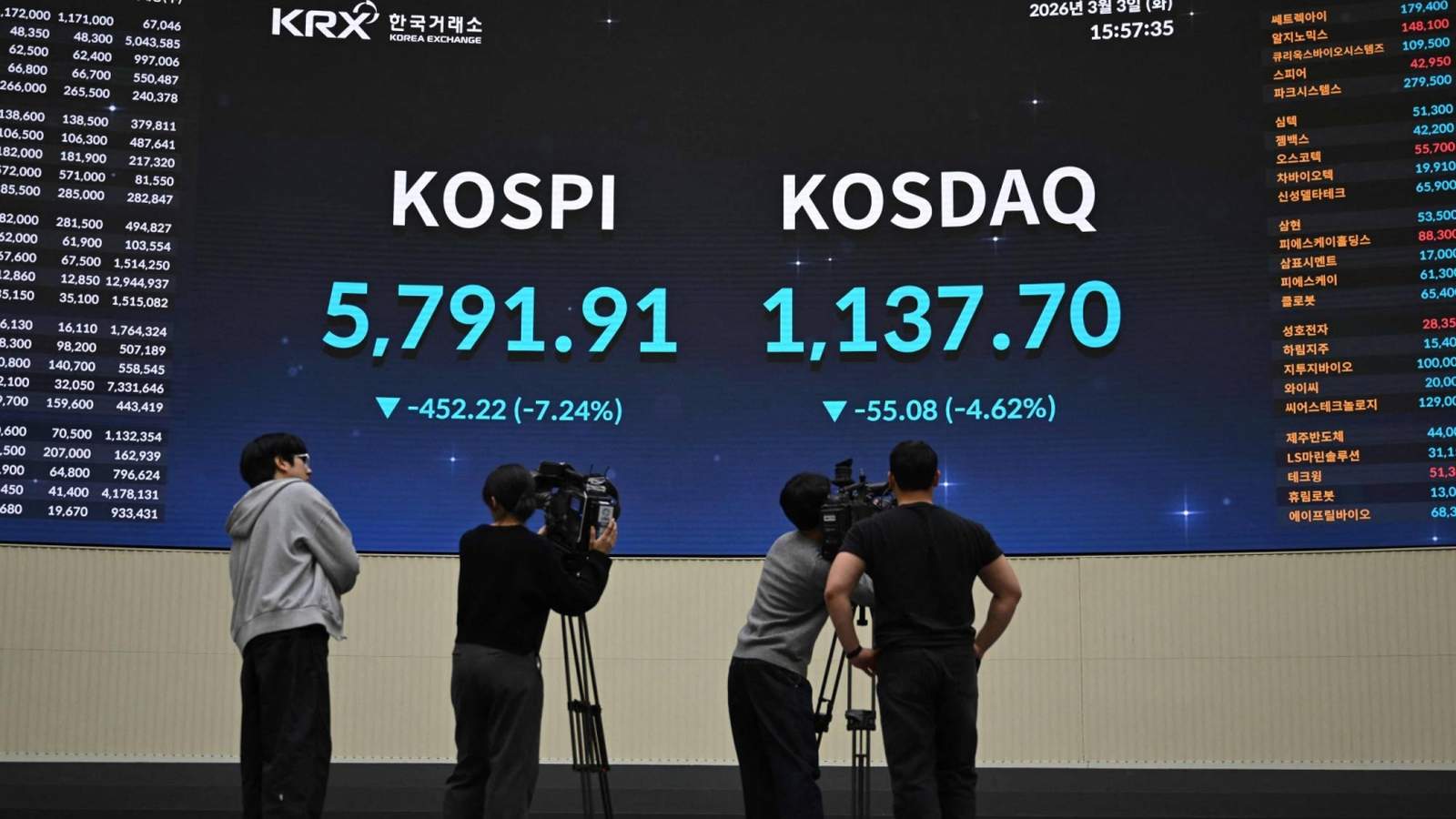
South Korea’s benchmark Kospi index fell by 10% on Tuesday, June 23, 2026, marking its most significant daily decline since March 4. The sell-off, which closed the index at 8,203.84 points, was driven by a sharp retreat in the technology sector, mirroring broader concerns regarding the sustainability of the ongoing AI-fuelled market rally.
The downturn hit major chipmakers Samsung Electronics and SK Hynix particularly hard, with both companies shedding over 12% of their market value. Because these two firms account for more than half of the Kospi’s total market capitalization, their decline triggered an automatic 20-minute bourse-wide trading halt during the afternoon session.
Market analysts point to heightened volatility driven by retail investor activity as a primary concern. Alexander Redman, chief equity strategist at CLSA, noted that the market’s current state appears “dangerously overstretched.” Regulators have expressed alarm over the impact of leveraged single-security ETFs, which were introduced last month and are believed to have exacerbated the sell-off. Lee Chan-jin, head of South Korea’s market watchdog, stated that the government may have acted prematurely in approving these leveraged funds.
The drop follows a period of record-high margin debt among retail investors in June and comes as the Kospi had previously surged nearly 95% year-to-date. While equity markets faced intense pressure, debt markets saw a flight to safety, with the yield on the benchmark 10-year Korean treasury bond falling by 1.8 basis points to 4.179%.