


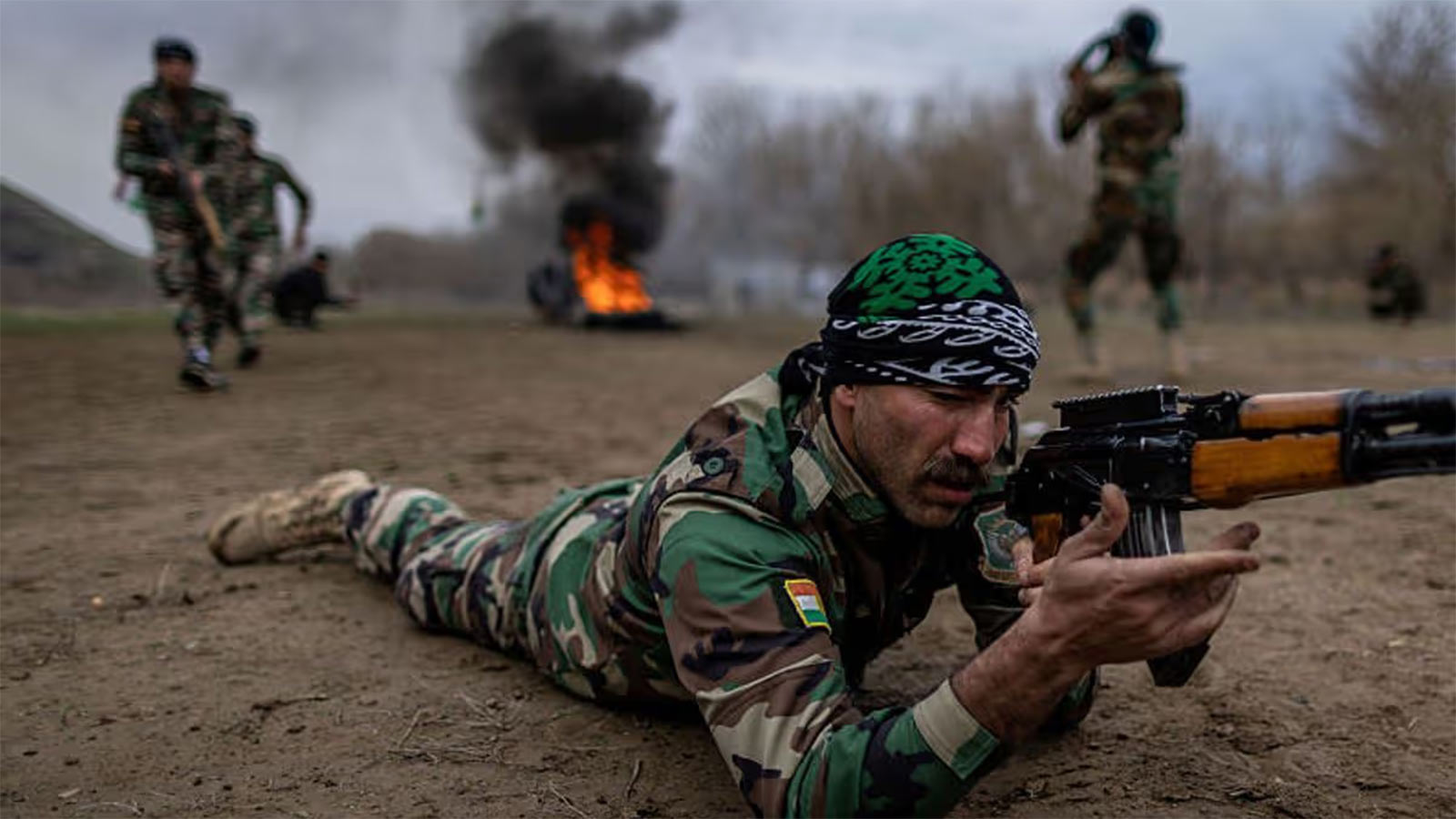
Tehran (Azat TV) – Iranian Kurdish militias have launched a ground offensive against regime forces in western Iran, a development confirmed by an official from the Coalition of Political Forces of Iranian Kurdistan (CPFIK). This military action, reportedly initiated on March 2, comes amidst increasing reports of active discussions between U.S. intelligence and Iranian Kurdish groups regarding potential military and logistical support. The offensive marks a significant escalation in regional tensions and indicates a new phase in efforts to challenge the Iranian government.
According to an i24NEWS exclusive, a CPFIK official stated that ground military movements by Kurdish forces based in Iraq began at midnight on March 2. The official reported that Iranian forces evacuated the border city of Mariwan on March 3, establishing new defensive positions. Fighters from the Kurdistan Free Life Party (PJAK), a key component of the CPFIK, are reportedly deployed deep within the Zagros Mountains, utilizing armed wings modeled after Kurdish formations in Syria. These developments unfold as the U.S. and Israel have recently conducted strikes against Iran, prompting President Donald Trump to engage with Kurdish leaders in Iraq, including Masoud Barzani and Bafel Talabani, to discuss the ongoing conflict and potential next steps, as reported by JINSA.
Kurdish Offensive Underway in Western Iran
The commencement of the ground offensive in western Iran follows months of heightened rhetoric and covert activities. The CPFIK, a newly unified umbrella organization of six Iranian Kurdish opposition parties, including PJAK and the Democratic Party of Iranian Kurdistan (PDKI), formed after eight months of negotiations, signaling a more coordinated approach to challenging Tehran. Their operational charter includes a joint command for armed wings and a framework for international engagement, which they now appear to be leveraging. A senior Iranian Kurdish official told CNN that these militias expect U.S. and Israeli support for their operations, believing this period presents a significant opportunity for action against the Iranian regime.
The Iranian Revolutionary Guard Corps (IRGC) has responded to the escalating situation, reportedly targeting Kurdish groups with dozens of drones and missile attacks since February 28. These strikes, which have caused confirmed casualties, underscore the volatile security environment along the Iraq-Iran border. Despite the risks, Kurdish leaders appear determined to press their advantage, viewing the current regional instability as a critical moment for their aspirations.
U.S. Engagement and Support for Kurdish Groups
Multiple media outlets, including CNN and Axios, have reported that Washington is seriously considering or actively pursuing plans to arm Kurdish forces. CNN sources indicated that the CIA is working to arm Kurdish groups with the aim of fomenting a popular uprising inside Iran. This strategy, sometimes referred to as a ‘by, with, and through’ approach, was previously employed against ISIS and could empower Kurdish forces to pressure the Iranian regime in Kurdish regions and coordinate with broader opposition networks. JINSA further highlighted that American intelligence is in active discussions about providing weapons and military support to Iranian Kurdish forces.
However, the prospect of U.S. support is met with a mix of hope and trepidation among Kurdish factions. While many Kurdish leaders express overwhelming opposition to the Iranian regime, they also harbor fears of being abandoned by international partners, a sentiment echoed by a senior Kurdistan Regional Government official who told CNN, ‘We are very frightened.’ This historical caution stems from past alliances, particularly the U.S. partnership with the Syrian Democratic Forces (SDF) in the fight against ISIS, which many Syrian Kurds felt ended in betrayal when the U.S. alliance was declared ‘largely expired’ earlier this year.
Lessons from Syria: A Cautious Partnership
The experience in Syria serves as a crucial backdrop for current discussions. The U.S. relied heavily on Kurdish forces as its primary ground partner against ISIS, with the SDF losing thousands of fighters. Yet, when Syria’s political landscape shifted, the alliance proved difficult to sustain. Iranian Kurdish leaders are acutely aware of this precedent and are seeking concrete political assurances from the Trump administration before fully committing to any resistance effort. They need to understand not only Washington’s immediate desire for their assistance but also its long-term commitments to their aspirations.
For an effective partnership, JINSA emphasizes that both sides must overcome lingering misgivings and learn from past experiences. The U.S. is urged to make credible commitments of support for Iranian Kurdish aspirations and to defend Kurdish opposition bases in Iraqi Kurdistan from Iranian strikes. Conversely, Kurdish actors are advised to maintain strategic discipline, recognizing that while they represent a significant force, they cannot lead a national revolution unilaterally. Overplaying their hand could alienate other opposition constituencies—Persian, Arab, and Baluch—whose cooperation would be vital for any durable transition.
Regional Implications and Iranian Response
The potential for a U.S.-backed Kurdish ground operation in Iran carries profound regional implications. An official from the CPFIK openly framed Kurdish cooperation with the U.S. and Israel as part of a broader geopolitical vision, suggesting that weakening Tehran could lead to greater autonomy or independence for Iran’s various ethnic groups. The official even posited that a future Kurdish state could serve as a strategic corridor linking the Persian Gulf to Israel, arguing that Kurds and Jews share common adversaries in the region. These ambitious claims, however, have not been publicly confirmed by the White House or Israeli officials.
The Iranian regime, for its part, views any such collaboration as a direct threat to its territorial integrity and has demonstrated its willingness to use force against Kurdish opposition groups. The ongoing IRGC strikes against Kurdish bases in Iraqi Kurdistan highlight Tehran’s resolve. The U.S. maintains an intelligence post in Iraqi Kurdistan near the Iranian border and coalition forces in Erbil, possessing the operational infrastructure to respond to Iranian aggression, though the political will to directly use it against Iran has been a subject of debate.
The reported commencement of a ground offensive by Iranian Kurdish militias, coupled with ongoing U.S. discussions for military support, signals a critical shift from covert pressure to overt, potentially proxy, conflict. This development directly challenges the Iranian regime on its own territory, but also carries significant risks for regional stability and the long-term prospects of Kurdish self-determination, particularly given the complex history of U.S.-Kurdish alliances.