


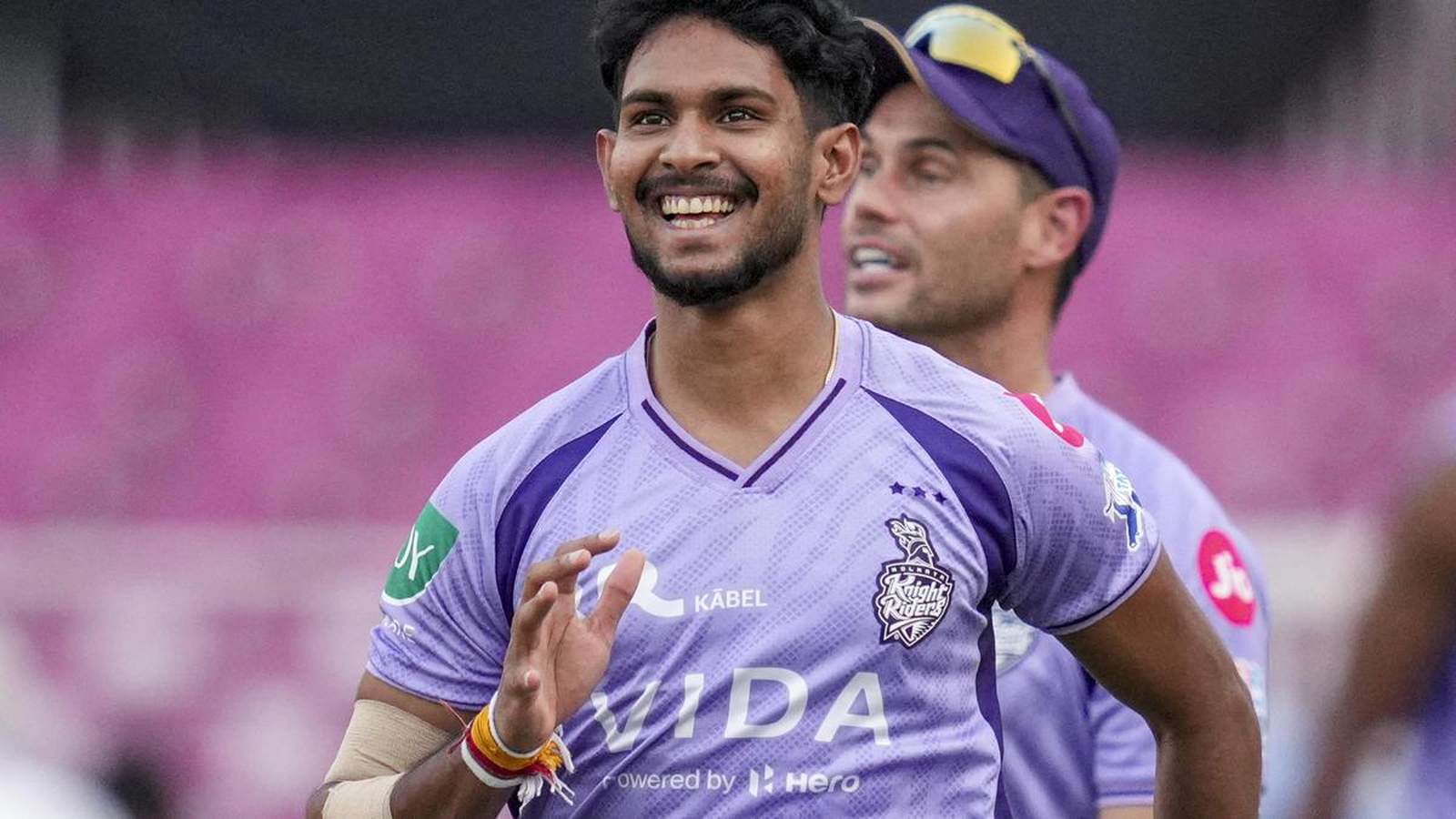
The 18-Crore Debut That Lasted Eight Deliveries
In a season defined by high-stakes financial commitments and aggressive roster building, the Kolkata Knight Riders (KKR) faced a catastrophic setback on Saturday at Eden Gardens. Matheesha Pathirana, the Sri Lankan pace prodigy acquired for a staggering Rs 18 crore at the IPL 2026 auction, saw his long-awaited debut cut short after just eight deliveries. The fast bowler, renowned for his ‘Malinga-esque’ slinging action, was forced to walk off the field during the clash against Gujarat Titans (GT) due to a recurring left calf injury.
The optics of the exit were as painful as the injury itself. After missing the first half of the tournament to recover from a calf strain sustained during the T20 World Cup in March 2026, Pathirana’s return was framed as the final piece of KKR’s championship puzzle. However, after bowling seven balls, Pathirana pulled out of his run-up on the eighth. Despite brief on-field treatment and an attempt to finish the over with a slower ball, the discomfort was visible. His subsequent departure from the ground leaves KKR’s management grappling with the reality of an expensive asset sidelined during the most critical phase of the season.
Quantifying the Institutional Risk
The Pathirana incident is not merely a sports injury; it is a case study in the financial risks inherent in modern franchise cricket. At Rs 18 crore, Pathirana represents one of the highest per-ball valuations in the league’s history for the 2026 cycle. KKR’s decision to invest such a significant portion of their purse in a player with a known history of soft-tissue injuries now faces intense scrutiny. According to reports from NDTV Sports and Sportstar, the franchise had already been navigating a depleted bowling attack, with Akash Deep and Harshit Rana sidelined, and Varun Chakaravarthy struggling with fitness.
The strain on the roster is reaching a breaking point. While KKR’s batting lineup—led by Finn Allen’s explosive 93 and unbeaten fifties from Angkrish Raghuvanshi and Cameron Green—powered the team to a season-high 247/2, the bowling department remains a structural vulnerability. Without Pathirana to anchor the death overs, the tactical burden shifts to a rotating cast of domestic replacements who lack the Sri Lankan’s specialized skill set in high-pressure scenarios.
The Physiological Toll of the ‘Slinger’ Action
Medical analysts have long pointed to the extreme physical demands of Pathirana’s unique bowling mechanics. The lateral flexion required for his release point puts disproportionate stress on the lower limbs, specifically the calves and ankles. Having already missed the initial phase of IPL 2026 following the T20 World Cup, the recurrence suggests that the rehabilitation period may have been insufficient or that the intensity of the IPL environment exceeded the player’s current physical threshold. The loss of Pathirana is a blow not only to KKR but also to the Sri Lankan national team, which views him as a generational talent.
As Gujarat Titans struggled to chase KKR’s massive total, the absence of Pathirana was a looming shadow over the Eden Gardens. While the immediate match result favored the home side due to their batting dominance, the long-term outlook for their playoff campaign is now clouded by the uncertainty of their primary strike bowler’s availability. The recurring nature of Pathirana’s calf injury points to a systemic failure in balancing player recovery with the commercial demands of back-to-back high-intensity tournaments. For KKR, the 18-crore investment currently yields a cautionary tale: in the pursuit of elite talent, franchises must weight the brilliance of a player’s peak against the reliability of their physical foundation. The inability to secure a return on such a high-value asset could dictate the strategic direction of future IPL auctions, shifting the focus toward durability over sheer velocity.