


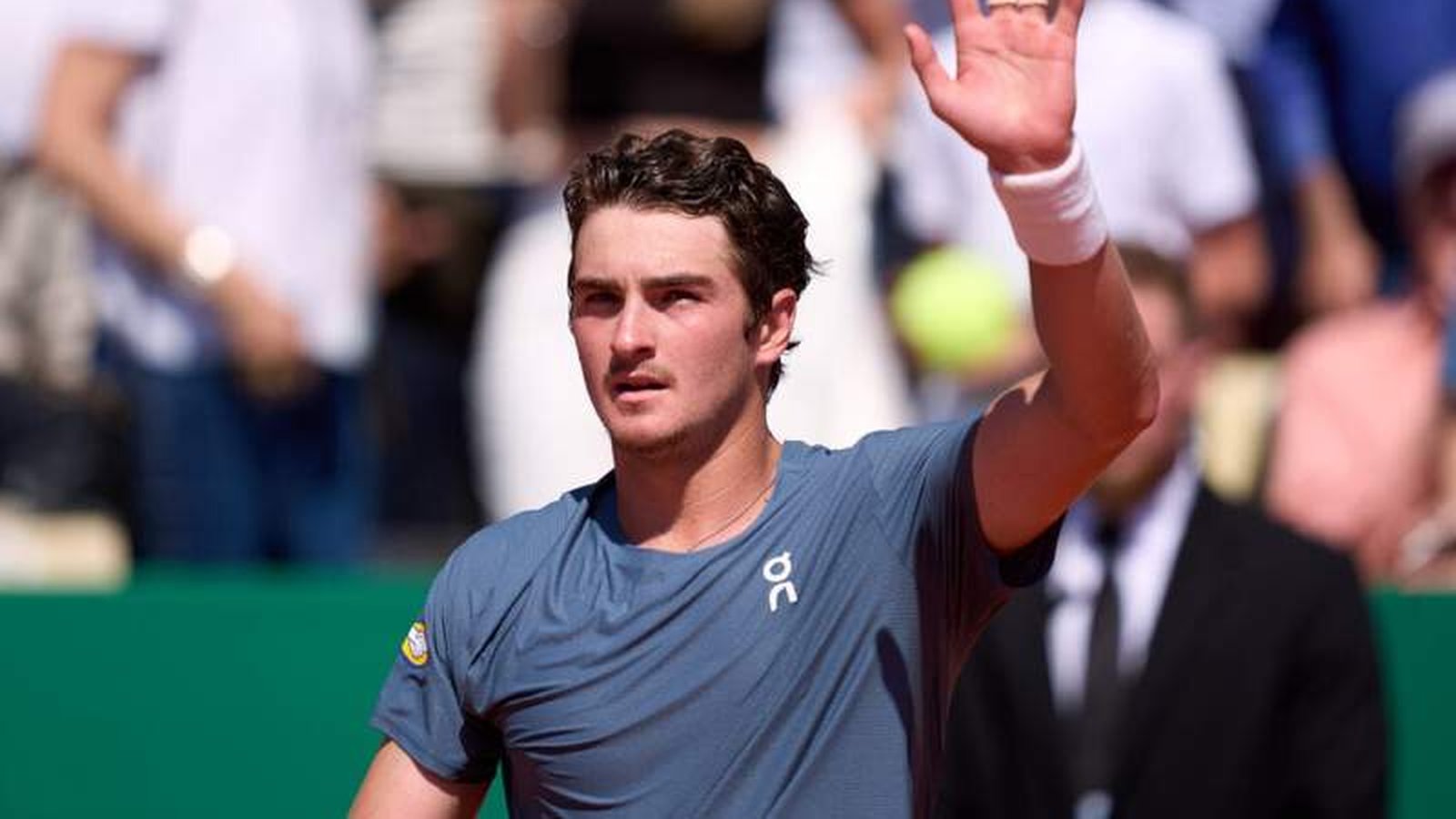
The Escalating Tension on the Red Dirt
The Italian Open in Rome, typically a bastion of traditional tennis decorum, has become the epicenter of a growing debate regarding the ‘footballization’ of tennis crowds. The recent third-round clash between Serbian rising star Hamad Medjedovic and Brazilian sensation Joao Fonseca served as a flashpoint for this issue, as intense, partisan cheering threatened to derail the competitive integrity of the match.
During the deciding set, as Medjedovic attempted to serve out the victory, the atmosphere became increasingly hostile. Medjedovic was forced to appeal directly to chair umpire Jimmy Pinoargote, stating, “Tell them to shut up and let me serve. I’ll play.” The official’s response—that the crowd would inevitably be loud and that the player must adapt—highlights a systemic challenge: how do officials balance the entertainment value of an energized crowd against the professional necessity of a focused, undistracted playing environment?
The Shift in Crowd Dynamics
The phenomenon is not isolated. Younger players like Fonseca, who command massive, vocal followings, are inadvertently bringing a stadium culture more akin to football or basketball into the intimate confines of a tennis court. While this energy can boost the sport’s profile and commercial appeal, it poses a direct threat to the concentration required for elite-level tennis. Medjedovic, who eventually prevailed 3-6, 6-3, 7-6(1), later admitted that while he found the crowd’s energy difficult to navigate, it ultimately served as a catalyst for his mental resilience.
“It was a rollercoaster,” Medjedovic told Tennis TV. “It was not easy to go through those moments, but the crowd helped me a lot. I think I was very, as some would say, locked in.” Despite the diplomatic phrasing, the incident underscores the psychological burden placed on players when they must compete against both their opponent and a hostile gallery.
Institutional Stakes and Future Policy
The governing bodies of tennis are now facing a difficult balancing act. On one hand, the ATP and WTA seek to capture the fervor of younger audiences; on the other, they must preserve the fundamental tenets of the sport. If the trend of disruptive, constant noise persists, it may necessitate a shift in officiating protocols—potentially granting umpires more power to penalize crowds or interrupt play to ensure silence during service motions.
As the Italian Open progresses toward the quarter-finals, the focus remains on whether these behavioral standards will be reinforced. Players like Medjedovic, who are currently fighting for career-best rankings, cannot afford to have their professional development hampered by uncontrollable crowd interference. The integrity of the Masters 1000 series relies on the ability of athletes to perform at their peak, free from the external pressures of unruly spectators.
Assessment: The Medjedovic-Fonseca incident is a symptomatic warning for the ATP. As tennis looks to modernize, it must define a clear boundary between ‘passionate support’ and ‘disruptive behavior.’ Failure to do so risks alienating the athletes themselves, who may increasingly view high-stakes environments as hostile rather than professional, ultimately undermining the sport’s competitive equilibrium.