
Quick Read
- Pope Francis passed away at 88 after a stroke.
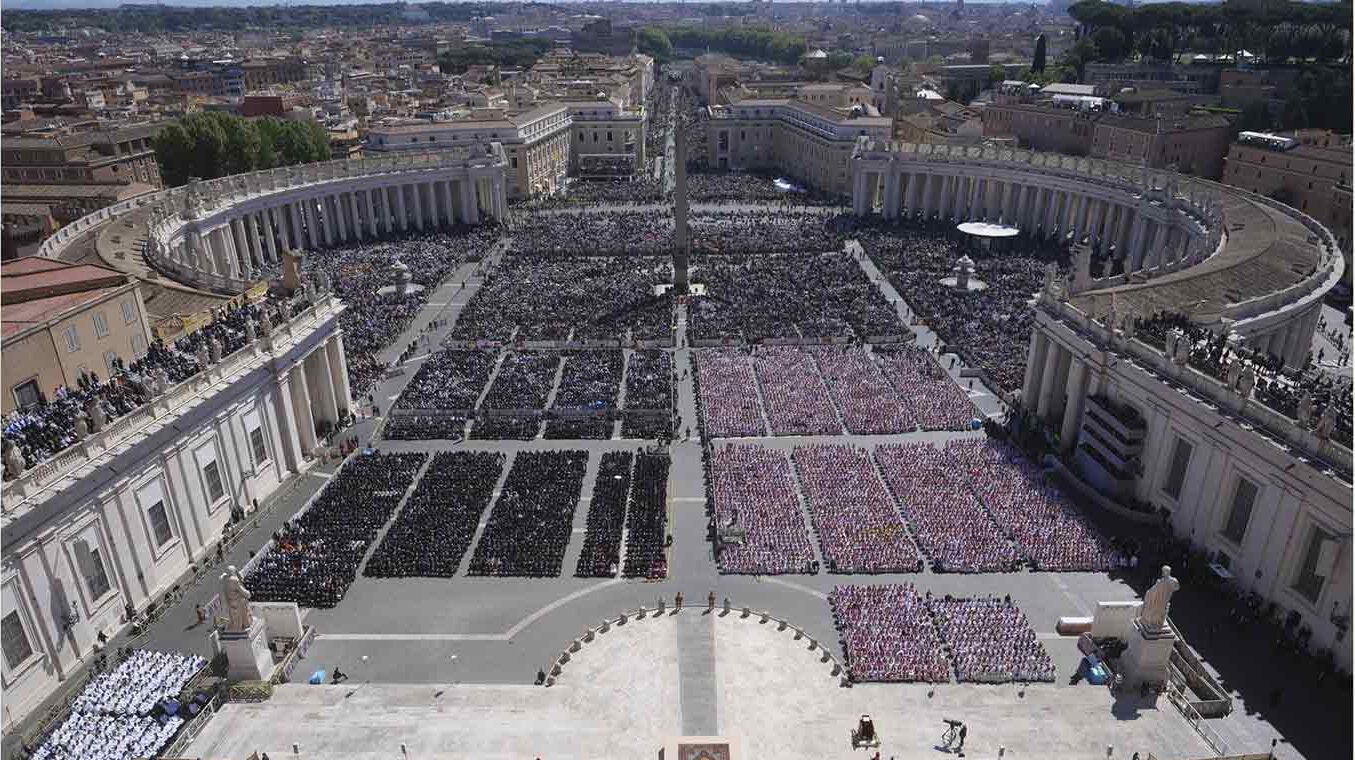
- Over 250,000 mourners attended his funeral in St. Peter’s Square.
- World leaders, including Donald Trump and Emmanuel Macron, were present.
- He was buried in Santa Maria Maggiore Basilica, honoring his humble legacy.
- The conclave to elect a new pope will begin in early May.
Pope Francis Laid to Rest in Rome After Historic Funeral
Pope Francis, the 266th leader of the Roman Catholic Church, was laid to rest on Saturday, April 26, 2025, following a historic funeral ceremony in St. Peter’s Square at the Vatican. The funeral drew over 250,000 mourners, including world leaders, religious figures, and ordinary citizens, who gathered to honor the life and legacy of the first Latin American pope.
Three Days of Mourning
The public mourning period began on Tuesday, April 22, 2025, as tens of thousands of mourners filed past Pope Francis’ open coffin in St. Peter’s Basilica. The Vatican extended viewing hours overnight to accommodate the unexpectedly large crowds. Many individuals, including clergy and laypeople, waited hours to pay their respects.
Angele Bilegue, a nun who visited the coffin three times, shared her emotional connection to the late pope. “He was my friend, so I went one last time to say goodbye. I cried,” she said. Pope Francis was laid out in red robes, a bishop’s miter, and a rosary entwined in his hands, reflecting his role as a spiritual leader. His well-worn black shoes, marked by scuffing, symbolized his commitment to simplicity and humility.
The Funeral Ceremony
The funeral Mass, presided over by Cardinal Giovanni Battista Re, took place under clear skies in St. Peter’s Square. The Vatican estimated that over 250,000 people attended the ceremony, filling the square and surrounding streets. Choirs sang hymns in Latin, and prayers were recited in multiple languages, including Italian, Spanish, Chinese, Portuguese, and Arabic, reflecting the global reach of the Catholic Church.
Cardinal Re, in his homily, emphasized Pope Francis’ legacy of compassion and advocacy for the marginalized. “Rich in human warmth and deeply sensitive to today’s challenges, Pope Francis truly shared the anxieties, sufferings, and hopes of this time,” he said. The ceremony concluded with applause as pallbearers carried the pope’s coffin from the square.
A Procession Through Rome
Following the funeral, Pope Francis’ coffin was placed on an open-topped vehicle and transported through the streets of Rome to the Papal Basilica of St. Mary Major (Santa Maria Maggiore). The 4-kilometer route was lined with approximately 300,000 mourners, many of whom waved signs and threw flowers as the procession passed iconic landmarks like the Colosseum.
The decision to bury Pope Francis at Santa Maria Maggiore, rather than St. Peter’s Basilica, was in keeping with his humble persona. The burial site is near the Salus Populi Romani icon of the Madonna, a symbol of devotion for the late pope. The tombstone bears a simple inscription in Latin: “Franciscus.”
World Leaders in Attendance
The funeral attracted 164 delegations from around the world, including 54 heads of state and 12 reigning monarchs. Notable attendees included U.S. President Donald Trump, French President Emmanuel Macron, and Ukrainian President Volodymyr Zelenskyy. Trump and Zelenskyy held a brief meeting during the event, discussing the ongoing war in Ukraine. Italian Prime Minister Giorgia Meloni described the day as “historic,” noting the symbolic importance of world leaders discussing peace at the funeral of the “Pope of Peace.”
Other dignitaries included U.K. Prime Minister Keir Starmer, King Felipe VI and Queen Letizia of Spain, and Brazilian President Luiz Inácio Lula da Silva. The diverse attendance underscored Pope Francis’ global influence and his efforts to bridge divides between nations and cultures.
Security Measures
Given the high-profile nature of the event, Italian authorities deployed over 2,500 police officers and 1,500 soldiers to ensure security. The operation included an armed naval vessel stationed off the coast and fighter jets on standby. The measures were part of a broader effort to safeguard the funeral and the subsequent procession through Rome.
A Legacy of Humility and Service
Pope Francis, born Jorge Mario Bergoglio in Argentina, served as pope for 12 years. His papacy was marked by a focus on social justice, environmental stewardship, and outreach to the marginalized. He often eschewed traditional papal luxuries, choosing to live in a modest Vatican guesthouse and wear simple attire.
Francis’ humility extended to his funeral arrangements. He opted for a single wooden coffin, lined with zinc, rather than the traditional three-layered caskets. A rogito, or written account of his life and papacy, was placed in the coffin alongside coins minted during his tenure. The document highlighted his advocacy for the poor, his encyclicals, and his health challenges.
With Pope Francis’ burial complete, attention now turns to the conclave that will elect his successor. Cardinals from around the world have begun arriving in Rome, with formal discussions set to begin after nine days of mourning. The conclave is expected to start in early May, following ancient rituals and procedures. The new pope will inherit a church grappling with financial challenges, ideological divisions, and the need to address global crises. Cardinal François-Xavier Bustillo, reflecting on Francis’ legacy, described him as “a free man” who “humanized the church without desacralizing it.” As the Catholic Church prepares for its next chapter, the memory of Pope Francis’ humility, compassion, and dedication to social justice will undoubtedly shape its future direction.