

Quick Read
- Russian submarine Novorossiysk surfaced off France, reportedly after a fuel leak near Gibraltar.
- NATO monitored the vessel; Russia denies malfunction, citing standard navigation rules.
- Dutch Navy and tugboat escorted the submarine, suggesting possible towing.
- Incident highlights reduced Russian naval presence in the Mediterranean.
- NATO launched its annual nuclear exercise amid heightened tensions.
NATO Monitors Russian Submarine Surfacing Off French Coast
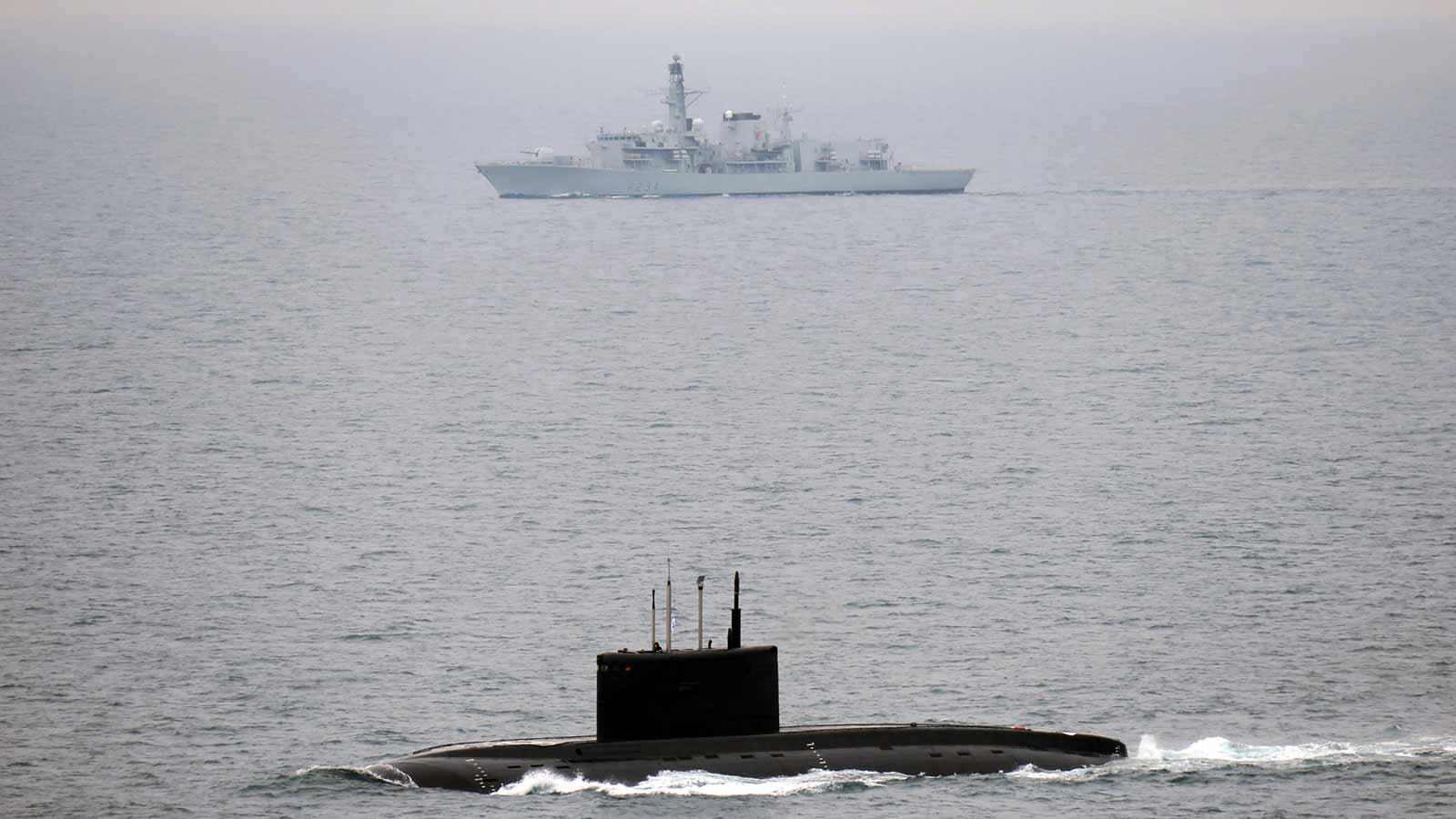
It was an unusual sight in the Atlantic: a Russian submarine, the Novorossiysk, surfaced off the coast of Brittany, France. The event quickly drew the attention of NATO, whose naval forces, including a French frigate, began monitoring the vessel’s movements. NATO Secretary-General Mark Rutte did not hold back, openly mocking the submarine as “broken” and “limping home.” The episode, reported by Reuters and confirmed by NATO’s Maritime Command, has become a focal point in the ongoing tension between Russia and Western alliances.
Fuel Leak Claims and Russian Denials
The Novorossiysk is a Kilo-class, diesel-electric submarine, armed with Kalibr cruise missiles and part of Russia’s Black Sea Fleet. According to Dutch media and the Kyiv Independent, the submarine suffered a serious fuel leak near Gibraltar in late September. The Russian crew reportedly discovered fuel flooding the hold and, without qualified specialists on board, was forced to surface and “drain the hold” directly into the sea—allegedly to prevent an explosion. Open-source trackers even flagged a U.S. Navy patrol plane flying overhead as the situation unfolded.
Despite mounting evidence, Russian officials rejected claims of a malfunction. The Black Sea Fleet insisted the Novorossiysk was on a “scheduled inter-fleet transit” after completing a planned Mediterranean deployment, and surfaced in accordance with international law. According to maritime regulations, submarines are required to travel surfaced and display their flag when passing through the English Channel. Russia maintains that the surfacing was routine, not an emergency.
Escorted and Monitored: NATO’s Response
NATO’s Maritime Command posted photos of a French Navy frigate shadowing the surfaced submarine near Brittany, underscoring the alliance’s vigilance. The Dutch Navy, along with the tugboat Yakov Grebelsky, reportedly escorted the Novorossiysk as it headed toward northern waters for repairs. Rutte, in a speech in Slovenia, referenced Tom Clancy’s iconic novel, quipping, “What a change from the 1984 Hunt for Red October. Today, it seems more like the hunt for the nearest mechanic.” His remarks highlighted the perceived decline of Russian naval strength in the Mediterranean, asserting, “There’s a lone and broken Russian submarine limping home from patrol.”
The situation comes as NATO launches its annual “Steadfast Noon” nuclear exercise, involving dozens of aircraft and heightened security measures across Europe—an atmosphere already tense due to recent drone incursions and ongoing military realignments.
Contradictory Narratives and Geopolitical Implications
The incident exposes a widening gap between official Russian statements and Western intelligence reports. While Russian authorities maintain that all procedures were standard and deny any technical failures, Dutch officials and open-source intelligence suggest the submarine was likely towed, unable to continue under its own power. The episode not only raises questions about the operational readiness of Russia’s naval assets but also reflects broader shifts in maritime security.
Analysts, speaking to France 24 and other outlets, suggest the Novorossiysk may have been involved in intelligence gathering or equipment transport, rather than a direct combat operation. Its inability to dock in Black Sea or Syrian ports, and the need for repairs in northern waters, points to logistical challenges facing Russia’s fleet.
Russian Shadow Fleet: A Broader Context
This submarine incident is set against the backdrop of Russia’s expanding “shadow fleet”—a network of over 940 tankers used to export oil and petroleum products, many of them old and inexpensive vessels. According to RBC-Ukraine, the European Commission’s latest sanctions package specifically targets this shadow fleet, further tightening the economic noose around Russia’s maritime ambitions.
The Novorossiysk’s troubles, whether mechanical or political, symbolize the challenges facing Russia’s navy in the face of growing Western surveillance and sanctions. As the vessel limps toward repairs, NATO’s message is clear: the alliance remains vigilant, ready to defend its maritime approaches, and quick to spotlight any Russian missteps.
Assessment: The surfacing of Novorossiysk off France, amid conflicting reports of technical failure and Russian denials, illustrates not just the vulnerability of a single submarine, but a shifting balance of maritime power. NATO’s rapid, public response and Russia’s defensive narrative reveal a contest of credibility as much as capability. In this high-stakes game, transparency and operational reliability may prove as decisive as firepower.