


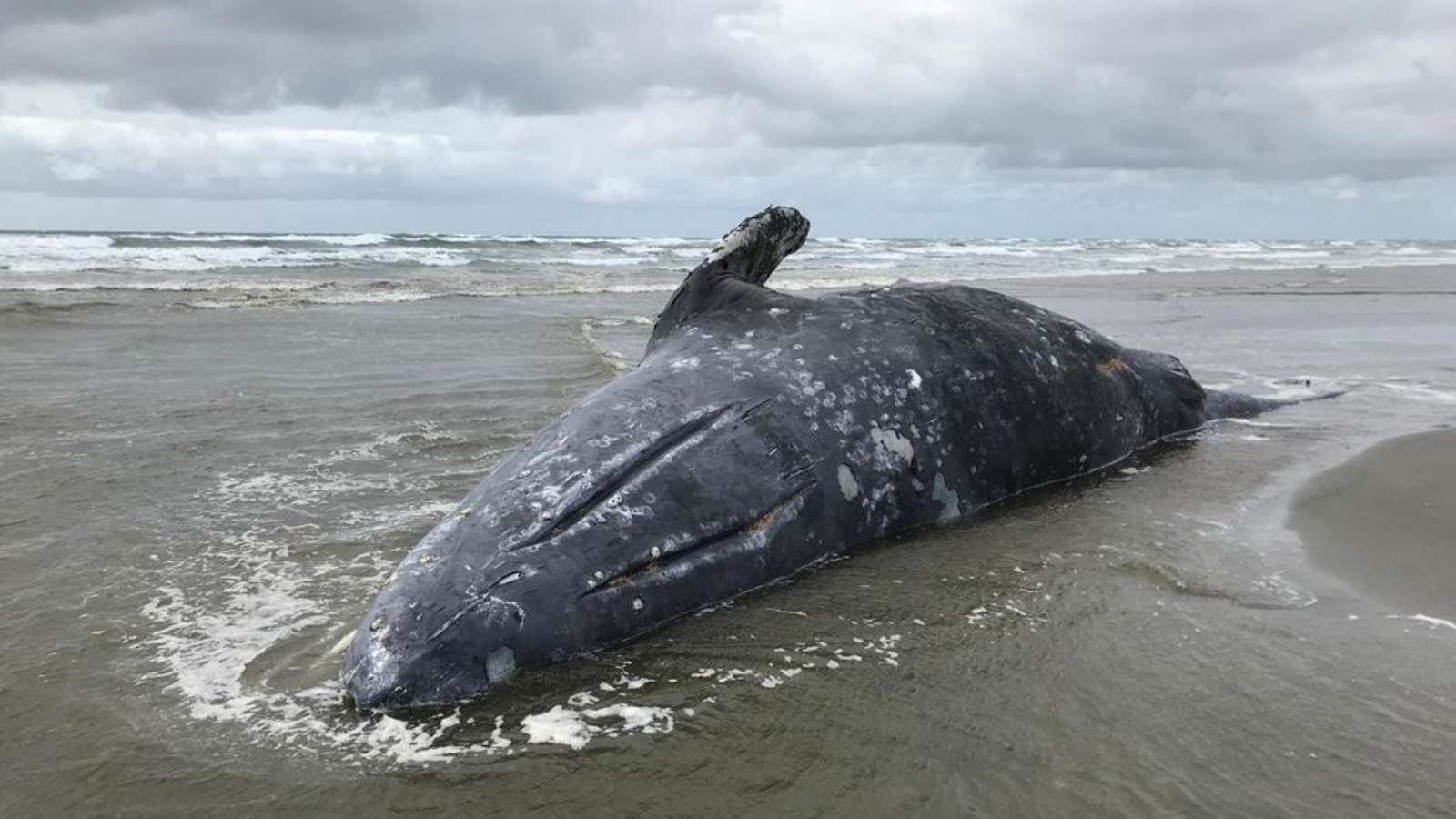
SEATTLE (Azat TV) – A troubling trend of gray whale mortality has gripped the Pacific Northwest, with three confirmed deaths in Washington state within a 48-hour window. The most recent and highly unusual case involves a juvenile gray whale that traveled 20 miles inland up the Willapa River, where it was later found deceased. Marine researchers are now investigating whether these incidents reflect a broader, systemic failure in the species’ food supply across the Pacific.
Increasing Inland Movement and Starvation Risks
The juvenile whale, colloquially named “Willapa Willy” by local residents, was first spotted last Wednesday in the north fork of the Willapa River, roughly 145 miles southwest of Seattle. The Cascadia Research Collective, which monitored the situation, had initially hoped the whale would navigate back to the open ocean. However, the animal succumbed to its condition over the weekend. Experts pointed to severe malnutrition as a primary factor in the animal’s desperate search for alternative feeding grounds, an behavior increasingly observed in the eastern Pacific population.
Broader Ecological Shifts in the Pacific
According to researchers at the Cascadia Research Collective, the recent inland entry is not an isolated anomaly but likely a symptom of reduced food availability in the whales’ traditional feeding grounds in the northern Bering and Chukchi seas off the coast of Alaska. This nutritional stress is forcing whales to explore unconventional, often dangerous habitats in a bid to survive. The deaths of two additional 42-foot adult gray whales in the nearby Ocean Shores area earlier this month have further heightened concerns; biological evaluations of these animals confirmed they were suffering from extreme malnutrition, with one also exhibiting signs of a fatal ship strike.
Stakes for Gray Whale Survival
The survival of the gray whale population remains a critical concern for conservationists. While gray whales are a staple of ecotourism and a vital component of the Pacific ecosystem, they face a gauntlet of threats ranging from vessel strikes and fishing gear entanglement to the looming threat of habitat degradation. As these whales venture further into inland waterways to find sustenance, they become increasingly vulnerable to human-induced hazards. The combination of environmental shifts and physical risks creates a precarious future for the species, as researchers work to determine if these current mortality rates indicate a long-term decline in the Pacific gray whale population.
The clustering of these deaths, particularly the emergence of malnourished whales in inland river systems, suggests that the current ecological stressors in the North Pacific are pushing the species toward a behavioral shift that significantly increases their mortality risk, signaling a potential crisis for the regional population.