
Quick Read
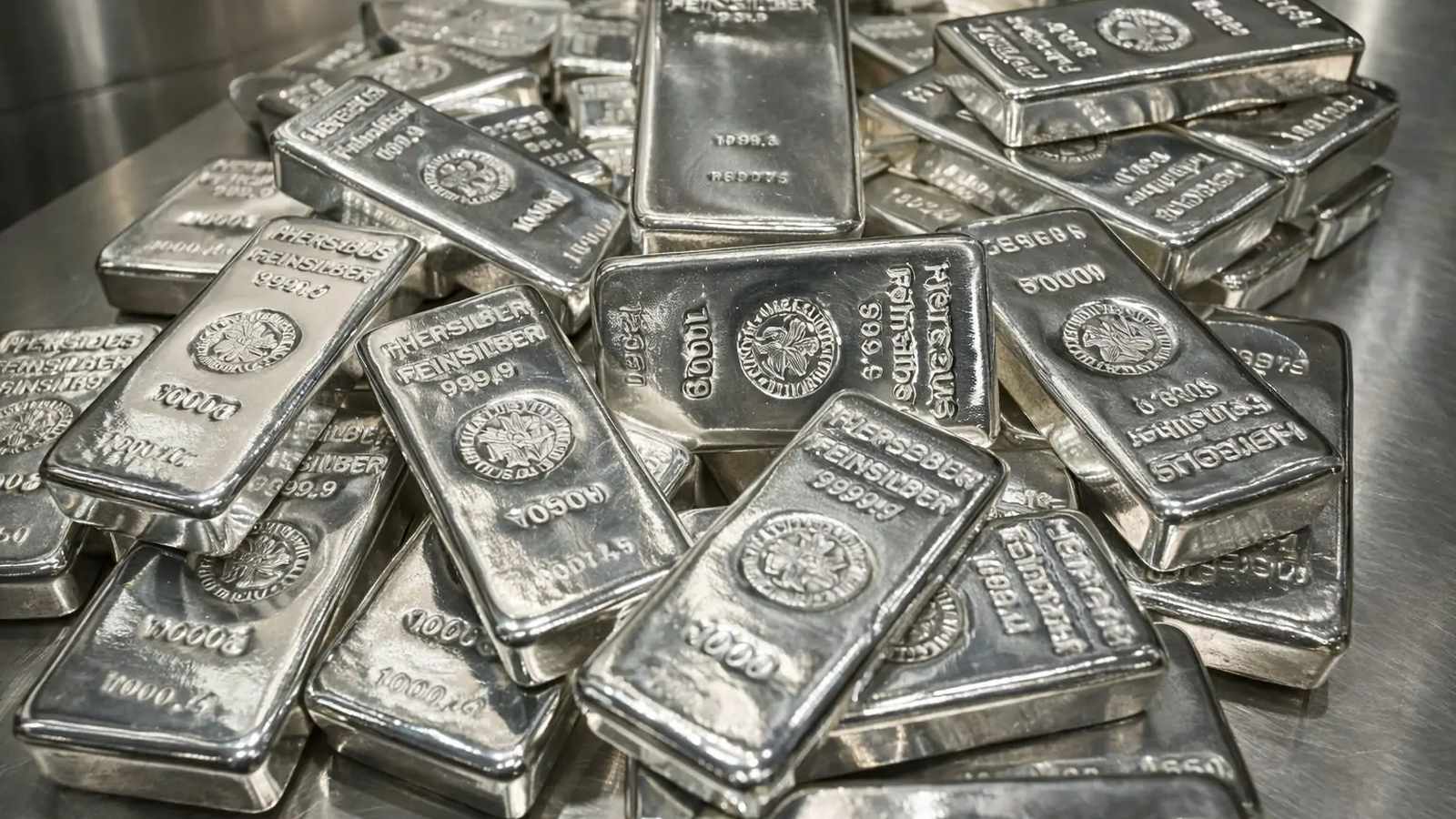
- Silver futures surged 5.8% to an all-time high of over $95.40 an ounce.
- Gold futures also hit a new record, surpassing $4,740 an ounce.
- The rally in precious metals was triggered by President $1’s threat of new tariffs on NATO allies over Greenland.
- Major U.S. stock futures (Dow, S&P 500, Nasdaq 100) dropped significantly.
- The yield on the 10-year U.S. Treasury note jumped seven basis points to roughly 4.30%.
Global financial markets experienced significant volatility on Tuesday as silver futures surged by an impressive 5.8% to reach a new all-time high of over $95.40 an ounce in electronic trading. This dramatic ascent, mirrored by gold futures also hitting a fresh record above $4,740 an ounce, comes amidst widespread market unease triggered by $1 Donald Trump’s threat to impose new tariffs on eight NATO allies. The proposed tariffs, stemming from the allies’ opposition to his desired sale of Greenland to the United States, sent stock futures diving and Treasury yields jumping, prompting investors to flock to traditional safe-haven assets like precious metals.
Geopolitical Tensions Ignite Market Sell-Off
The immediate catalyst for the market’s turbulence was a declaration made by President $1 Trump over the weekend via his Truth Social network. Trump threatened to levy 10% U.S. import tariffs on eight NATO allies beginning February 1, followed by a steeper 25% tariff from June 1. These punitive measures, he stated, would remain in effect “until such time as a Deal is reached for the Complete and Total purchase of Greenland.” This unexpected and aggressive stance against key international partners sent shockwaves through global financial centers, reminding investors of the profound impact political rhetoric can have on economic stability.
The threat of a new tariff war, particularly one targeting long-standing allies, immediately translated into a broad market sell-off. Stock futures connected to major U.S. indices plunged in premarket trading. Nasdaq 100 futures dropped 1.9%, S&P 500 futures fell 1.6%, and Dow Jones Industrial Average futures pointed down 1.3%. This decline was particularly pronounced among big tech stocks, with shares of the ‘Magnificent Seven’ firms—Nvidia (NVDA), Alphabet (GOOGL), Amazon (AMZN), Meta Platforms (META), and Tesla (TSLA)—all seeing premarket declines of roughly 2.5% to 3%. The prospect of increased trade barriers and strained international relations introduced a significant layer of uncertainty, leading investors to shed riskier assets.
Further exacerbating the market’s jitters, the yield on the 10-year U.S. Treasury note jumped seven basis points to approximately 4.30%. The 10-year Treasury yield is a critical benchmark, influencing interest rates on a wide array of consumer loans, including mortgages. A sudden increase in this yield often signals investor concern about inflation, economic growth, or a flight from bond markets, further underscoring the prevailing market anxiety. The combination of falling stock futures and rising Treasury yields painted a clear picture of an investment community bracing for potential economic headwinds.
Silver and Gold Shine as Safe Havens
In stark contrast to the broader market downturn, precious metals experienced a significant rally, reaffirming their long-standing role as safe-haven assets during times of geopolitical and economic uncertainty. Silver futures led the charge, climbing 5.8% to an unprecedented high of over $95.40 an ounce. This remarkable performance highlights silver’s dual appeal as both an industrial metal and a store of value, often exhibiting higher volatility than gold but offering substantial gains when market sentiment shifts decisively towards safety.
Gold futures, the quintessential safe-haven asset, also surged to a fresh all-time high, surpassing $4,740 an ounce. The simultaneous rise of both gold and silver underscores a broad-based demand for tangible assets perceived to be insulated from the political and economic risks affecting paper currencies and equities. Investors typically flock to gold and silver when confidence in traditional financial systems or government policies wanes, seeking refuge in assets with intrinsic value and a history of preserving wealth across various crises.
The performance of other assets further illustrated this flight to safety. Bitcoin, often touted as “digital gold,” was trading around $91,300, down from overnight highs of approximately $93,300, indicating that even this relatively new asset class was not immune to the prevailing risk-off sentiment. The U.S. dollar index, which measures the greenback’s value against a basket of global currencies, fell about 1% to 98.46, suggesting a weakening of the dollar amidst the global uncertainty. Meanwhile, West Texas Intermediate crude futures, the U.S. oil benchmark, advanced a modest 0.4% to $59.70 a barrel, indicating that while some commodities saw slight gains, the primary movement was towards precious metals.
Broader Economic and Political Ramifications Unfold
The proposed tariffs by President $1 carry significant weight beyond immediate market reactions. Imposing tariffs on NATO allies could strain critical diplomatic and economic relationships, potentially leading to retaliatory measures and disrupting global supply chains. Such actions could undermine international cooperation, especially within a military alliance designed to ensure collective security, and have far-reaching consequences for global trade and economic stability. The uncertainty surrounding these threats adds another layer of complexity for businesses and policymakers worldwide.
The timing of these threats is also notable, coinciding with the World Economic Forum in Davos, Switzerland, where Trump is expected to speak on housing affordability. The forum typically serves as a platform for global leaders to discuss pressing economic and social issues, but Trump’s statements risk overshadowing other agenda items and injecting political discord into an environment usually focused on collaboration. Furthermore, traders are closely monitoring the U.S. Supreme Court, which may issue a ruling on the legality of Trump’s earlier “Liberation Day” tariffs, adding another element of legal and political uncertainty to the economic landscape.
The market’s robust reaction to these geopolitical developments underscores the interconnectedness of global finance and politics. Investors are increasingly sensitive to rhetoric that suggests a departure from established international norms or poses a threat to stable trade relations. The surge in silver and gold prices serves as a barometer of this heightened sensitivity, reflecting a collective move to hedge against potential instability and a clear preference for assets that have historically offered protection during turbulent times.
The immediate flight to silver and gold amidst President $1’s tariff threats underscores the profound impact of geopolitical uncertainty on investor sentiment, highlighting the enduring role of these precious metals as reliable hedges against perceived economic and political instability in an increasingly interconnected global economy.