

Quick Read
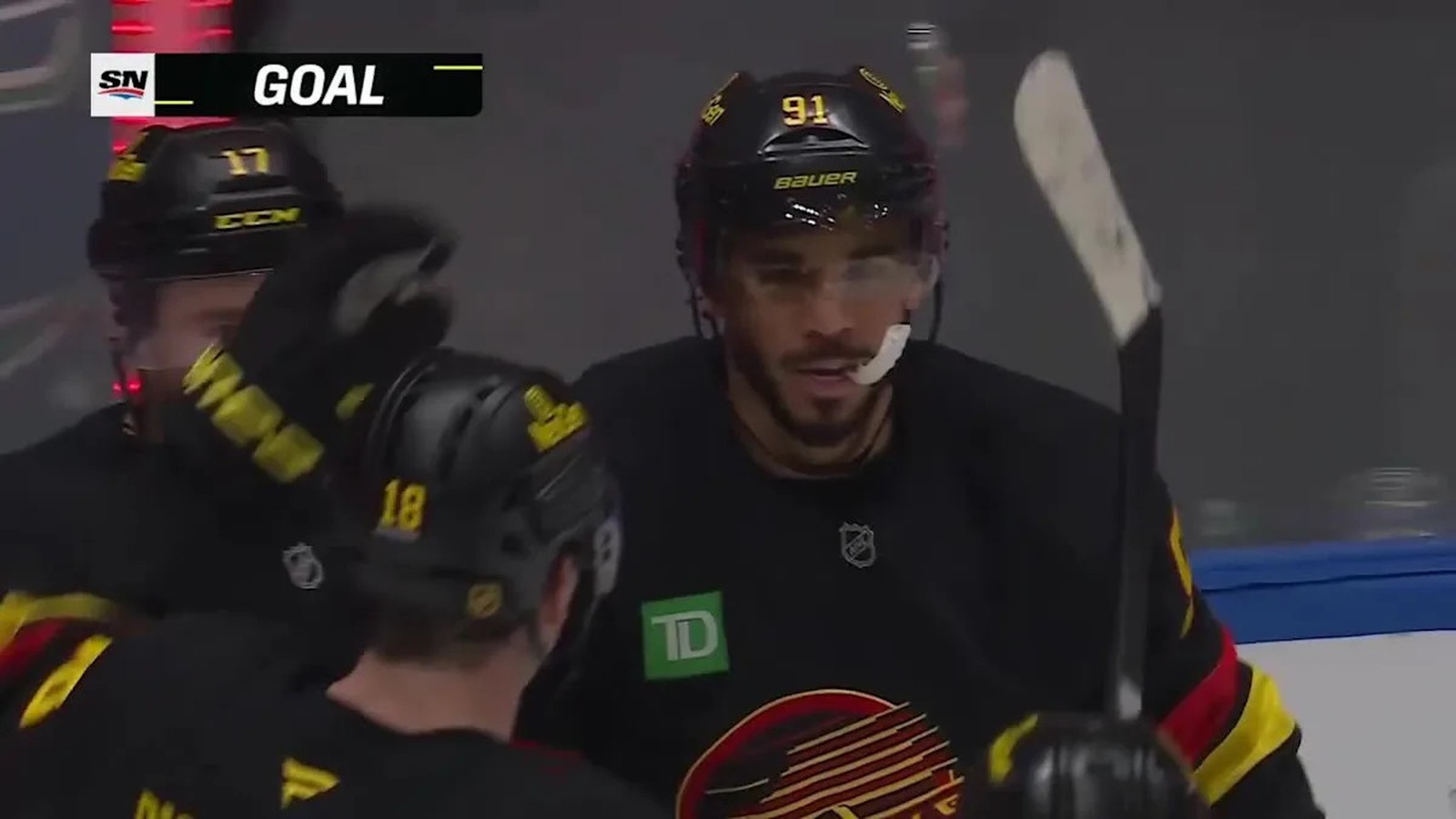
- Evander Kane scored a goal for the Vancouver Canucks against the New York Islanders on January 19, 2026.
- The Canucks lost the game 4-3, extending their franchise-record losing streak to 11 consecutive games.
- Kane’s goal came in the first period, tipping a shot to put the Canucks up 2-1 temporarily.
- The Islanders’ goals were scored by Anthony Duclair (twice), Ryan Pulock, and Tony DeAngelo.
- Canucks goaltender Kevin Lankinen was noted for his efforts to keep the team in the game.
The Vancouver Canucks extended their franchise-record losing streak to an unprecedented 11 games on Monday night, falling 4-3 to the New York Islanders at Rogers Arena, despite a significant offensive contribution from forward Evander Kane. Kane’s first-period goal provided a brief spark, but it ultimately wasn’t enough to prevent the Canucks from recording their longest losing streak in team history, a development that has sent ripples of concern through the fan base and the league.
The game, played on January 19, 2026, saw a determined effort from individual Canucks players, but systemic issues continued to plague the team, allowing the Islanders to capitalize on key moments. The loss marks a critical juncture for the struggling Vancouver squad, raising questions about their season trajectory and the future of several key players.
Early Promise and Kane’s Impact
The Canucks started the game with an intensity that belied their recent struggles. The first period saw Vancouver come out with aggressive offensive zone pressure, tripling their usual shot output in the opening minutes, as reported by CanucksArmy. The home team opened the scoring with Max Sasson’s tenth goal of the season, assisted by Nils Höglander and Linus Karlsson, giving them a 1-0 lead. Höglander’s assist marked his first point in 14 games since returning from injury, a positive sign for the forward.
However, the Islanders quickly responded. A slick passing play saw Anthony Duclair equalize for New York, highlighting defensive lapses in the Canucks’ first line. The back-and-forth nature of the period continued, and it was Evander Kane who restored Vancouver’s lead. Capitalizing on a weak exit pass, D-Petey teed up a one-timer that Kane deftly tipped at the net front, putting the Canucks up 2-1. This goal, captured and highlighted by Yahoo Sports, momentarily shifted momentum in Vancouver’s favor.
The Islanders nearly equalized again with Matthew Schaefer scoring what appeared to be his 14th goal of the season, but the play was immediately called offside, much to the relief of the Vancouver faithful. Despite the close calls, the Canucks managed to hold onto their lead heading into the second period, offering a glimmer of hope that this game might break their disheartening streak.
Islanders Seize Control in a Tumultuous Second Period
The second period began with the Canucks maintaining their offensive push, unleashing a barrage of shots on Islanders goaltender Ilya Sorokin. DeBrusk, Karlsson, Räty, and Höglander all tested Sorokin within the first three minutes, showcasing Vancouver’s desire to extend their lead. The trio of Karlsson, Höglander, and Sasson particularly stood out, dominating their shifts against the Islanders’ fourth line and generating sustained pressure in the offensive zone.
Despite their strong five-on-five play, the Canucks’ power play continued to be an area of concern. After Zeev Buium drew a slashing penalty against New York’s Calum Ritchie, Vancouver failed to convert on the man advantage. Ironically, the Islanders created the most dangerous chance shorthanded through Casey Cizikas. The Canucks’ inability to capitalize on power play opportunities has been a recurring theme throughout their losing streak, often costing them crucial momentum.
The tide turned decisively in the latter half of the second period. Adam Pelech drew a tripping penalty against Sasson, giving the Islanders their own power play chance. Mat Barzal orchestrated a play, slipping a pass between Tyler Myers’ legs to Calum Ritchie, who then set up Anthony Duclair for his second goal of the night, tying the game at 2-2. Less than two minutes later, Ryan Pulock netted his second goal of the season, giving the Islanders their first lead of the game at 3-2. Defensive breakdowns and poor low-to-high coverage by the Canucks were exploited, allowing New York to take control of the contest.
Desperate Third Period Efforts Fall Short
Entering the third period trailing by one goal, the Canucks faced an uphill battle. Their task was made even harder early on when Tony DeAngelo drew a tripping penalty against Drew O’Connor, followed quickly by Emil Heineman drawing a cross-checking minor against Tyler Myers. This gave the Islanders a crucial 1:40 two-man advantage. Despite being down two men, the Canucks’ penalty kill unit, featuring Marcus Pettersson, Elias Pettersson (EP40), and Conor Garland, performed admirably, limiting the Islanders to just three shots on goal even after Marcus Pettersson’s stick broke.
Upon returning to even strength, O’Connor had a shorthanded breakaway opportunity, but the play was blown dead due to a hand-pass. The crowd at Rogers Arena, appreciative of their team’s resilience, responded with a raucous cheer when Myers left the penalty box. However, a critical power play chance for Vancouver, following a knee-on-knee hit by Ryan Pulock on Myers, also went unconverted, with only a near-goal by Kane in the final 30 seconds of the advantage.
The Islanders then doubled their lead to 4-2 with Tony DeAngelo’s third goal of the season, just two minutes after the return to five-on-five play. In a desperate attempt to salvage the game, Head Coach Adam Foote pulled his goalie with four minutes remaining. Drew O’Connor managed a redirect on Filip Hronek’s point-shot with less than two minutes to go, narrowing the deficit to 4-3. Despite subsequent offensive zone faceoffs due to icing calls, the Canucks’ six-man unit failed to generate a serious chance, ultimately succumbing to the 4-3 defeat and extending their historic losing streak to 11 games.
The Vancouver Canucks’ 11th consecutive loss, despite individual flashes of brilliance from players like Evander Kane and strong goaltending from Kevin Lankinen, underscores a deeper structural challenge within the team. While Kane’s effort suggests a player motivated to perform, perhaps even with an eye towards a potential move to a contender, the collective inability to maintain leads or capitalize on crucial opportunities points to systemic issues that the coaching staff and management will need to address urgently to break this unprecedented skid.