


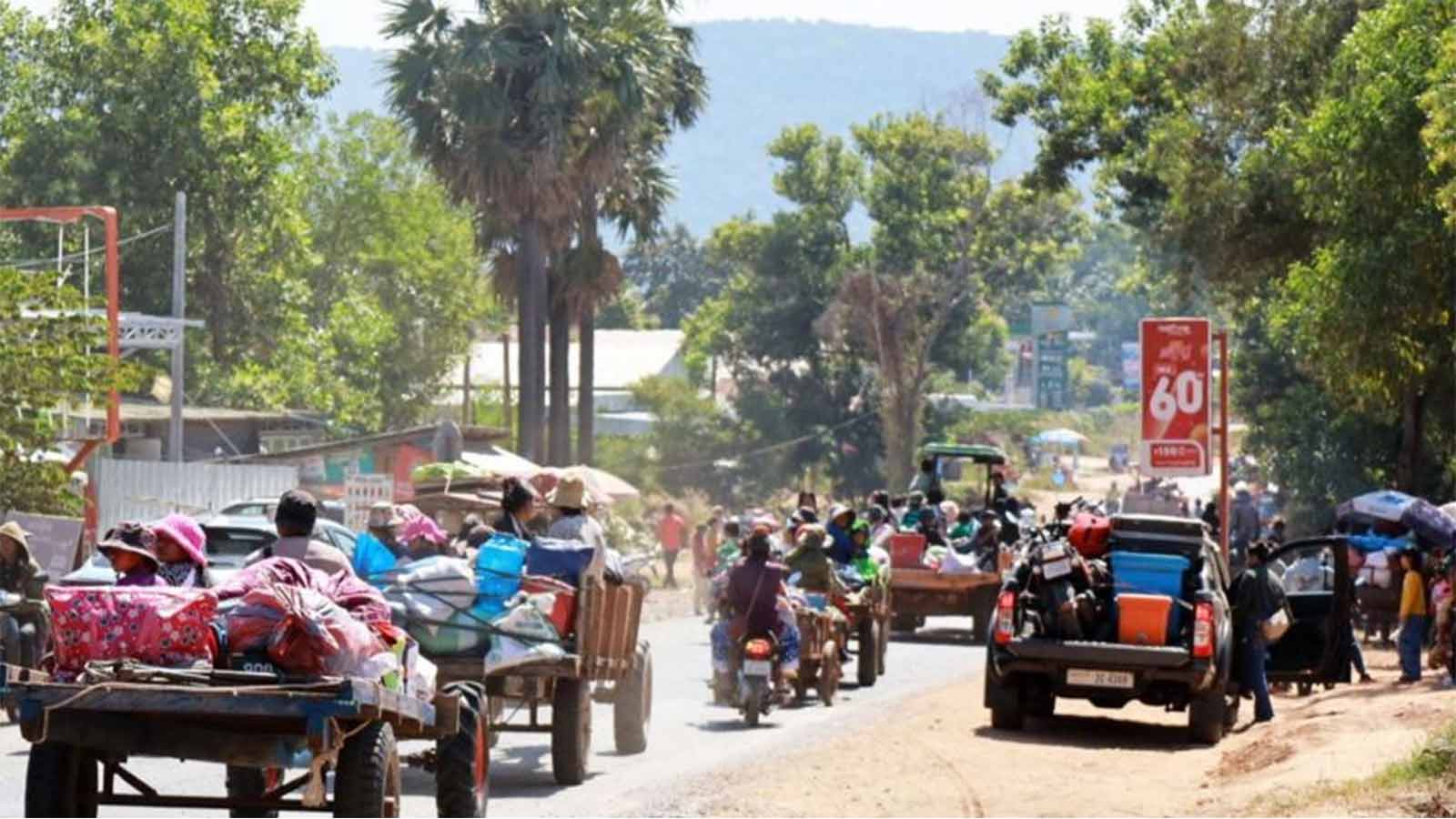
Border Clashes Escalate, Triggering Mass Displacement
The Thailand-Cambodia border is once again engulfed in violence. For the third consecutive day, artillery exchanges, air raids, and shelling have forced more than 500,000 civilians from their homes, according to local authorities and reports from Al Jazeera and Bloomberg. The scale of the crisis is staggering: families are fleeing through muddy fields and crowded roads, seeking refuge in hastily organized shelters, as the specter of war looms over their daily lives.
Thai officials report that more than 400,000 people have been evacuated from seven provinces bordering Cambodia. Surasant Kongsiri, Thailand’s Ministry of Defence spokesperson, described the evacuations as a response to an “imminent threat to civilian safety.” Meanwhile, Cambodian authorities have moved over 100,000 people to shelters or relatives’ homes across five provinces. The numbers are rising by the hour, and with each passing day, the border region becomes more desolate and dangerous.
Military Operations and Civilian Impact
The fighting, which erupted over the weekend along the 800-kilometer frontier, has grown more intense. According to Thai media sources and Bloomberg, Thailand deployed F-16 fighter jets to target Cambodian military positions, following accusations that Cambodian rockets had struck civilian areas. Reports indicate that rockets from Cambodia landed near the Phanom Dong Rak Hospital in Surin, forcing staff and patients to take cover in bunkers.
Cambodian artillery fire has targeted multiple locations in four Thai provinces, with no immediate casualty figures, but the toll is mounting. So far, at least 13 soldiers and civilians have died since the conflict reignited. In Cambodia, Senate President and former Prime Minister Hun Sen, now serving as military commander, has suggested retaliatory strikes, signaling little hope for a swift resolution.
Al Jazeera’s correspondents on both sides of the border describe chaotic scenes at evacuation camps. In Oddar Meanchey, northwestern Cambodia, families huddle under makeshift blue tarpaulin tents, while many lack even basic shelter from the elements. Aid is scarce, and fear is everywhere. Loud explosions echo miles from the front lines, prompting repeated relocations and an overwhelming sense of uncertainty. “Wherever they go, it seems like danger will follow them,” reports Barnaby Lo.
Political Rhetoric and International Mediation
The international community is watching closely, and the rhetoric is heating up. Former US President Donald Trump, who brokered a shaky ceasefire in October, publicly announced his intention to intervene again. “I am going to have to make a phone call. Who else could say I’m going to make a phone call and stop a war of two very powerful countries, Thailand and Cambodia,” Trump declared at a Pennsylvania rally.
Despite the promised intervention, officials from both Thailand and Cambodia remain entrenched in their positions. Thai Foreign Minister Sihasak Phuangketkeow told Al Jazeera there was no potential for negotiations, insisting Thailand did not initiate the clashes. Cambodia’s Defence Ministry accused Thailand of “indiscriminately and brutally targeting civilian residential areas” with artillery, an allegation rejected by Bangkok. Human rights observers, such as Sunai Phasuk, warn of “rapidly intensifying” violence and the indiscriminate use of long-range weapons, posing grave risks to civilians already displaced.
Historic Tensions and Immediate Triggers
The roots of this conflict run deep. Colonial-era border demarcation disputes and competing claims to ancient temples along the undemarcated border have fueled decades of mistrust and periodic fighting. The immediate trigger for this latest escalation appears to be the suspension of de-escalation measures by Thailand last month, after a Thai soldier was maimed by a landmine that Bangkok claims was freshly laid by Cambodia—a charge Cambodian officials deny.
The violence of July 2025, which killed dozens and displaced 300,000 people, ended with a fragile truce mediated by Trump. That agreement has now collapsed, as mutual accusations of ceasefire violations and strategic land grabs have reignited hostilities. Cambodia’s leadership, including Prime Minister Hun Manet, is reportedly banking on imminent US intervention to halt Thailand’s advances, while Thai officials are determined to secure “security and safety” for their citizens before considering peace.
Regional Fallout and Social Disruption
The ripple effects are already being felt beyond the immediate conflict zone. Cambodia has withdrawn from the Southeast Asian Games in Thailand, citing “serious concerns” over the ongoing violence. The games, intended as a symbol of regional unity, now serve as a reminder of deep-seated divisions. For the hundreds of thousands displaced, daily life is marked by improvisation and anxiety: makeshift shelters, interrupted education for children, and disrupted livelihoods.
Humanitarian groups warn that aid is insufficient, and the unpredictability of rocket fire means that even designated shelters offer little real safety. “There is no assurance of safety,” says Sunai Phasuk, especially as Cambodia’s long-range weapons lack precision.
What Comes Next?
As fighting shows no sign of abating, diplomatic solutions remain elusive. The threat of further escalation hangs over the region, with both sides signaling readiness for prolonged conflict. The United States may yet intervene, but previous efforts have yielded only temporary reprieves.
For now, the story is one of displacement, fear, and resilience. Civilians on both sides of the border face the daily challenge of survival, while leaders debate strategy and international actors weigh their options. The fate of the region depends on whether cooler heads can prevail before the humanitarian crisis grows even more dire.
The facts reveal a conflict driven by longstanding grievances and immediate provocations, with civilian suffering at its core. Until both sides commit to dialogue and restraint, regional stability will remain out of reach, and the humanitarian toll will continue to rise.