


The HBO Max medical drama, ‘The Pitt,’ has garnered significant attention with the third episode of its second season, which explicitly addresses the devastating 2018 Tree of Life synagogue shooting in Pittsburgh. This poignant installment, co-written by series star Noah Wyle, offers a direct and deeply human portrayal of the tragedy’s lasting impact through the experiences of a Jewish doctor and a survivor, while powerfully highlighting the crucial role of interfaith solidarity in the aftermath of antisemitic violence. The episode’s release comes at a time when discussions around communal grief and interfaith relations remain highly relevant, providing a moment of unexpected grace and directness in contemporary cultural discourse.
For those familiar with the series, the first season of ‘The Pitt’ alluded to the collective trauma stemming from the Tree of Life attack, often through the character of Dr. Michael “Robby” Robinavitch (Noah Wyle). Robby, an ER doctor at the Pittsburgh Medical Trauma Centre, was depicted as carrying a heavy burden of grief and survivor’s guilt, which manifested in a brutal, climactic scene where he was found hunched over, clutching his Magen David and reciting the Shema prayer during a mass shooting event. While the specifics of the Tree of Life shooting were only obliquely referenced then, the new episode, titled “9:00 a.m.,” moves beyond insinuation to confront the tragedy head-on, offering a much-needed explicit narrative.
Confronting Trauma on Screen
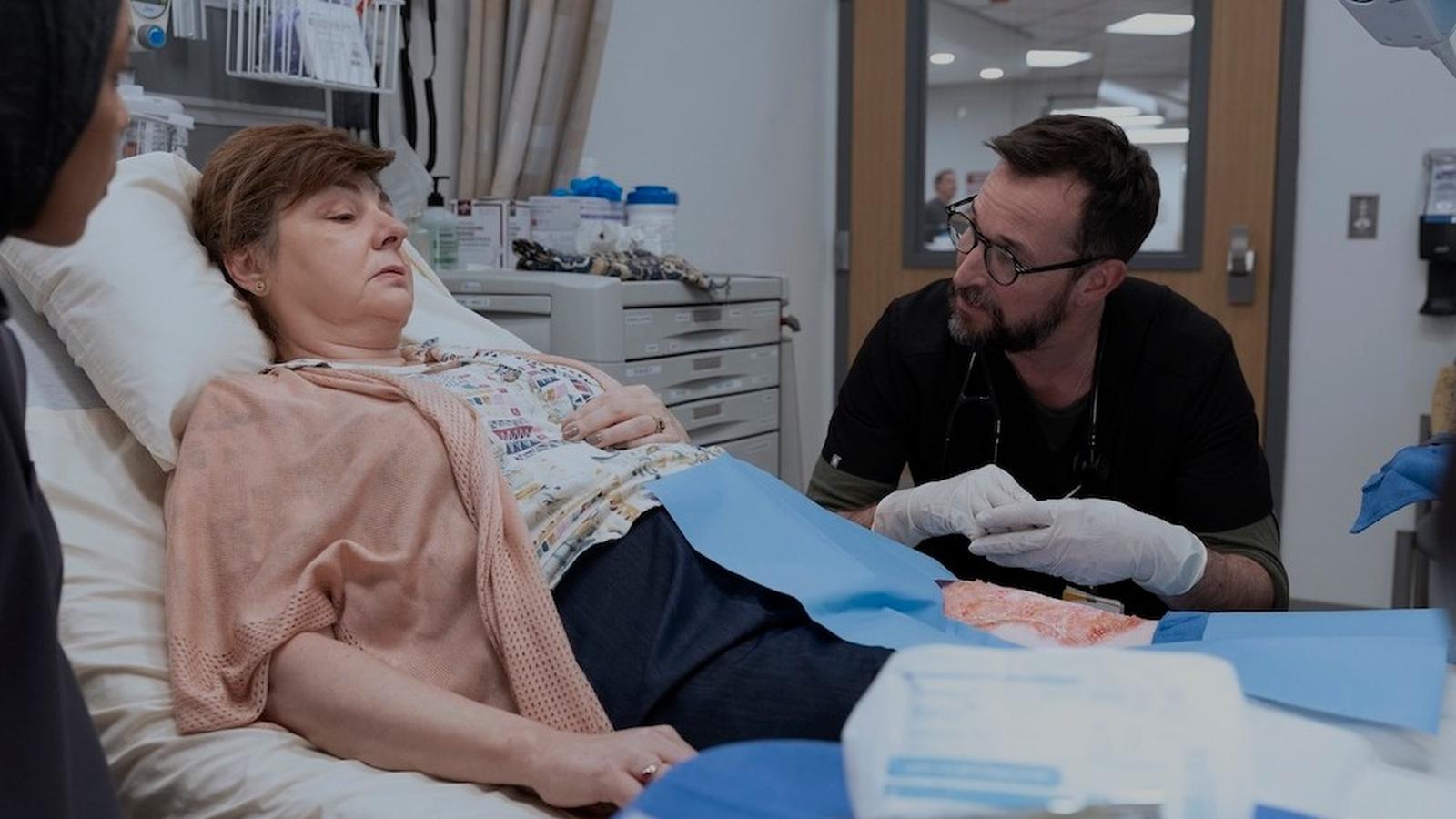
The episode introduces Yana Kovalenko (Irina Dubova), a Russian-Jewish emigre patient admitted to the hospital with severe burns after dropping a samovar, startled by the sound of firecrackers. As Dr. Robby begins treating her, a connection forms through their shared Jewish heritage, prompted by Yana recognizing Robby’s last name. Yana, a grandmotherly figure, quickly establishes a familiar rapport with Robby, reminiscent of his own grandparents who raised him. This authenticity is partly attributed to Noah Wyle, who has spoken about incorporating his Russian-Jewish heritage into his character, creating a genuine dynamic between the two.
As their conversation unfolds, the true source of Yana’s trauma is gently unveiled. She confesses to Robby that she was on her way into the Tree of Life synagogue on October 27, 2018, the day of the attack, and felt compelled to go in after the police arrived, despite the chaos. She recounts her lingering PTSD, particularly triggered by loud, unexpected noises like firecrackers, which bring back the terrifying sounds of gunshots. Her emotional breakdown in the scene, despite her assertion that she is ‘better now,’ underscores the profound and enduring psychological repercussions of such an event. Robby, who himself grappled with the psychological aftermath of the COVID pandemic and a hospital shooting in the first season, demonstrates a deep empathy, understanding the hidden wounds of trauma.
A Moment of Interfaith Solidarity
The episode reaches a particularly moving and critically acclaimed moment through the interaction between Yana and nurse Perlah (Amielynn Abellera), a hijabi Muslim nurse. As Perlah is tending to Yana’s burns, Yana, in a matter-of-fact yet profoundly emotional tone, identifies Perlah as Muslim. What follows is an unscripted, raw expression of gratitude that has resonated deeply with viewers and critics alike. Yana, with a voice threatening to break, says simply, “Thank you.”
She then elaborates on the reason for her gratitude, recounting the immediate aftermath of the Tree of Life shooting: “After the shooting, it was the Muslims that came together for us in support, and … walked with us. You raised money. You paid for all the funerals … Anyway. Thank you.” This powerful exchange, described by The Sydney Morning Herald as something rarely seen onscreen, brings to light a critical, yet often obscured, aspect of the tragedy’s aftermath. It highlights the spontaneous and profound solidarity shown by the Muslim community towards their Jewish neighbors in Pittsburgh, providing financial aid and emotional support during a time of immense grief. Abellera’s portrayal of Perlah in this scene is particularly notable, conveying a quiet dignity and shared vulnerability that transcends religious differences.
This scene is not merely a narrative device; it reflects real-world efforts of interfaith cooperation. As Variety reported, Noah Wyle and the executive producers R. Scott Gemmill and John Wells specifically wanted to honor both the Jewish and Muslim communities in Pittsburgh, addressing ‘important elements of that that hadn’t been told, or hadn’t really made the news cycle.’ The episode implicitly argues that despite attempts to pit communities against each other, especially minority groups, there exists a profound commonality in shared experiences of vulnerability and a readiness for mutual support. This message of solidarity is particularly resonant in the current global climate, serving as a reminder that human connection and empathy can bridge divides even in the face of profound hatred.
Rebuilding and Remembering
Beyond the personal stories of trauma and solidarity, the episode also touches upon the ongoing journey of the Tree of Life synagogue itself. Dr. Robby mentions to Yana that he hears the synagogue is being rebuilt, a detail rooted in reality. As AOL.com notes, the Tree of Life synagogue, the site of the deadliest antisemitic attack in U.S. history, is indeed undergoing a significant transformation. In September 2025, the synagogue revealed plans for a new complex, which will include a museum, classrooms, and a sanctuary, with an anticipated opening in late 2027. This rebuilding effort symbolizes the resilience of the Pittsburgh community, echoing the sentiment that ‘Pittsburghers get back up.’
The show’s decision to explicitly address the 2018 tragedy, which saw 11 congregants murdered by a white supremacist gunman, and its aftermath, provides a vital platform for remembrance and education. The attack, which occurred on October 27, 2018, remains a painful scar on the nation’s conscience, and the episode serves as a powerful tribute to the victims and survivors, and to the broader community that rallied around them. By weaving this historical event into its narrative, ‘The Pitt’ transforms from a typical medical drama into a vehicle for social commentary, emphasizing the long-term psychological impact of such violence and the enduring power of human connection.
‘The Pitt’ episode, despite the show’s occasionally unsubtle narrative style, delivers a profoundly impactful message about shared humanity, empathy, and the transformative power of solidarity in the face of hatred. It underscores that while grief is deeply personal and multifaceted, authentic support often emerges from unexpected places, transcending perceived societal or religious divides, thereby offering a poignant cultural reflection on collective healing and resilience.