


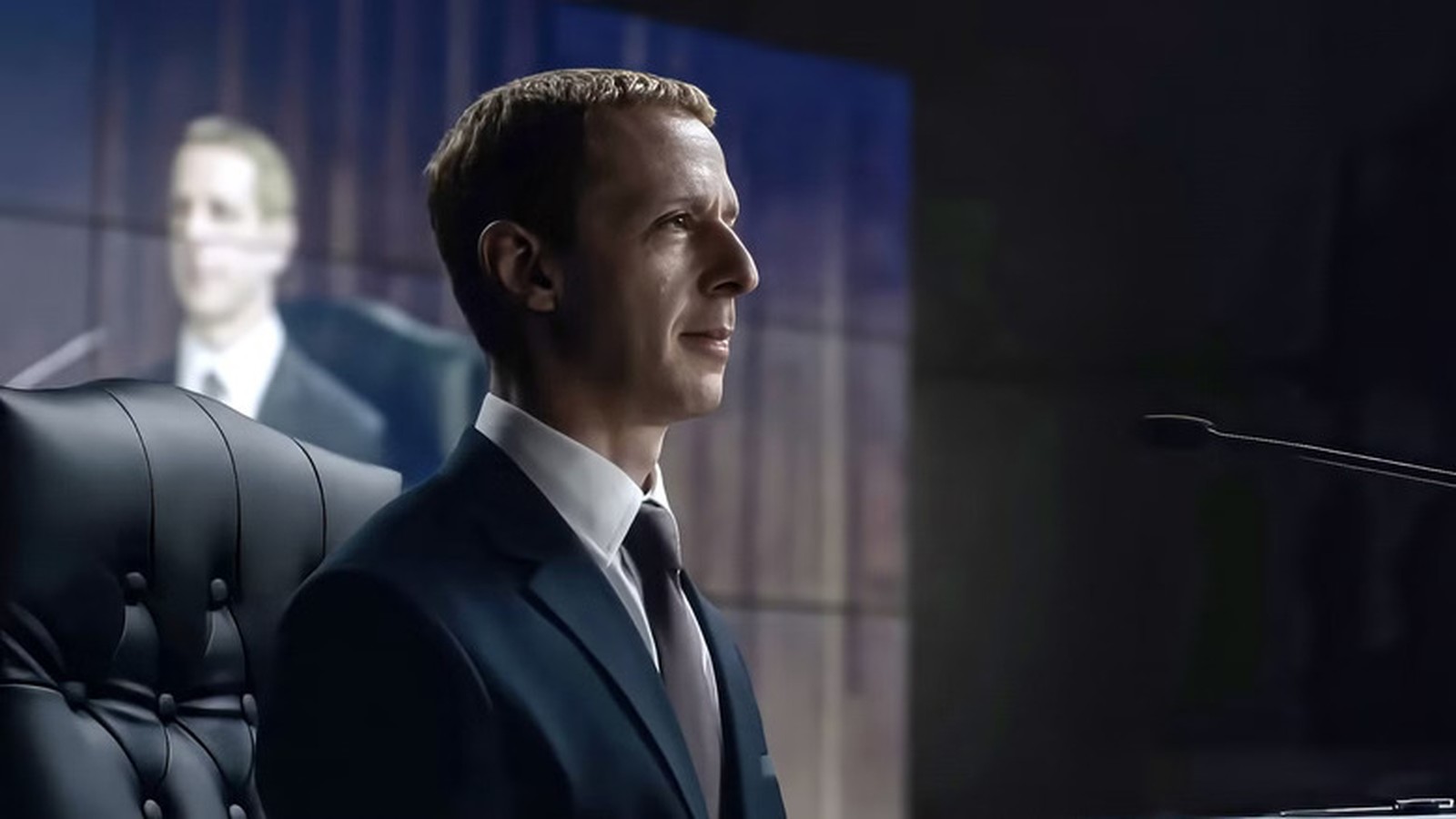
Sixteen years after the release of David Fincher and Aaron Sorkin’s Academy Award-winning 2010 drama, the follow-up film The Social Reckoning has officially debuted in theaters. Released on October 9, 2026, the new film attempts to chronicle the subsequent evolution of Meta, online radicalization, and high-stakes corporate whistleblowing. However, early critical assessments from SlashFilm describe the project as a critical misfire that fails to match the precise direction and sharp scriptwriting of its predecessor.
A Change in Creative Control
While the original 2010 film benefited from David Fincher’s detail-obsessed direction paired with Sorkin’s dialogue, SlashFilm reports that Sorkin took on double duty for the sequel by writing and directing the project himself. Critics argue that the absence of a separate director to temper Sorkin’s more bombastic tendencies led to a heavy-handed narrative approach. The film stars Jeremy Strong as an older, more robotic iteration of Meta founder Mark Zuckerberg, replacing Jesse Eisenberg from the original cast. The ensemble also features Mikey Madison portraying whistleblower Frances Haugen and Jeremy Allen White as journalist Jeff Horwitz.
Plot Arc and Controversial Framing
The storyline explores the real-world fallout of social media platforms, touching upon internal leaks, congressional oversight, and public safety debates. Yet, reviewers have taken specific aim at the film’s structural framing. SlashFilm notes that the narrative bookends its nearly two-hour runtime with a fictionalized framing device involving a character radicalized on Facebook who eventually participates in the January 6, 2021 insurrection at the U.S. Capitol. Critics point to these narrative choices as examples of self-indulgence that detract from the core corporate drama.
Theatrical Stक्स and Critical Standing
As the film rolls out to movie theaters nationwide, it enters a vastly different media landscape than the one navigated by The Social Network in 2010. While satirical takes from outlets like The Onion have poked fun at the sequel’s delayed arrival and plot premise, serious reviews emphasize that the movie struggles to balance complex tech policy issues with compelling cinematic character studies. Audiences and critics alike are left questioning whether future cinematic explorations of Big Tech will manage to recapture the lightning-in-a-bottle success of the original Oscar-winning feature.