
Quick Read
- Tom Hanks co-wrote and stars in ‘This World of Tomorrow,’ running off-Broadway through December 2025.
- The play is adapted from Hanks’s short story collection ‘Uncommon Type’ and explores themes of time travel and nostalgia.
- Hanks and playwright James Glossman collaborated over five years, blending analog and digital methods.
- Robin Wright revealed she and Hanks didn’t bond during ‘Forrest Gump’ filming but reconnected for their new film ‘Here.’
- Preview audiences have responded positively to Hanks’s stage debut and the play’s mix of humor and caution.
Tom Hanks Returns to the Stage with ‘This World of Tomorrow’
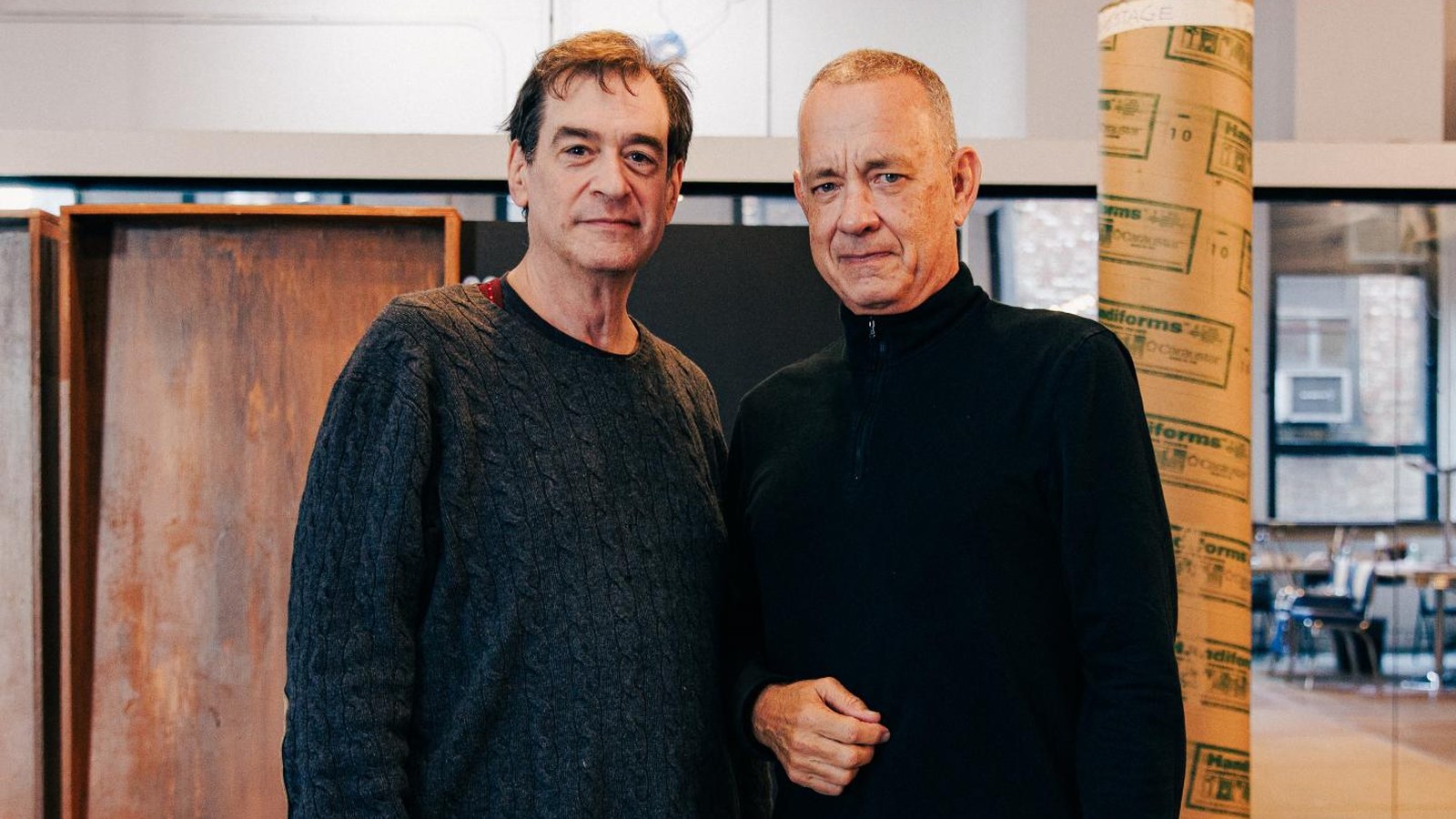
For many, Tom Hanks is the face of American cinema: affable, versatile, and always ready to bring heart to a story. But in late 2025, Hanks has taken a bold step beyond the silver screen, co-writing and starring in the off-Broadway play This World of Tomorrow with playwright James Glossman. The production, running through December 21 at The Shed in New York City, marks a rare moment where Hanks’s love for storytelling, history, and his famously quirky typewriter collection all converge in a single creative project.
The Genesis of a Unique Collaboration
The roots of this stage adventure date back to early 2021, when Glossman received an unexpected call from Hanks himself. The actor praised Glossman’s adaptation of one of his short stories—no small compliment from a two-time Oscar winner known for his exacting standards. The call sparked a partnership that has grown over nearly five years, leading to the joint creation of This World of Tomorrow.
Glossman, a veteran director and lecturer at Johns Hopkins, first became interested in Hanks’s fiction after securing rights to adapt stories from Uncommon Type: Some Stories, Hanks’s debut short story collection. The stories, each connected by the motif of a typewriter (a nod to Hanks’s real-life hobby), offered fertile ground for theatrical adaptation. Glossman’s original plan—a three-act play—was upended by the COVID-19 pandemic, but the collaboration endured.
The partnership matured over countless Zoom calls, face-to-face meetings at Hanks’s Chrysler Building office, and even scripts drafted on vintage typewriters. As Glossman told Johns Hopkins Hub, the process was “the best writing experience of my life,” blending analog nostalgia and digital convenience in a way that mirrored the play’s own themes.
Time Travel, Technology, and the Human Heart
This World of Tomorrow centers on two characters from Hanks’s story “The Past is Important to Us”: Bert Allenberry (portrayed by Hanks), a late 21st-century inventor, and Carmen Perry (played by Tony-winner Kelli O’Hara), a mid-20th-century bookkeeper. Thanks to futuristic time travel—accessible only to billionaires in 2089—Bert repeatedly journeys back to the 1939 World’s Fair, each time hoping for another encounter with Carmen. Their meetings unfold like a bittersweet waltz through history, with Bert’s trips strictly timed and ever more precious.
The play isn’t simply a sci-fi romance, though. It’s a meditation on nostalgia and progress, using Hanks’s signature humor and cultural references—think Babe Ruth and Katharine Hepburn—to lighten the mood and anchor the story in American memory. As Hanks explained in an interview with Stephen Colbert, the dual challenge of writing and performing his own words was “as terrifying an experience as I have ever had.” Yet, the risk seems to have paid off, as preview audiences have responded with laughter and emotion.
Behind the Curtain: Hanks’s Collaborative Spirit
For Glossman, the collaboration was transformative: “To hear from a living author whose work you’re adapting that you got it, and that they want to work with you, is nothing short of the best day you can possibly have.” Their partnership relied on both analog and digital means, reflecting the play’s thematic tension between past and future.
Hanks’s fascination with typewriters is more than a quirky hobby—it’s a metaphor for his approach to storytelling. He’s drawn to the tangible, the mechanical, and the nostalgic, even as he embraces the possibilities of technology. This blend of old and new is at the heart of both his latest play and his enduring appeal as a performer.
On-Screen Connections: ‘Forrest Gump’ and Reunions
Hanks’s collaborative nature is also evident in his film work. Robin Wright, his co-star in the classic Forrest Gump, recently reflected on their time together. Speaking to Today in October 2024, Wright explained that she and Hanks didn’t become close during the filming of the 1994 Oscar-winning movie—not because of any tension, but because Hanks was constantly “Forresting.” The actor spent every lunch break running for the iconic scenes that defined the film.
Despite their distant on-set relationship, Wright says the two “got to know each other as adults” when they reunited with director Robert Zemeckis for their upcoming movie, Here. For Wright, returning to work with Hanks and Zemeckis felt like “getting the band back together,” underscoring Hanks’s reputation for warmth and camaraderie.
Legacy and Future Directions
As This World of Tomorrow enjoys its run in New York, Hanks’s willingness to experiment—whether in literature, theater, or film—continues to set him apart. He’s not content to rest on his laurels. Instead, he dives into new creative waters, forging connections across media and generations. For Glossman, the experience has been a gift; for audiences, it’s a chance to see Hanks in a new light, as both playwright and performer.
Beyond the stage, Hanks’s career remains as varied as ever. His favorite films, according to Glossman, include Apollo 13, A League of Their Own, Castaway, and the new release Here. Each project, whether a blockbuster or a Broadway experiment, is infused with the same curiosity and empathy that have made Hanks a beloved figure for decades.
As the curtain rises on This World of Tomorrow, one thing is clear: Tom Hanks isn’t just revisiting the past—he’s inventing new ways to connect, tell stories, and inspire.
In a career defined by evolution, Tom Hanks’s leap into co-authorship and live theater signals not just artistic courage but a genuine yearning to explore the boundaries of storytelling. The facts reveal a creator who values partnership, authenticity, and the magic of human connection—qualities that ensure his work, whether on stage or screen, continues to resonate in a rapidly changing world.