


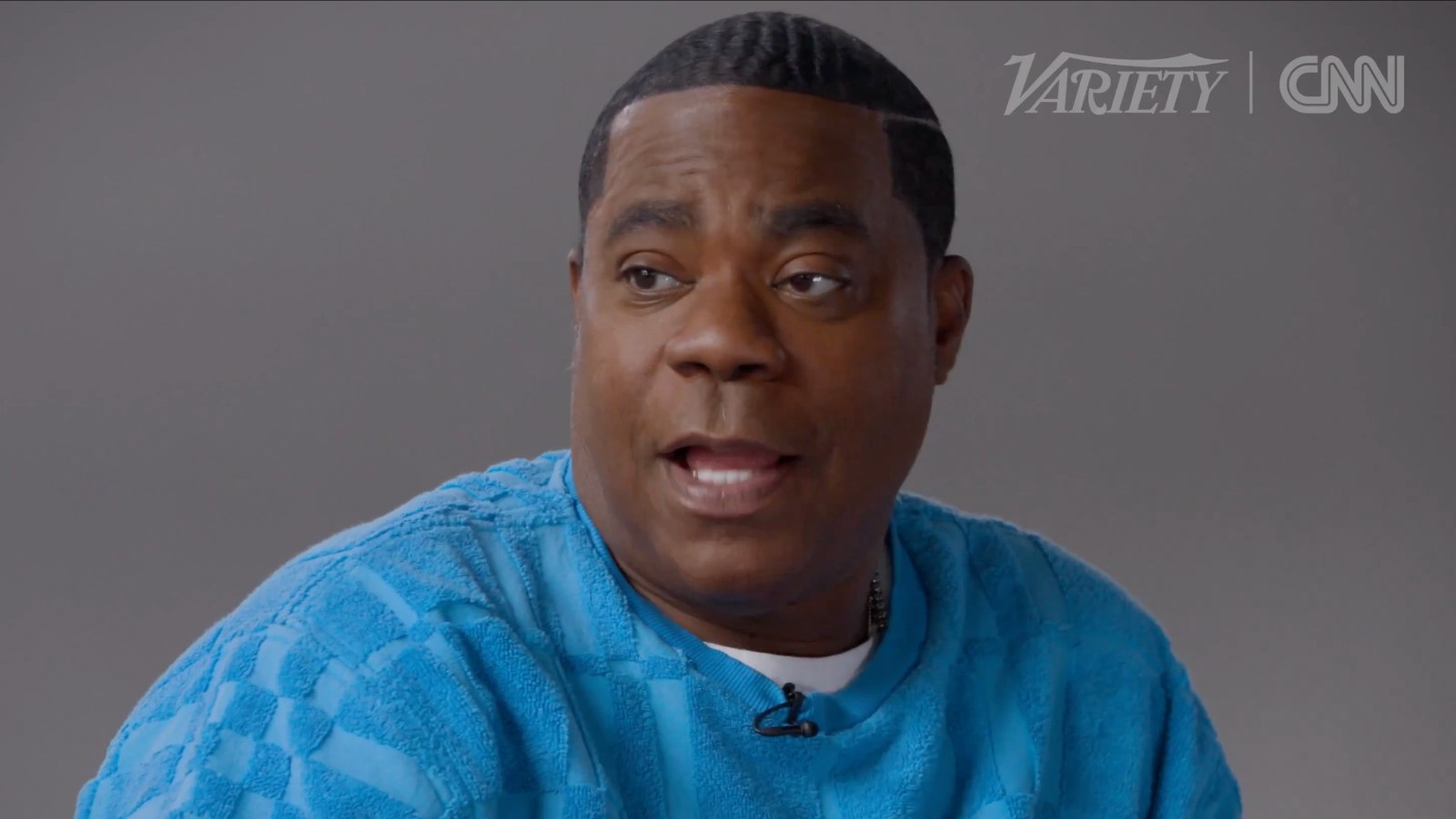
Veteran comedian Tracy Morgan has drawn significant public backlash following a candid appearance on Variety’s “Actors on Actors” series, where a conversation with Saturday Night Live breakout star Marcello Hernández took a sharp turn into controversy. During the segment, Morgan dismissed the value of the teaching profession and offered unsolicited, explicit advice regarding Hernández’s personal life.
The Controversy
The friction began when the conversation turned to school-age struggles. When Hernández noted that he was labeled a troublemaker in school for being overly talkative, Morgan attempted to frame the behavior as a sign of future success. However, he quickly pivoted to a disparaging critique of educators, stating, “I can’t stand teachers. Because they have a ceiling. They have a limit.” Morgan further suggested that teachers are limited by their professional “minimum wage” status, contrasting this with his own philosophy of “the sky’s the limit.”
The exchange drew immediate reactions from viewers and media outlets, with many criticizing the 57-year-old actor for belittling a profession that is widely recognized for its systemic underfunding and societal importance. The segment also featured Morgan providing unsolicited advice to the 28-year-old Hernández about his reproductive life, urging him to stop using birth control in an attempt to “birth a nation,” a comment that many found invasive and inappropriate for a professional industry interview.
Analysis: The ‘No-Holds-Barred’ Persona vs. Public Expectation
The backlash highlights a growing disconnect between the “no-holds-barred” comedic persona that defined Morgan’s rise in the 1990s and 2000s and the evolving expectations of professional decorum in 2026. Morgan, who has spent decades cultivating a public image as an unfiltered, zany mentor figure, appears to be struggling to navigate the modern media landscape where high-profile conversations are subjected to immediate institutional and social scrutiny.
While the “Actors on Actors” format is designed to be intimate and unscripted, Morgan’s decision to weaponize his status as a veteran to denigrate educators suggests an out-of-touch approach to public discourse. In an era where the economic plight of public servants is a frequent topic of debate, Morgan’s dismissive remarks regarding teachers’ salaries serve as a lightning rod for criticism. This incident underscores the risks inherent in legacy comedians relying on shock value in a media environment that increasingly demands accountability for public rhetoric.