


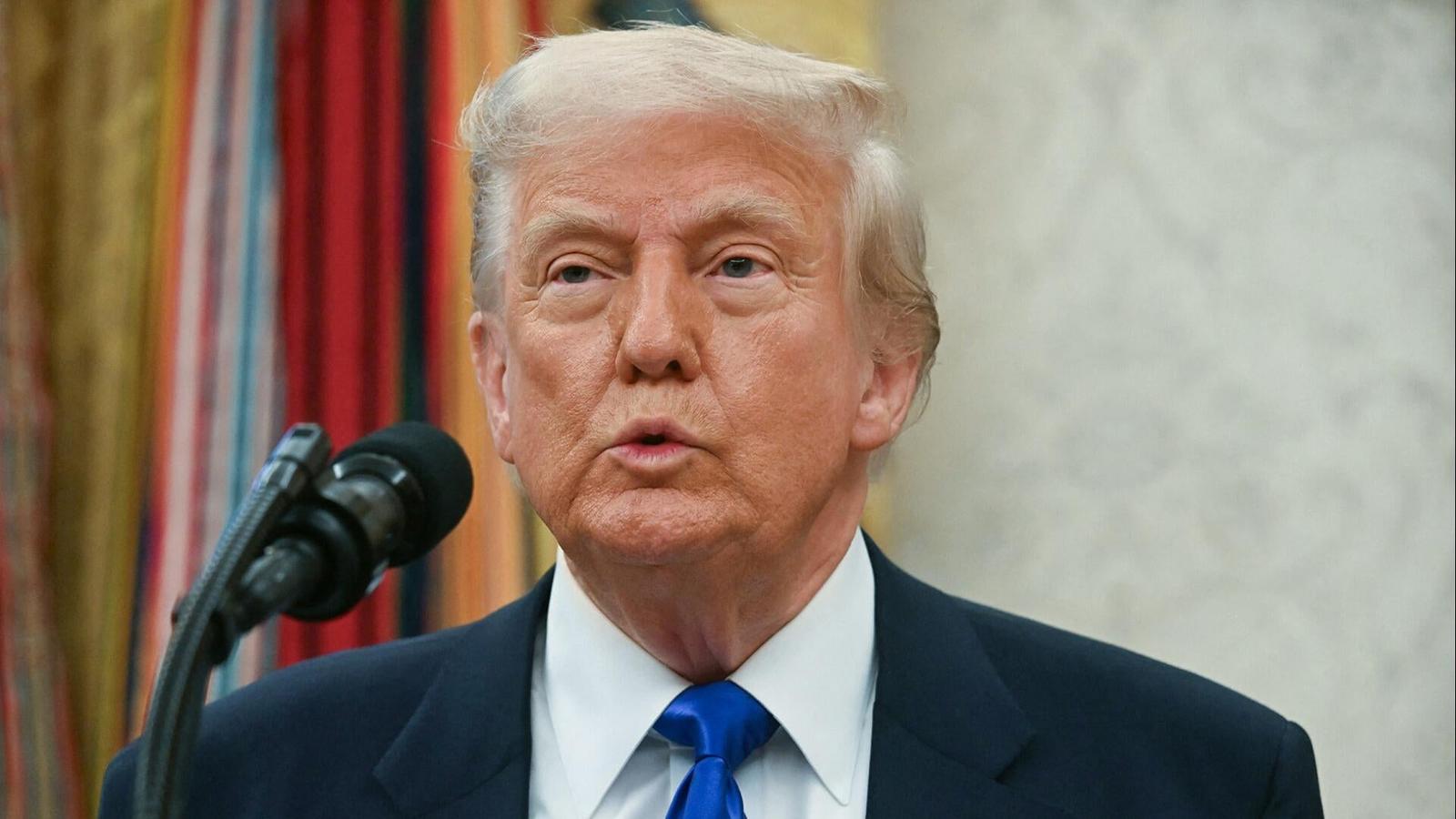
President Donald Trump has once again found himself at the center of controversy, this time for using an antisemitic slur during a speech in Des Moines, Iowa. The remark, which invoked the term “Shylock” to describe exploitative bankers, has sparked widespread criticism from Jewish organizations, political opponents, and social commentators alike. Trump, however, has defended himself, stating that he was unaware of the term’s offensive connotations.
The Controversial Remark
During a speech promoting his newly passed “big, beautiful bill,” which includes sweeping tax cuts and spending provisions, Trump mentioned the term “Shylock” while discussing measures aimed at protecting family farmers. Specifically, he said, “No death tax, no estate tax, no going to the banks and borrowing from, in some cases, a fine banker, and in some cases, Shylocks and bad people.” This comment was immediately flagged for its antisemitic undertones, as the term “Shylock” originates from Shakespeare’s play The Merchant of Venice and has long been associated with harmful stereotypes about Jewish people as greedy and exploitative.
When pressed by reporters after the event, Trump claimed ignorance about the term’s historical and cultural significance. “I’ve never heard it that way,” he said, adding, “To me, Shylock is somebody that’s a money lender and high rates.” This explanation did little to assuage critics, who argue that the president’s use of the term is part of a broader pattern of normalizing antisemitic rhetoric.
Reactions from Jewish Organizations and Critics
Jewish advocacy groups, including the Anti-Defamation League (ADL), were quick to condemn Trump’s choice of words. The ADL released a statement describing the term as “extremely offensive and dangerous,” noting that it perpetuates centuries-old stereotypes about Jews and greed. Amy Spitalnick, CEO of the Jewish Council for Public Affairs, took to social media to denounce the president’s remarks as part of a troubling trend. “This is not an accident,” she wrote. “It follows years in which Trump has normalized antisemitic tropes and conspiracy theories — and it’s deeply dangerous.”
Political opponents also weighed in. Democratic leaders criticized the remark as yet another example of Trump’s divisive rhetoric. Former Vice President Joe Biden, who faced similar backlash in 2014 for using the same term, expressed disappointment but refrained from outright condemnation. Biden had apologized for his use of the term, calling it a “poor choice of words,” a gesture many now expect from Trump.
A History of Controversial Statements
This incident is not the first time Trump has been accused of antisemitism. In 2015, he told the Republican Jewish Coalition that “you want to control your politicians” — a comment widely interpreted as a nod to stereotypes about Jewish influence. More recently, his decision to host a dinner with a Holocaust-denying white nationalist drew widespread condemnation from both sides of the political aisle.
Despite these controversies, Trump’s administration has taken several actions aimed at combating antisemitism, such as creating a federal task force to address antisemitic harassment on college campuses and implementing stricter immigration policies to screen for antisemitic activity. Critics, however, argue that these measures are overshadowed by the president’s own rhetoric and actions, which they say often undermine the very causes he claims to support.
The Broader Implications
The fallout from Trump’s Iowa speech highlights the enduring sensitivity surrounding language and its impact on marginalized communities. Words from public figures, especially those in positions of power, carry weight and can either challenge or reinforce harmful stereotypes. As the United States grapples with rising incidents of antisemitism, the responsibility of leaders to set a positive example becomes even more critical.
Trump’s defenders argue that his comment was a misunderstanding rather than a deliberate act of prejudice. They point to his administration’s initiatives against antisemitism as evidence of his commitment to the Jewish community. However, critics contend that intent matters less than impact, and that the president’s words have real-world consequences, including the potential to embolden hate groups and perpetuate harmful stereotypes.
As the controversy continues to unfold, it serves as a stark reminder of the power of language and the importance of accountability in leadership. Whether this incident will have lasting repercussions for Trump’s presidency remains to be seen.