

Quick Read
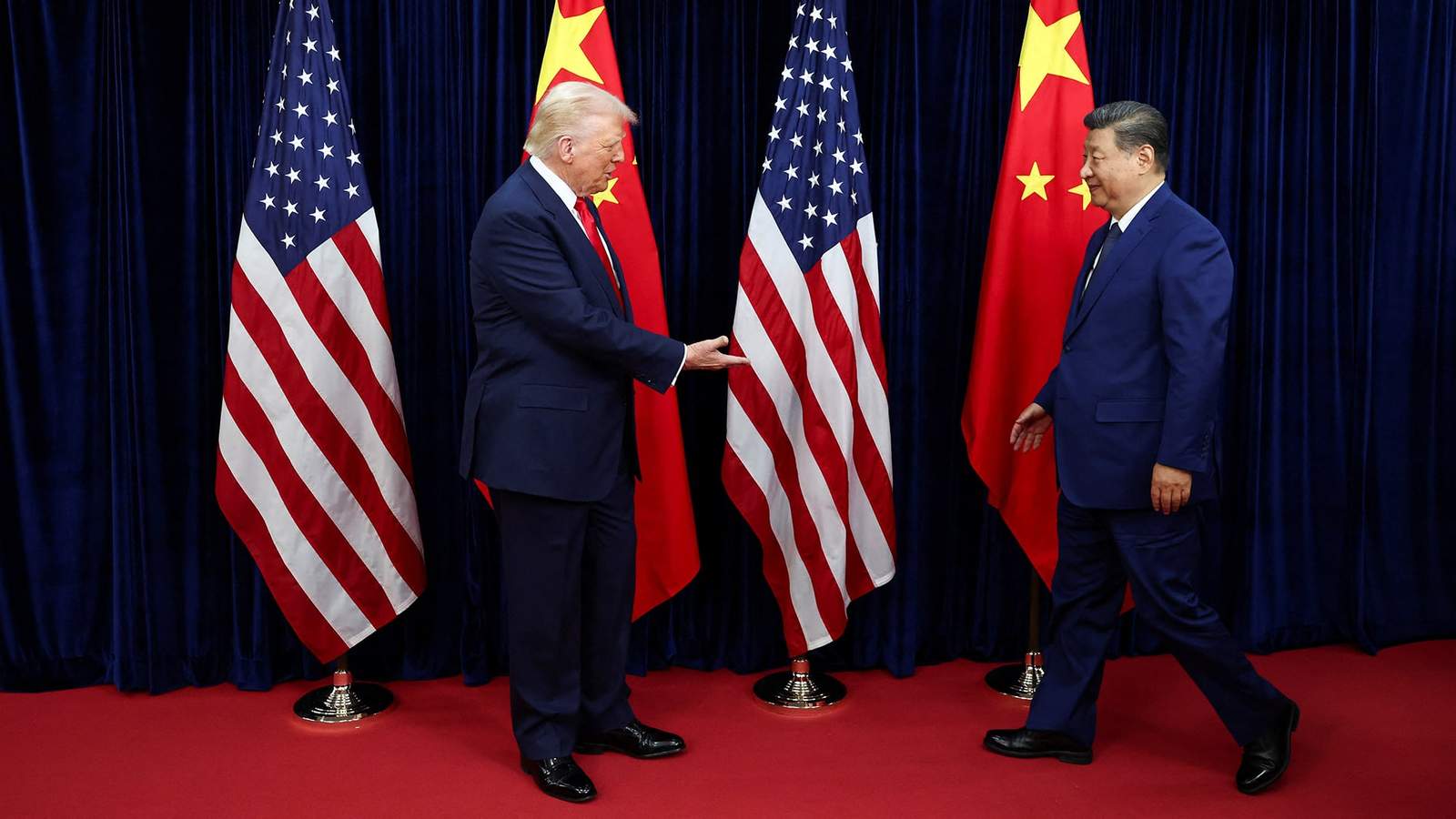
- President Trump and President Xi Jinping are set to meet in Beijing on May 14 to address trade, Taiwan, and AI.
- China is leveraging its dominance in critical minerals and rare earth processing to counter U.S. economic pressure.
- The summit faces significant tension as the U.S. continues to manage the regional impacts of the ongoing conflict in the Middle East.
President Donald Trump is scheduled to arrive in Beijing on May 14 for a two-day state visit, marking his first trip to China since 2017. The summit, which was delayed from its original March timeline due to U.S.-led military operations against Iran, takes place amid a significantly altered geopolitical landscape. As the U.S. Navy maintains a blockade in the Strait of Hormuz to curb Iranian influence, Beijing enters the negotiations from a position of renewed confidence, bolstered by its control over critical mineral supply chains and a desire to reshape U.S. policy regarding Taiwan.
Shifting Leverage: Critical Minerals and Economic Statecraft
According to experts at the Council on Foreign Relations, the economic center of gravity has shifted from the tariff-heavy disputes of the previous decade to a structural reliance on Chinese-dominated supply chains. Beijing currently controls the processing of rare earth elements and magnets essential for the production of advanced military systems, including precision-guided munitions and electronics. With the United States actively replenishing its stockpiles following operations in the Middle East, this dependency grants President Xi Jinping a significant leverage point during the upcoming talks.
Taiwan and the Risk of Policy Concessions
The status of Taiwan remains the most volatile item on the agenda. Chinese Foreign Minister Wang Yi has characterized the island as the most significant risk in bilateral relations, signaling that Beijing may condition cooperation on global issues—such as the Iran-related energy instability—upon a shift in U.S. declaratory policy. Observers note that President Trump’s recent skepticism regarding long-term strategic competition has created an opening for Beijing to push for a formal U.S. stance against Taiwanese independence, a move that would represent a historic departure from established American commitments.
The AI Dialogue and the Path to Maximum Pressure
The two leaders are expected to establish an artificial intelligence safety dialogue, though security analysts warn that the initiative may serve as a facade for Beijing to close the current eight-month technological gap between the two nations. Experts suggest that rather than seeking immediate safety agreements, the administration should focus on tightening export controls on AI chips to maintain U.S. supremacy. Without such pressure, the dialogue risks providing China with the resources needed to accelerate its own military and cyber capabilities, ultimately undermining long-term regional stability.
The summit highlights a fragile détente where both leaders prioritize the optics of stability over structural resolution. While the meeting provides a necessary channel for communication amidst the ongoing conflict in the Middle East, the underlying asymmetry in supply chain reliance and the divergent objectives regarding Taiwan suggest that the visit is unlikely to produce substantive, long-term policy shifts.