
Quick Read
- Ukrainian skeleton athlete Vladyslav Heraskevych was disqualified from the Milan Cortina Winter Olympics.
- Heraskevych refused to remove a helmet honoring over 20 Ukrainian athletes and coaches killed in the war with Russia.
- The IOC cited Rule 50.2, which prohibits political statements on the field of play.
- IOC President Kirsty Coventry met with Heraskevych, expressing regret but upholding the rule.
- The decision drew strong condemnation from Ukrainian officials, including President Volodymyr Zelenskyy.
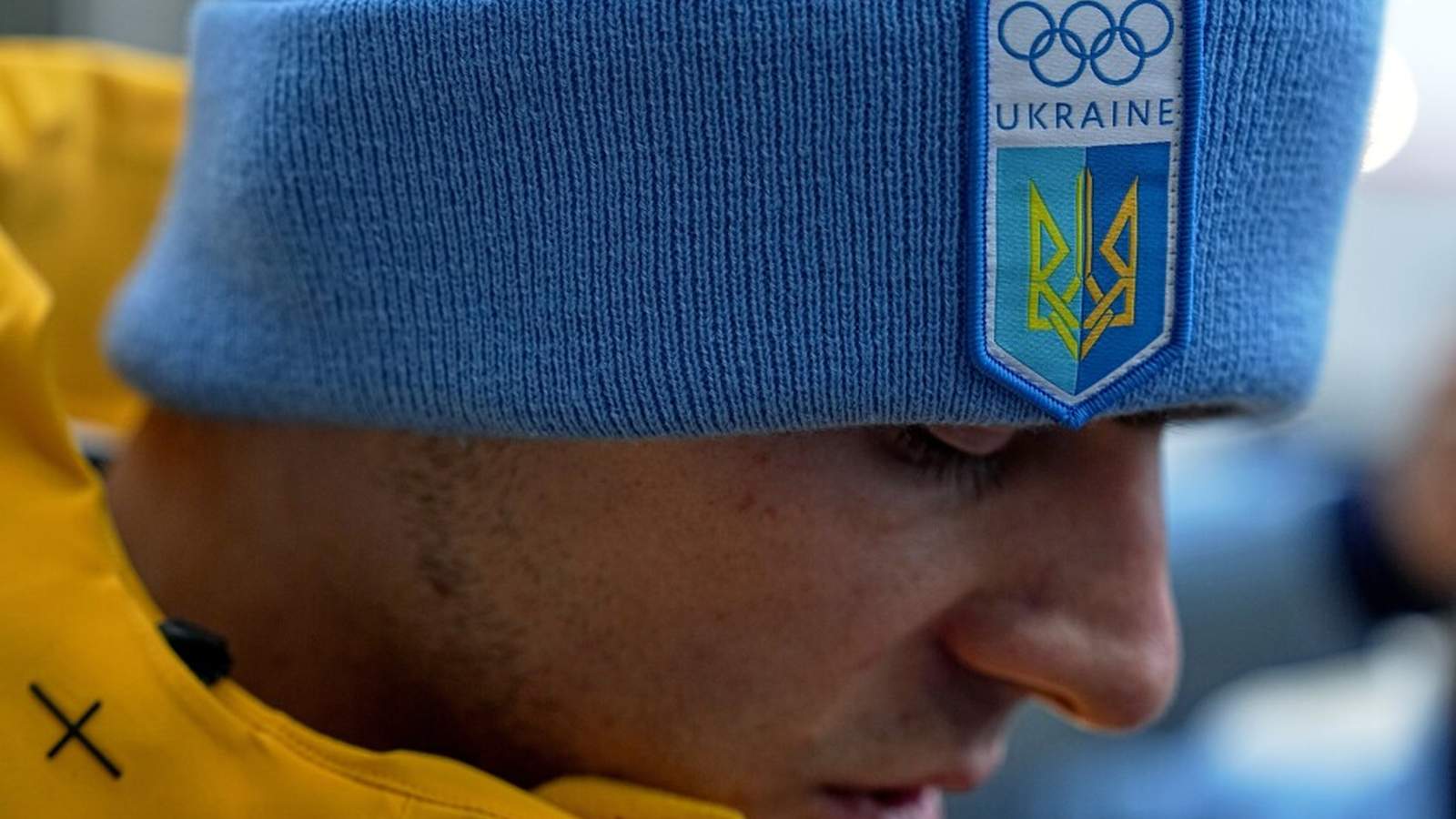
CORTINA D’AMPEZZO, Italy (Azat TV) – Ukrainian skeleton athlete Vladyslav Heraskevych, the first to represent his nation in the sport, was disqualified from the Milan Cortina Winter Olympics on Thursday after he refused to remove a helmet honoring more than 20 Ukrainian athletes and coaches killed in the ongoing war with Russia. The International Olympic Committee (IOC) cited its long-standing rules against political statements on the field of play, a decision that has ignited a fierce debate about athlete expression and the Olympic Charter.
Heraskevych, considered a legitimate medal contender after a strong performance at last year’s world championships, was barred from racing roughly 45 minutes before the start of the men’s skeleton competition. He had worn the helmet throughout training runs, despite earlier warnings from Olympic officials. The International Bobsled and Skeleton Federation (IBSF) confirmed the decision, stating his choice was “inconsistent with the Olympic Charter and Guidelines on Athlete Expression.”
The Helmet of Remembrance and Olympic Rule 50.2
The helmet displayed the faces of fallen Ukrainian sports figures, serving as a poignant tribute to those who lost their lives amidst the conflict. Heraskevych maintained that his helmet was a message of remembrance, not a political statement, and expressed deep pain over the decision. “I believe, deeply, the IBSF and IOC understand that I’m not violating any rules,” Heraskevych stated, adding that he felt discriminated against given other athletes had expressed themselves without facing similar repercussions.
The IOC, however, upheld Rule 50.2 of the Olympic Charter, which explicitly states: “No kind of demonstration or political, religious or racial propaganda is permitted in any Olympic sites, venues or other areas.” IOC spokesman Mark Adams explained that allowing unrestricted messaging would lead to a “chaotic situation” and that “sport without rules cannot function.”
IOC’s Attempts at Compromise and Heraskevych’s Firm Stance
IOC President Kirsty Coventry personally met with Heraskevych at the sliding center in Cortina d’Ampezzo in a last-ditch effort to find a compromise. Coventry, an Olympic champion swimmer, expressed regret and acknowledged the powerful message of remembrance conveyed by the helmet. The IOC had offered alternatives, such as wearing a black armband or displaying the helmet once off the ice. However, Heraskevych would not budge from his decision to wear the helmet during the race.
“We didn’t find common ground in this regard,” Heraskevych said following the meeting. Coventry, visibly emotional, told reporters, “Sadly, we’ve not been able to come to that solution. I really wanted to see him race today. It’s been an emotional morning.” Both parties reportedly agreed that the helmet’s design would barely be visible to spectators due to the high speeds of skeleton racing, yet the principle of the rule remained paramount for the IOC.
Widespread Condemnation and Calls for Consistency
The disqualification drew immediate and sharp condemnation from Ukrainian officials. President Volodymyr Zelenskyy took to social media, writing, “Sport shouldn’t mean amnesia, and the Olympic movement should help stop wars, not play into the hands of aggressors. Unfortunately, the decision of the International Olympic Committee to disqualify Ukrainian skeleton racer Vladyslav Heraskevych says otherwise.” Ukrainian Foreign Minister Andrii Sybiha called it a “moment of shame” for the IOC, arguing that “Russians who must be banned, not the commemoration of their victims.”
Heraskevych also pointed to perceived inconsistencies in the application of Rule 50.2. He cited instances such as U.S. figure skater Maxim Naumov displaying a photo of his late parents at the kiss-and-cry area after his skate, and Israeli skeleton athlete Jared Firestone wearing a kippah bearing the names of 11 Israeli athletes killed in the 1972 Munich Games attack during the opening ceremony. Firestone expressed admiration for Heraskevych, calling him “a man with strong values.” Heraskevych previously displayed a “No war in Ukraine” sign at the 2022 Beijing Olympics without facing any sanctions, as the IOC then considered it a call for peace.
Impact and Future Steps for the Ukrainian Athlete
Despite his disqualification, Heraskevych is allowed to retain his Olympic credential, enabling him to remain at the Games as an athlete, albeit not a competing one. His coach and father, Mykhailo Heraskevych, voiced profound disappointment, stating, “The International Olympic Committee destroyed our dreams. It’s not fair.” Heraskevych announced his intention to appeal the decision to the Court of Arbitration for Sport, though his opportunity to compete in the current Games has passed.
The incident also casts a shadow over the participation of about a dozen Russian and seven Belarusian athletes at the Games, who are competing as neutral individuals without national flags or anthems. Heraskevych has been a vocal critic of their presence, arguing that the IOC’s decision to disqualify him while allowing these athletes ‘plays along with Russian propaganda.’
The disqualification of Vladyslav Heraskevych underscores the persistent tension between the Olympic movement’s commitment to political neutrality and the profound personal and national expressions of athletes facing extraordinary circumstances. While the IOC maintains the necessity of its rules for the integrity of sport, the emotional weight of Heraskevych’s tribute to war victims, especially as Ukraine’s pioneering skeleton racer, highlights the difficulty of separating sport from the broader human and geopolitical realities.