
Quick Read
- US lawmakers call for sanctions against Aliyev, Erdogan.
- Demand includes release of Armenian prisoners of war.
- Artsakh Armenian right of return at the center of demands.
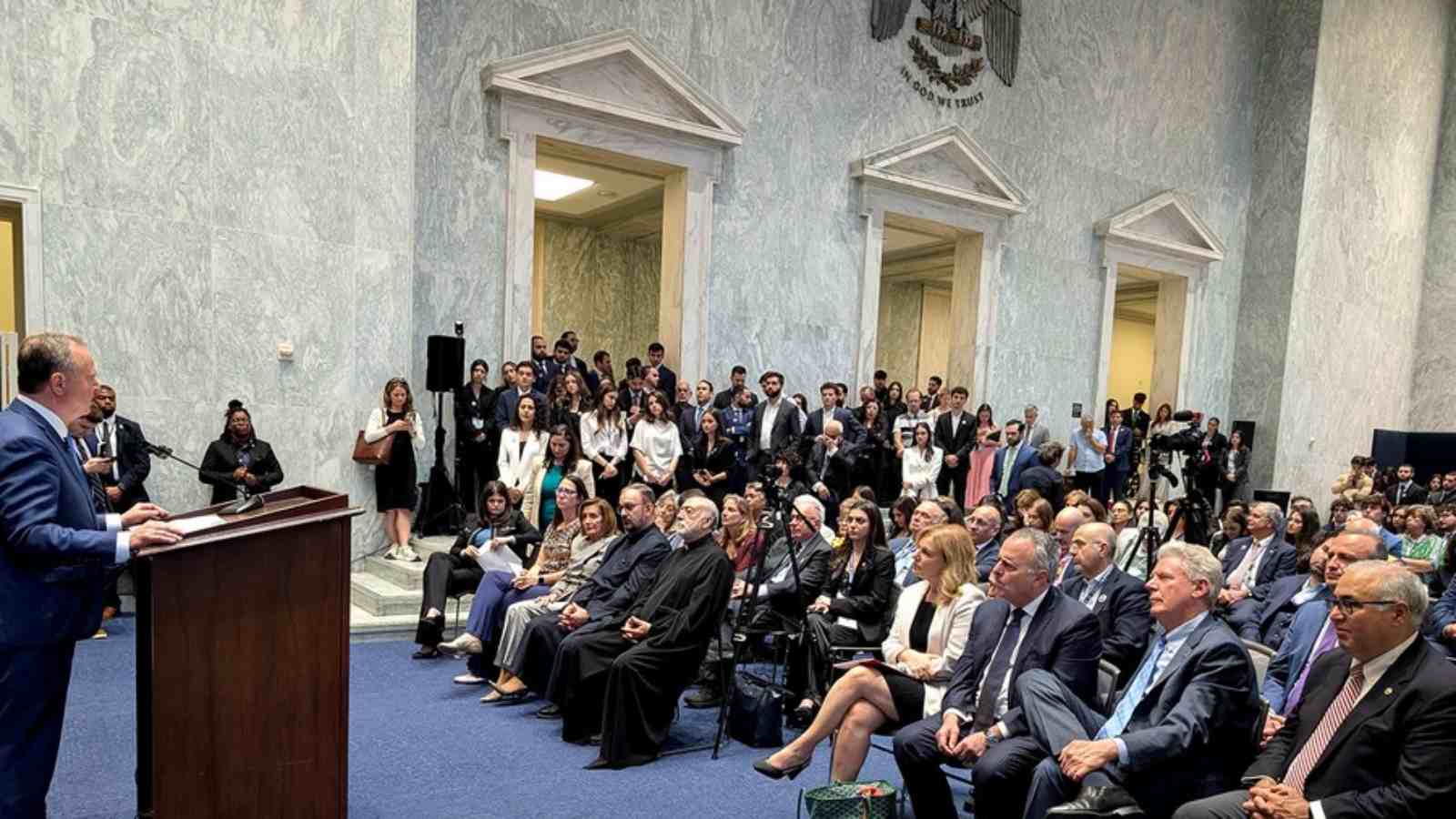
In Washington D.C., a bipartisan gathering on Capitol Hill has amplified calls for the release of Armenian prisoners held by Azerbaijan, sanctions against Azerbaijani President Ilham Aliyev and Turkish President Recep Tayyip Erdogan, and the assurance of the right of return for Armenians displaced from Nagorno-Karabakh (Artsakh). The April 15 event, timed with the annual commemoration of the Armenian Genocide, signals mounting international pressure amid continued reports of human rights violations and territorial disputes.
Bipartisan Support for Armenian Rights
The event, co-organized by the Armenian National Committee of America (ANCA) and the Armenian Assembly of America, in collaboration with the Congressional Armenian Caucus, continued a decades-long tradition that began in 1965, marking the 50th anniversary of the Armenian Genocide. This year’s gathering occurred against a backdrop of what organizers describe as unaddressed genocidal acts against the Armenian people by Turkey and Azerbaijan. Armenian prisoners of war and civilian hostages, including Artsakh leaders, remain in Azerbaijani custody. Over 150,000 Armenians from Artsakh remain displaced from their homes following Azerbaijan’s military actions in September 2023, and Azerbaijan continues to occupy sovereign Armenian territory.
Key Demands and Statements
Aram Hamparian, Executive Director of the ANCA, stated that the challenges are existential (genocidal) rather than transactional, emphasizing the need to focus on the future. He rejected what he termed a “false peace” being imposed on Armenia, which he believes would consolidate Azerbaijan’s gains, entrench Armenia’s losses, and permanently block the return of Artsakh refugees to their homeland. Garnik Kerkonian, a keynote speaker, highlighted that the genocide is an ongoing process, criticizing the TRIPP project as a mechanism circumventing Armenia’s sovereignty and underscoring the importance of the right of return for Artsakh Armenians.
Legislative Actions and Calls for Accountability
Former Speaker of the House Nancy Pelosi acknowledged the role of the Armenian-American community in the passage of the 2019 Armenian Genocide recognition resolution. Several senators and congressmen spoke at the event, demanding concrete actions. Senator Adam Schiff stated that no peace agreement could be taken seriously if it did not address the issue of prisoners of war. Congressman Mike Lawler emphasized that “peace without accountability is not peace; it is permission.” The ARMENIA Security Partnership Act (H.R.6840), aimed at strengthening Armenia’s security and deterring aggression, has gained support in Congress. Legislators have called for the application of the Global Magnitsky Act and other tools to impose sanctions on Azerbaijani officials. Bipartisan support has also been shown for the Armenian Genocide Education Act, emphasizing the importance of education in preventing similar crimes.
Looking Ahead
The renewed calls for sanctions and accountability arrive at a tense moment. While the event on Capitol Hill was framed around the Armenian Genocide Commemoration, the focus on current prisoners and the right to return for Artsakh Armenians underscores the immediate humanitarian and political stakes. The demand for sanctions against Aliyev and Erdogan reflects a hardening stance among some U.S. lawmakers, who view the leaders as enabling a continued pattern of aggression and impunity. Whether this bipartisan pressure will translate into concrete policy changes remains to be seen, but the event signals a determination to keep these issues at the forefront of the U.S. foreign policy agenda. The Armenian National Committee of America continues to urge action from the US government.