
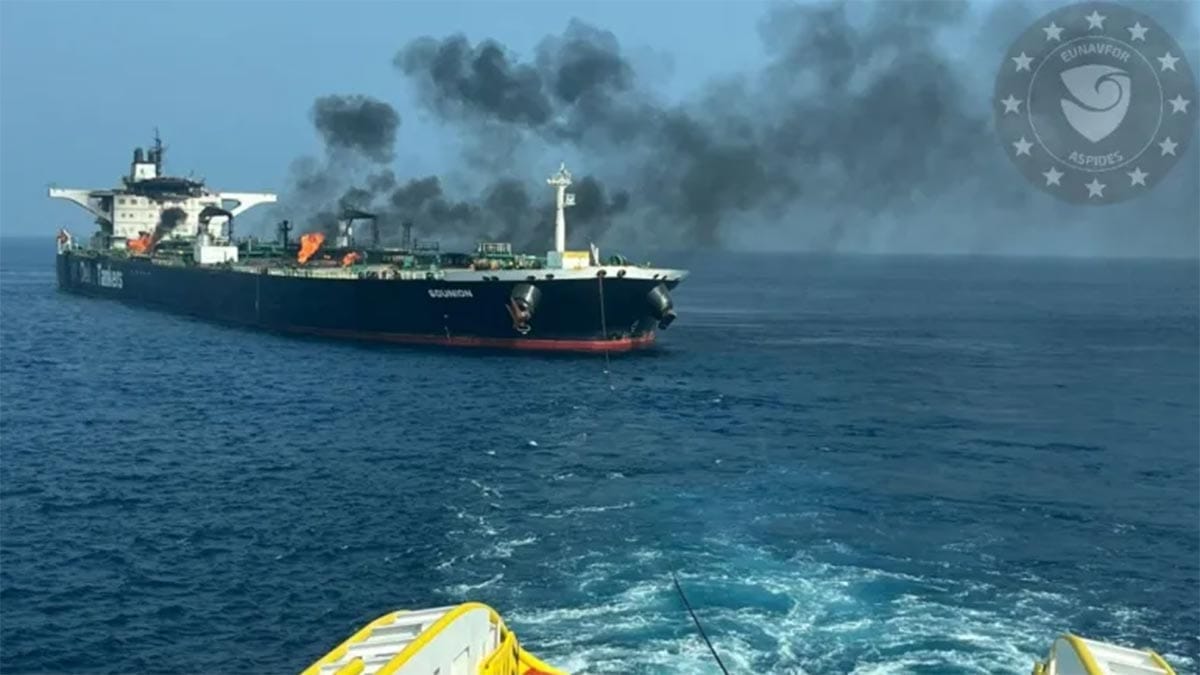
Yemen’s Houthi rebels have announced the resumption of attacks on Israeli ships after Israel failed to lift its blockade on aid deliveries into Gaza. The four-day deadline set by the Houthis for Israel to allow the resumption of aid to the Palestinian enclave passed on Wednesday, triggering the renewed threats. Late Tuesday, the armed group declared they were “resuming the ban on the passage of all Israeli ships” in the Red Sea because Israel did not honor the ultimatum announced last Friday. The Iran-aligned Yemeni group stated the ban was effective immediately, warning that “any Israeli ship attempting to violate this ban shall be targeted in the declared zone of operations.” The “ban” extends to the Arabian Sea, Bab al-Mandeb Strait, and the Gulf of Aden, the group confirmed. The Houthis, controlling a significant portion of Yemen, one of the Arabian Peninsula’s poorest countries, have been persistently targeting this vital sea route as Israel continues its bombardment of Gaza. These attacks have significantly impacted global trade, diverting substantial maritime traffic from the Suez Canal to the much longer route around Africa.
Renewed Threat: Houthis Announce Resumption of Attacks on Israeli Ships in Red Sea
The latest announcement from Yemen’s Houthi rebels signals a significant escalation in maritime risks within the Red Sea region. By explicitly stating their intent to target vessels linked to Israel, the group has created a climate of uncertainty and peril for all ships navigating this critical maritime corridor. While Israeli-linked vessels are the stated targets, the indiscriminate nature of such attacks means any ship traversing these waters faces heightened danger. This renewed threat deepens regional instability and raises the stakes for international shipping operations, forcing maritime companies to reassess and reroute their vessels to mitigate potential harm. The Houthis’ resumption of military actions underscores the volatile security landscape and the escalating risks for global commerce.
Gaza Aid as Trigger: Israel Fails to Meet Houthi Deadline for Resuming Humanitarian Deliveries
The primary catalyst for the Houthis’ decision to resume attacks is the continued blockade of humanitarian aid to the Gaza Strip. The group insists that their actions are aimed at pressuring Israel to permit the unobstructed flow of aid into the besieged enclave. Israel’s failure to meet the Houthis’ publicly declared deadline for aid resumption is perceived by the group as a breach of their terms, thus justifying the reinstatement of military actions. This stance reveals the Houthis’ unwavering commitment to leveraging maritime disruptions to achieve their political and humanitarian objectives, even at the cost of significant global trade repercussions and heightened regional tensions. The Houthis are strategically framing their actions as a direct response to the humanitarian crisis in Gaza, garnering support from sympathetic populations and amplifying pressure on Israel.
Immediate Action: Ban Takes Effect Instantly, Targets Declared
The Houthis have made it unequivocally clear that the ban on Israeli vessels in the Red Sea and adjacent waters is effective immediately. This abrupt implementation leaves no room for ambiguity and signals the group’s readiness to enforce their threats without delay. By declaring that any Israeli ship attempting to breach the ban will be considered a legitimate target, the Houthis have escalated the potential for direct confrontation and maritime incidents. This decisive posture serves as a stark warning to international shipping and underscores the urgency of addressing the underlying issues driving the conflict to prevent further escalation and maritime disruptions.
Impact on Global Trade: Shipping Routes Disrupted, Economic Repercussions Loom
The Houthi attacks in the Red Sea are already exerting significant adverse effects on global trade. As a key artery for maritime transport between Asia and Europe, the Red Sea’s increased risk profile is forcing shipping companies to reroute their vessels around Africa, bypassing the Suez Canal. This detour substantially increases shipping times and operational costs, leading to higher freight rates and potential disruptions in supply chains. The reduction in shipping volumes through the Red Sea, coupled with increased transportation expenses, will inevitably lead to broader global economic repercussions, impacting consumer prices and potentially slowing down economic growth. Developing economies, heavily reliant on international trade, are particularly vulnerable to these disruptions, exacerbating existing economic challenges.
Background Context: Halt in Attacks in January and Renewed Threats
It is crucial to recall that the Houthis had temporarily suspended their Red Sea attacks following the ceasefire declared in Gaza in January. This pause reflected a tentative de-escalation and provided a window for diplomatic efforts to resolve the situation. However, Israel’s subsequent decision to block humanitarian aid deliveries to Gaza reignited tensions and prompted the Houthis to issue renewed threats. This sequence of events underscores the direct link between the humanitarian crisis in Gaza and the escalating maritime security risks in the Red Sea. The current resumption of attacks, after the expiration of the Houthi deadline, confirms the group’s resolve to maintain pressure until their demands are met, highlighting the fragility of any de-escalation attempts without addressing the core issues.
Military Response: US and EU Enhance Naval Presence in the Region
In response to the escalating threats to maritime security in the Red Sea, the United States and the European Union are reinforcing their naval presence in the area. The US and EU have deployed naval missions to the Red Sea aimed at protecting shipping and deterring further Houthi attacks. Additionally, the US and the UK have conducted multiple air strikes on Houthi positions in Yemen in an attempt to degrade their military capabilities. These military deployments and actions reflect the international community’s concern over the destabilizing impact of the Houthi attacks and the determination to safeguard freedom of navigation. However, military responses alone may not resolve the underlying issues and carry the risk of further escalating the conflict and broadening regional instability.
Houthi Position: Designated “Foreign Terrorist” Group with Growing Regional Influence
The United States recently designated the Houthi movement, formally known as Ansar Allah, as a “foreign terrorist organization.” This designation is intended to intensify pressure on the group and curtail their financial and military resources. However, analysts argue that the Houthi attacks in the Red Sea have inadvertently elevated their profile and regional influence, transforming them from a localized threat into a direct challenge to Israeli and Western interests. The Houthis, who control significant territory in Yemen, have emerged as a key player in Middle Eastern geopolitics, commanding attention and recognition on the international stage. Counterterrorism designations may have limited impact if the root causes of the conflict and humanitarian crises are not addressed concurrently with security measures.
Escalating Risks and Heightened Tensions for International Shipping
The resumption of attacks on Israeli ships by Yemen’s Houthis marks a dangerous escalation in the Red Sea, heightening risks for international shipping and exacerbating regional tensions. The humanitarian crisis in Gaza and Israel’s blockade of aid deliveries have served as the immediate trigger for this renewed conflict phase. The international community must intensify efforts to de-escalate tensions and ensure safe passage through the Red Sea, a critical artery for global trade. Diplomatic initiatives and negotiations must focus on not only securing a ceasefire but also addressing the underlying causes of the conflict, encompassing regional political dynamics and humanitarian imperatives. Failing to achieve a sustainable resolution will leave international trade and regional security increasingly vulnerable to instability and uncertainty, with potentially far-reaching global consequences.