


Zooey Deschanel’s Unconventional Rom-Com Journey in ‘Merv’
Every holiday season, certain films offer comfort—a blend of romance, nostalgia, and the soft glow of festive lights. In 2025, Merv joined that tradition, but with a twist: at its center stands Zooey Deschanel, an actress whose quirky charm and emotional authenticity have long drawn audiences, this time paired with Charlie Cox and a dog named Gus. But what really happens when Hollywood’s familiar formula collides with the unpredictable world of animal acting?
Behind the Scenes: The Real Challenges of Acting with Dogs
Deschanel, now 45, pulls back the curtain in her recent interview with PEOPLE, shattering the myth that working with dogs on set is all cuddles and fun. “The dogs are very serious,” she reveals. “It’s not like you’re getting to snuggle them. In fact, you’re not allowed to when they’re working. Yeah, it’s not what you think.” For ‘Merv’, the lead canine Gus—a rescue terrier mix—was chosen after a nationwide search for the perfect temperament and screen presence. Director Jessica Swale admits it was “a real education, not only in what dogs can do, but in how to tell their story on camera.”
Multiple dogs stood in for Gus during B-roll, but Deschanel singles out the main star: “He’s insanely trained. That would never happen. He is more professional than most people I know.” The challenge, she explains, is synchronizing human performance with the dog’s cues: “You’re trying to do the scene at the same time the trainer is going, ‘Go, go,’ and the dog works very differently from a human.”
Plot Twists and Emotional Depth: Deschanel as Anna Finch
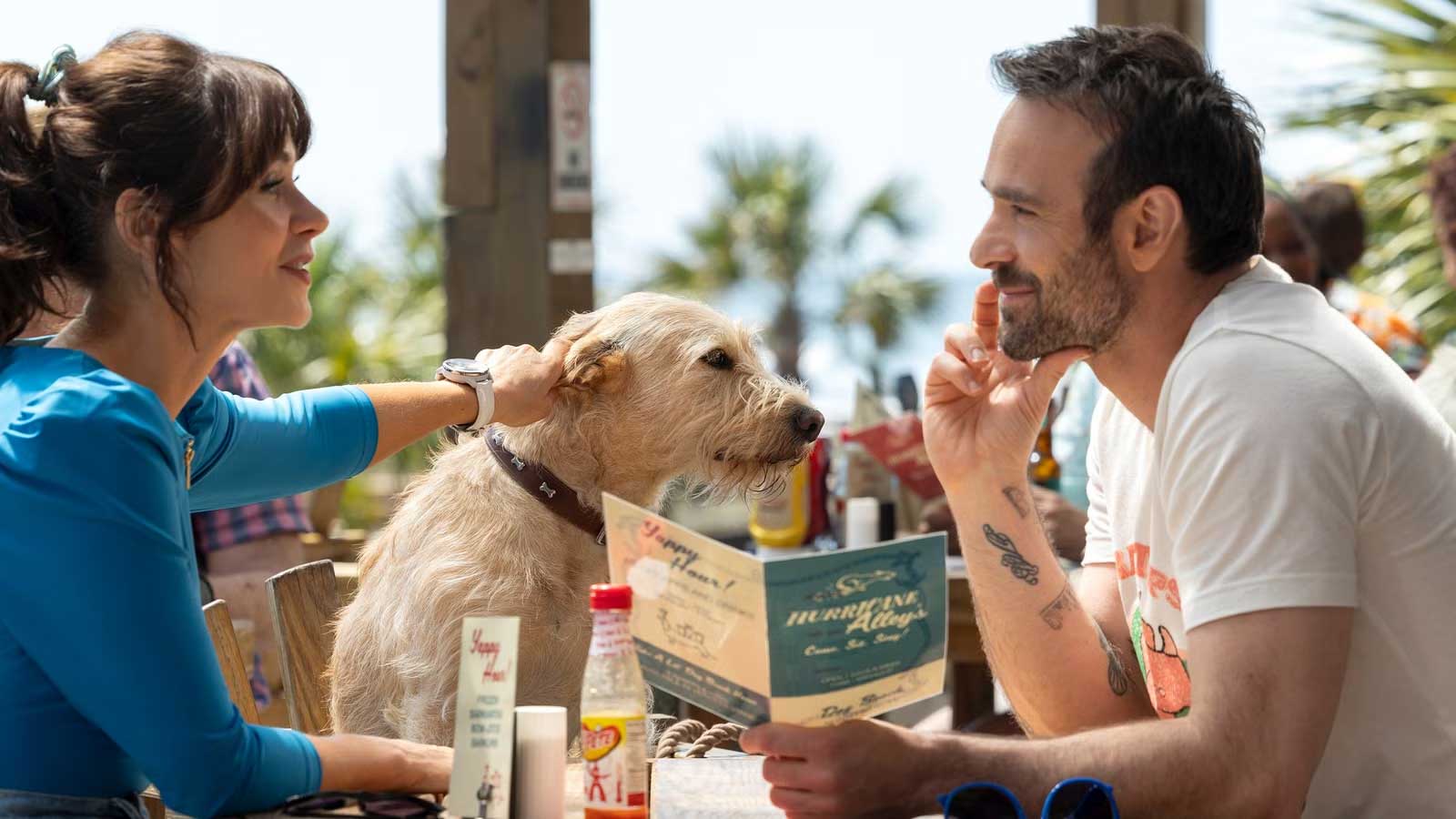
In ‘Merv’, Deschanel plays Anna Finch, a dedicated optometrist grappling with a recent breakup. Anna and her ex, Russ Owens (Charlie Cox), share custody of Merv, the dog who—unusually for a rom-com—suffers from depression. The film opens on snowy streets and festive storefronts, but quickly dives into the emotional fallout of their split, as Merv’s own withdrawal forces Anna and Russ to confront what’s broken between them.
The narrative doesn’t shy away from complexity. Merv’s diagnosis (depression, not a physical ailment) becomes a metaphor for the unresolved pain between his owners. Their attempt to mend Merv’s spirits takes them to Florida’s Sunnyside Dog Beach, where new characters and old wounds surface. A humorous animal healer suggests Merv is heartbroken because Anna and Russ are apart—a moment that gently nudges them toward honesty.
The film’s climax isn’t about grand gestures, but about real, difficult conversations. Anna confides that her infertility led her to end the relationship, fearing she was trapping Russ in a future he didn’t deserve. Russ, meanwhile, saw his marriage proposal as an act of love, not pity. Their miscommunication—silent, unspoken, deeply painful—drives the film’s emotional core.
Holiday Reconciliation and the Power of Vulnerability
As Christmas approaches, Anna and Russ slowly find their way back to each other, not through easy fixes but through genuine vulnerability. The pivotal moment comes not in a grand reunion, but in a quiet admission: Anna tells Russ her life has felt hollow without him. Their reconciliation, gentle and understated, signals a new beginning—for themselves and for Merv, whose depression lifts as the emotional stability returns to his household.
The final scenes, filled with dancing, laughter, and a new dog named Angelina, radiate a warmth that’s earned rather than assumed. The film refuses to portray their reunion as magical; instead, it shows two people choosing to face their fears and flaws together, with Merv as the silent witness to their growth.
Zooey Deschanel’s Perspective: Why ‘Merv’ Resonates
Deschanel’s connection to the story runs deeper than the script. “I’ve known so many people to break up but share a dog, and there’s all this stress and strife,” she tells PEOPLE. The film’s central dilemma—what happens to a shared pet when a relationship ends—reflects a very real, often-overlooked emotional reality. “If you’re in a relationship and you get a dog, you don’t think like, ‘Oh, I might have to share custody of the dog.’ What happens with that?”
Director Swale, meanwhile, sees ‘Merv’ as “the perfect winter watch,” complete with jokes, snow, holiday vibes, romance, and “comedy pensioners doing the salsa.” But it’s the dog—whose own emotional arc mirrors his owners’—that grounds the film in something more relatable than formula.
The Familiar Comfort and Mild Critique of ‘Merv’
Critical voices, like High On Films, have noted that ‘Merv’ fits snugly into the holiday rom-com genre, rarely straying from established patterns. The dog’s depression is more a narrative device than a deep character beat, and supporting roles (especially Anna’s friend Rebekah) serve the plot more than they enrich the world. The Florida beach sequence, with its flirtations and mild misunderstandings, echoes countless seasonal comedies before it.
Yet, what ‘Merv’ lacks in originality, it compensates for in gentle performances. Deschanel and Cox’s chemistry is easygoing, their emotional beats understated. The Christmas scenes—family gatherings, dance parties, and snow—offer the comfort audiences seek during the holidays. For dog lovers and fans of Deschanel’s unique warmth, the film delivers a mild, pleasant escape.
Ultimately, ‘Merv’ is unlikely to redefine the rom-com genre. By December 26, it may fade from memory. But in its quiet moments—dogs curled up on couches, awkward reunions in city parks, honest confessions—it reminds viewers why stories about love, loss, and second chances endure.
Zooey Deschanel’s role in ‘Merv’ doesn’t break new ground, but it does illuminate the quiet, often messy ways people (and pets) find their way back to each other. In a genre full of predictable comfort, her performance stands out for its gentle honesty, making ‘Merv’ worth a watch for anyone who believes the most meaningful reunions come not from grand gestures, but from small acts of courage and connection.