

Quick Read
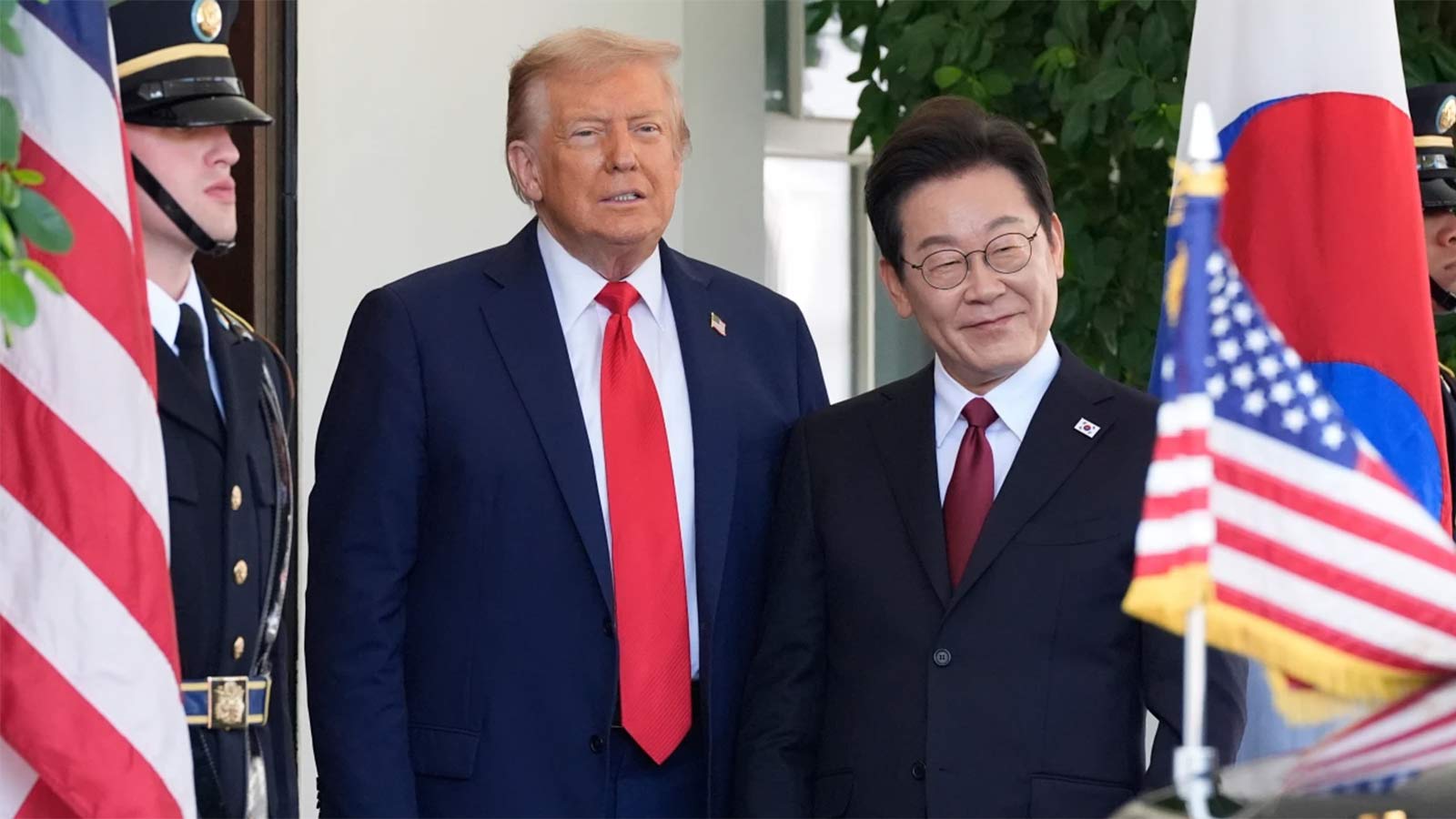
- President Trump met South Korean President Lee Jae Myung at the APEC summit in Gyeongju.
- Trump received South Korea’s highest honor and a replica of a historic Silla gold crown.
- A US-South Korea trade deal is expected soon, amid ongoing tariff and investment talks.
- Amazon Web Services announced $5 billion in new AI investments in South Korea.
- Protests and tight security marked Trump’s visit, reflecting mixed public sentiment.
Diplomacy on Display: Trump Meets South Korean President at APEC
In the ancient city of Gyeongju, South Korea, history and diplomacy converged as President Donald Trump arrived for the Asia-Pacific Economic Cooperation (APEC) summit. His meeting with South Korean President Lee Jae Myung marked a significant moment in a high-stakes diplomatic tour across Asia. The summit’s backdrop, rich in Korean heritage and adorned with artifacts from the Silla kingdom, set the stage for talks with lasting global impact.
President Lee, who has prioritized easing tensions on the Korean Peninsula and advancing the country’s technological ambitions, welcomed Trump with both symbolism and substance. The two leaders met at the Gyeongju National Museum, where Lee presented Trump with a replica of a historic golden crown from the Silla dynasty—a gesture steeped in tradition, representing sacred authority and aspirations for peace.
Lee also awarded Trump the Grand Order of Mugunghwa, South Korea’s highest honor, acknowledging his efforts to promote peace on the peninsula. Trump, visibly touched, called the medal “a great honor,” stating he would cherish the recognition. This exchange reflected the warmth in official relations, even as public opinion in South Korea remained divided.
Trade and Economic Ambitions Take Center Stage
Economic cooperation dominated the APEC agenda. Trump declared that a new trade deal with South Korea would be finalized “very soon,” emphasizing his administration’s commitment to reshaping US-Asia trade relations. Both leaders highlighted plans for increased South Korean investment in the United States, with Lee reiterating the July agreement to invest at least $350 billion.
Recent announcements from Amazon Web Services (AWS) further underscored the economic ties. AWS pledged over $5 billion in new investment for artificial intelligence data centers near Seoul, complementing previous commitments and aligning with South Korea’s goal to become a global AI leader. President Lee’s administration views such partnerships as key to modernizing the country’s economy and infrastructure.
Yet, Trump’s tariff policies cast a shadow. While South Korea negotiated a relatively low tariff rate of 15%, the increase from near zero has impacted the nation’s export-driven economy. According to the Korea Development Institute, exports—which account for over 40% of South Korea’s GDP—are expected to slow sharply, raising concerns among business leaders. Trump, however, remained bullish, touting “groundbreaking agreements” signed with Malaysia, Cambodia, and Japan during his Asia tour.
Security, Alliances, and the Korean Peninsula
Military and security concerns were also on the agenda. President Lee announced plans to increase South Korea’s defense spending, aiming to ease the “burden” on the United States and modernize the longstanding alliance. South Korea’s defense budget, already larger than North Korea’s entire GDP, signals a strategic shift toward self-reliance and technological advancement.
Trump reaffirmed his commitment to peace on the Korean Peninsula, acknowledging the region’s ongoing tensions. While speculation swirled about a possible meeting with North Korean leader Kim Jong Un, Trump clarified that such a summit would not occur during this visit—citing timing issues but expressing hope for future dialogue. Lee, whose approach to North Korea is more open than his predecessor’s, praised Trump’s willingness to engage and urged continued efforts toward denuclearization.
The upcoming meeting between Trump and Chinese leader Xi Jinping was a focal point, with both sides set to discuss trade and mutual concerns. China’s foreign ministry confirmed the summit would take place in Busan, underscoring the broader geopolitical stakes at play.
Symbolism and Public Sentiment
Beyond official pageantry, the atmosphere in Gyeongju reflected a mix of celebration and protest. While Trump received high honors and ceremonial gifts, small but vocal demonstrations greeted his arrival. Protesters, referencing “No Kings” rallies in the US, criticized Trump’s “authoritarian” style and the impact of tariffs on regional economies. Some carried placards warning of “devastating impacts” on livelihoods, according to Reuters.
Security was tight, with a military band performing “YMCA”—a nod to Trump’s political rallies—while the city braced for both celebration and dissent. The contrast between official ceremony and grassroots activism was stark, highlighting the complexities of international diplomacy in an era of polarized politics.
Looking Ahead: The APEC Summit’s Legacy
As Trump addressed the APEC CEO luncheon, he framed the summit as a turning point for trade and economic stability. He touted US achievements in artificial intelligence, manufacturing, and GDP growth, positioning the US-South Korea partnership as a model for the region. The visit’s legacy, however, will depend on the outcomes of ongoing trade negotiations and the trajectory of diplomatic efforts with China and North Korea.
For South Korea, the summit was an opportunity to showcase its cultural heritage and technological ambitions, while navigating the challenges of global economic uncertainty. For Trump, it was a platform to reinforce his administration’s vision for “fair” trade and strategic alliances.
Amid the spectacle of crowns and medals, the real test lies in translating ceremony into concrete policy—balancing symbolism with substance in an unpredictable geopolitical landscape.
Assessment: The APEC 2025 summit in Gyeongju encapsulated both the promise and the tension of modern diplomacy. While symbolic gestures highlighted the desire for peaceful coexistence and partnership, the underlying negotiations on trade, security, and alliances revealed a world still grappling with imbalances and uncertainty. The summit’s true impact will be measured not by medals, but by the durability of its agreements and the resilience of its relationships.